A wager on military action against a sovereign country has vaulted into the upper ranks of the most heavily traded contracts ever listed on Polymarket, putting it in the same league as marquee U.S. election markets.
In the immediate aftermath of U.S. and Israeli strikes on Iran, the platform became a real-time venue for pricing geopolitical risk. Within hours, new contracts were live, allowing users to speculate on ceasefire deadlines, regime durability and leadership succession.
Traders are assigning probabilities not just to escalation, but to highly specific outcomes — including whether U.S. ground forces will enter Iran by March 7 and who might replace Ali Khamenei.
The largest resolved market so far — “Khamenei out as Supreme Leader of Iran by March 31?” — settled at 100% after Iranian state television confirmed his death. That contract alone generated $45 million in trading volume, ranking among the week’s most active geopolitical bets. The top account, operating under the name “Curseaaaaaaa,” reportedly earned about $757,000 on a “yes” position, with four other traders also securing six-figure profits.
For weeks prior, the market had fluctuated between 25% and 50% as tensions mounted. Once confirmation came, the implied odds surged instantly to 100%.
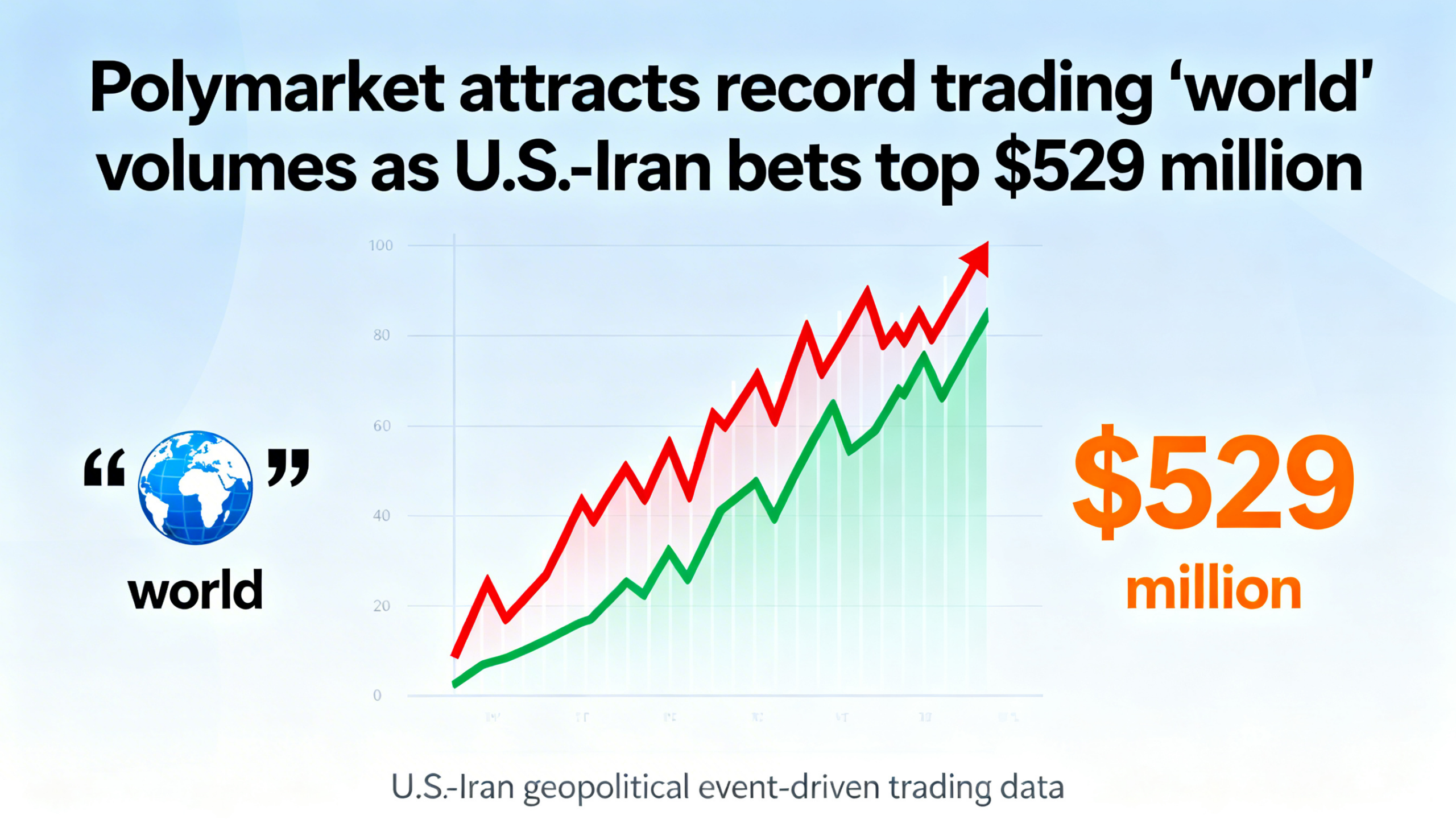
The platform’s biggest market overall remains “US strikes Iran by…?”, which has been active since December 22 and has now amassed $529 million in cumulative volume. It stands as the largest contract in the “World” and “Geopolitics” categories and the fourth-largest in “Politics,” trailing only major 2024 U.S. presidential election-related markets.
The February 28 strike date by itself accounted for $89.6 million in trades. Each daily contract covering February 28 through early March ultimately resolved to “yes,” rewarding those who correctly anticipated the precise day of U.S. military action. Resolution criteria required U.S. drone, missile or airstrikes on Iranian soil, while excluding cyber operations, interceptions or ground maneuvers.
With the strikes complete, liquidity has shifted to forward-looking questions.
Odds of a U.S.–Iran ceasefire by March 2 are priced at just 4%, rising to 15% by March 6. However, probabilities jump to 61% by March 31 and 78% by April 30, indicating that traders expect a resolution within weeks rather than months — a view echoed in bitcoin’s rebound toward $68,000.
The “Will the Iranian regime fall by June 30?” market now trades at 54%, a sharp increase from the low-20% range where it lingered for months. In the “Next Supreme Leader of Iran” contract, “position abolished” carries a 30% implied probability, suggesting that bettors see a meaningful chance the current theocratic framework does not endure. Among named contenders, former parliament speaker Ali Larijani leads at 21%.
Markets tied to potential U.S. ground involvement are also drawing attention. “Will the U.S. invade Iran before 2027?” trades at 19% with $207,000 in volume, while “US forces enter Iran by March 7” stands at 28% with roughly $2 million traded.
Unlike traditional markets, which close over the weekend, Polymarket operates continuously. Anyone with a crypto wallet can take positions at any time and observe real-time price discovery as new information emerges.
Some of the most scrutinized activity appears to have occurred before the strikes were publicly confirmed. Onchain analytics firm Bubblemaps reported that six wallets collectively generated $1.2 million in profit by betting on a U.S. strike by February 28 — the exact day the attacks occurred. Several of the wallets were funded within 24 hours of the operation, targeted the specific February 28 contract and accumulated “yes” shares shortly before military action began. One wallet reportedly turned approximately $61,000 into more than $493,000 in profit, while another converted a $30,000 stake into roughly $120,000 in gains.
Amid growing attention, Polymarket added a statement to its Middle East markets emphasizing that prediction markets aim to harness collective intelligence to provide accurate, unbiased forecasts on major global events. The platform said discussions with individuals directly affected by the conflict reinforced its belief that real-time market pricing can offer clarity beyond traditional news and social media coverage.
It has also introduced a dedicated hub for Iran-focused markets, reflecting the surge in participation surrounding the unfolding crisis.