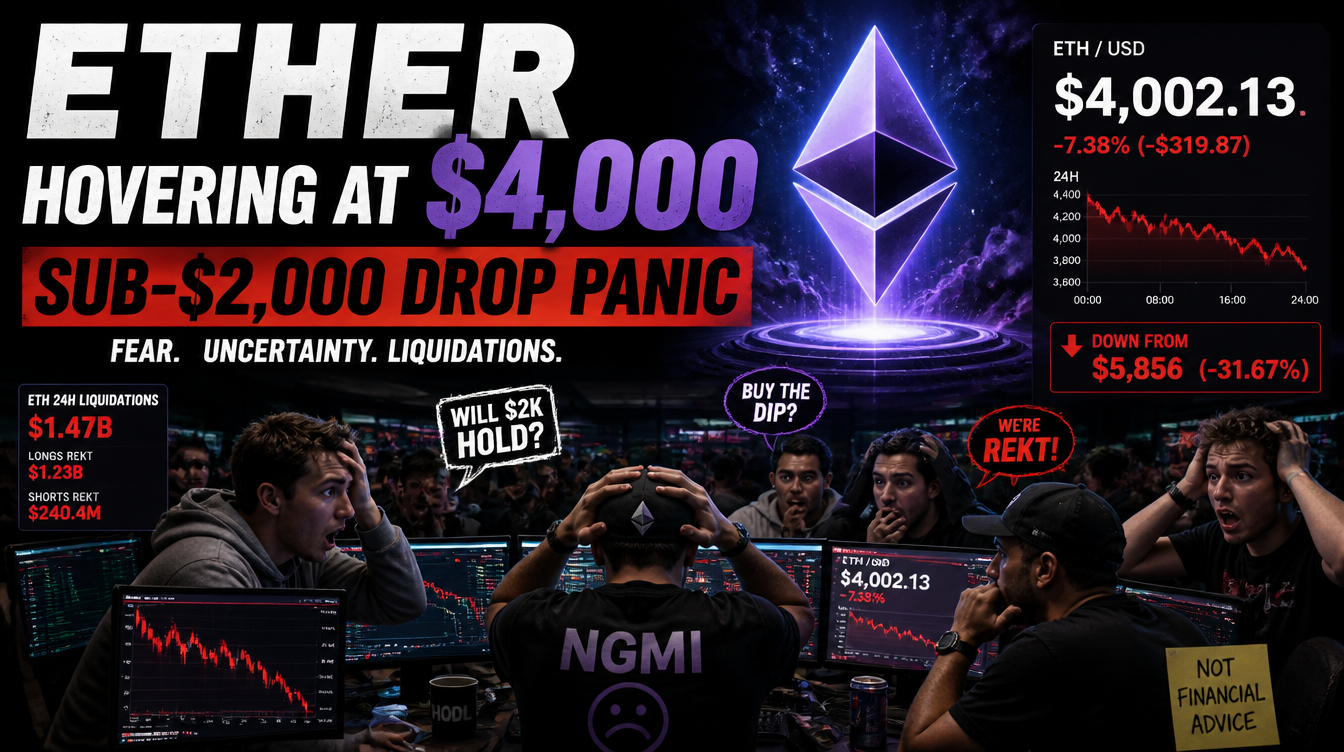
Retail traders piled into ether even as the token slipped below $2,000 for the first time since late March, a move that some analysts interpret as a potential warning sign rather than confirmation of a market bottom.
Sentiment data suggests enthusiasm spiked as prices broke down. Santiment reported bullish commentary rising to a 2.4-to-1 ratio on May 27, a level it characterizes as “FOMO-driven” territory where retail optimism often peaks during weakness rather than strength.
Historically, such sentiment surges have tended to be contrarian indicators. Retail buying during breakdowns can reflect premature optimism, with participants stepping in before selling pressure fully exhausts. Santiment has repeatedly noted that retail positioning is often least reliable at emotional extremes.
In contrast, Standard Chartered maintains a longer-term bullish stance. Geoffrey Kendrick, the bank’s head of digital assets research, reaffirmed a $4,000 year-end ether target and a $40,000 long-term forecast through 2030 in a Thursday note.
Kendrick argues that ether’s price has increasingly decoupled from underlying fundamentals. Onchain activity, including transaction volumes and total value locked, remains near record highs, even as ETH has fallen about 57% from its August peak in dollar terms and roughly 37% versus bitcoin.
He compared the disconnect to Amazon during the 2001 dot-com crash, when the stock plunged from $113 to $6 despite continued improvement in the underlying business. Over time, Amazon’s valuation ultimately aligned with its fundamentals, delivering outsized long-term gains.
“ETH will catch up to the internal metrics, it is just a matter of time,” Kendrick said.
Standard Chartered expects major structural growth in Ethereum-linked sectors, projecting a sixfold expansion in stablecoins by 2028 and a fiftyfold increase in tokenized real-world assets. The bank estimates Ethereum currently captures 50% to 65% of activity across both categories.
Combined, these segments already account for more than half of total value locked on the network. On that basis, a move to $4,000 would restore ETH’s bitcoin ratio toward its 2021 peak near 0.08, compared with roughly 0.03 today.
Market positioning, however, suggests traders are not waiting for that convergence. Ether futures open interest rose to a record 16.39 million ETH ($32.6 billion) even as spot prices declined, signaling increased leveraged positioning into weakness.
Rising open interest alongside falling prices typically indicates fresh short exposure rather than dip-buying. Funding rates remained broadly neutral at 0.0022%, suggesting neither longs nor shorts are paying a strong premium to maintain positions.
The result is a divided setup: retail traders leaning bullish into weakness, long-term forecasts projecting structural upside, and derivatives markets still skewed toward caution.
For now, sentiment remains elevated even as price trends weaken — a dynamic that has historically favored patience over early conviction.