Bitcoin’s bear cycle could run into late 2026 when viewed in U.S. dollar terms, but its valuation against gold indicates the market may be closer to a bottom, according to analysis from Mercado Bitcoin.
Rony Szuster, head of research at the exchange, pointed out that past bitcoin downturns have typically lasted 12 to 13 months. The latest dollar-denominated peak occurred in October 2025 near $126,000. If the current cycle mirrors historical patterns, the correction could persist through the latter part of 2026, he wrote in a report shared with CoinDesk.
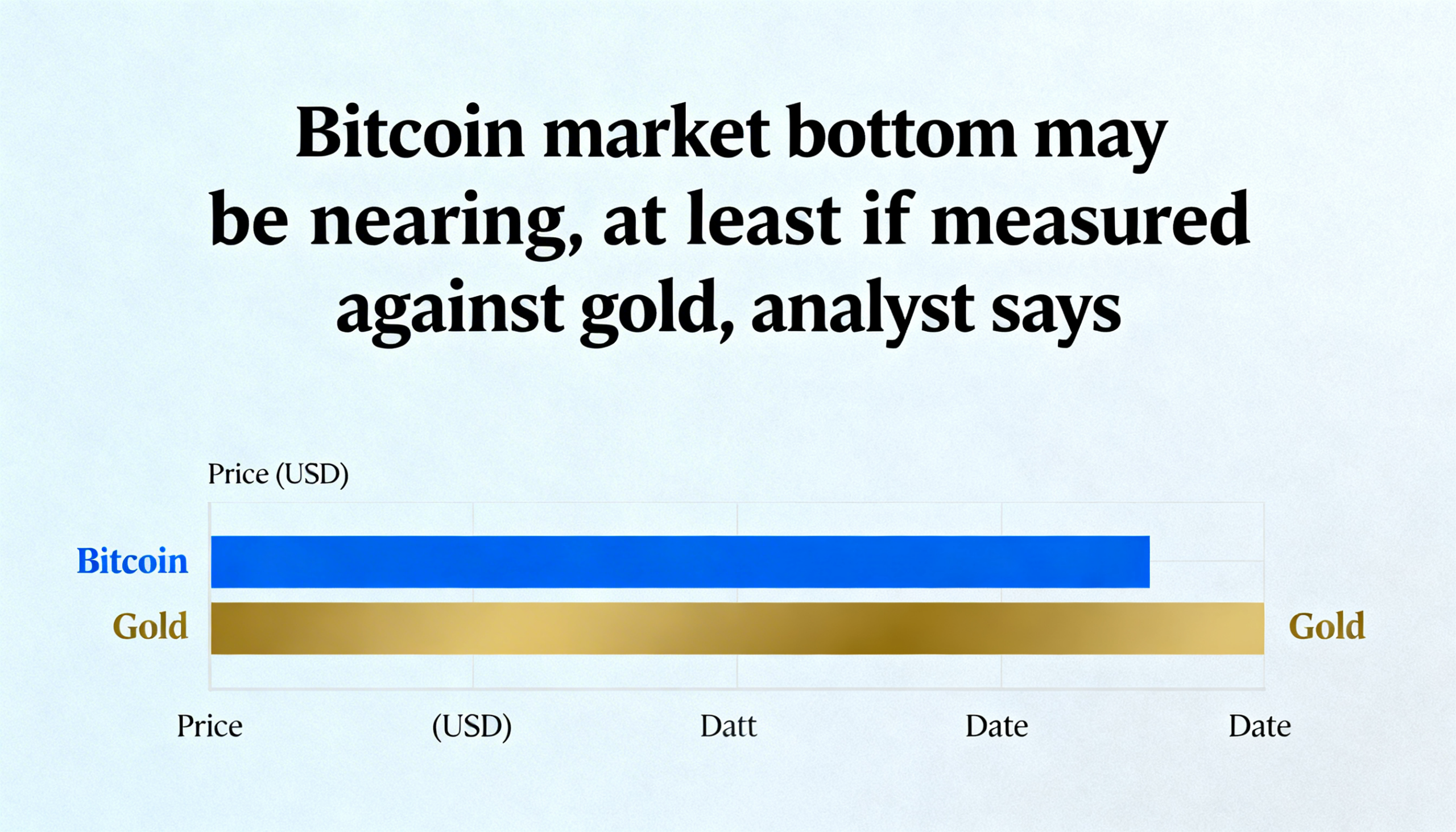
The timeline shifts, however, when bitcoin is measured in gold. The BTC-gold ratio topped out in January 2025. Applying the same 12–13 month framework would place a potential bottom around February 2026, with a rebound possibly beginning in March.
The difference underscores the role of broader macro forces. Since President Donald Trump began his new term, markets have faced renewed trade tariffs, domestic political tensions in the U.S., and escalating geopolitical strains involving China and Iran, with the latter developing into active military conflict.
Rising global uncertainty — reflected in a surge in the World Uncertainty Index — has driven investors toward safe-haven assets. Gold has climbed more than 80% over the past year to approximately $5,280. As capital rotated into bullion, bitcoin weakened against gold more quickly than it did versus the dollar.
Flows from spot bitcoin exchange-traded funds have compounded the pressure. Since November, around $7.8 billion has exited these ETFs, representing roughly 12% of the $61.6 billion in total assets, signaling risk aversion among more reactive investors.
Still, the pullback has not deterred all participants. According to the report, larger investors appear to be accumulating during the downturn. Abu Dhabi-based firms such as Mubadala Investment Company and Al Warda Investments increased their exposure to spot bitcoin ETFs in mid-February.
Given the mixed signals, Szuster advises a disciplined approach, favoring dollar-cost averaging to navigate volatility and reduce the risk of mistiming the market.
“Historically, periods of fear have offered stronger long-term entry points than moments of euphoria,” he wrote. “That doesn’t guarantee the bottom is already in place, but statistically, we are operating within the range where favorable average prices are often established.”