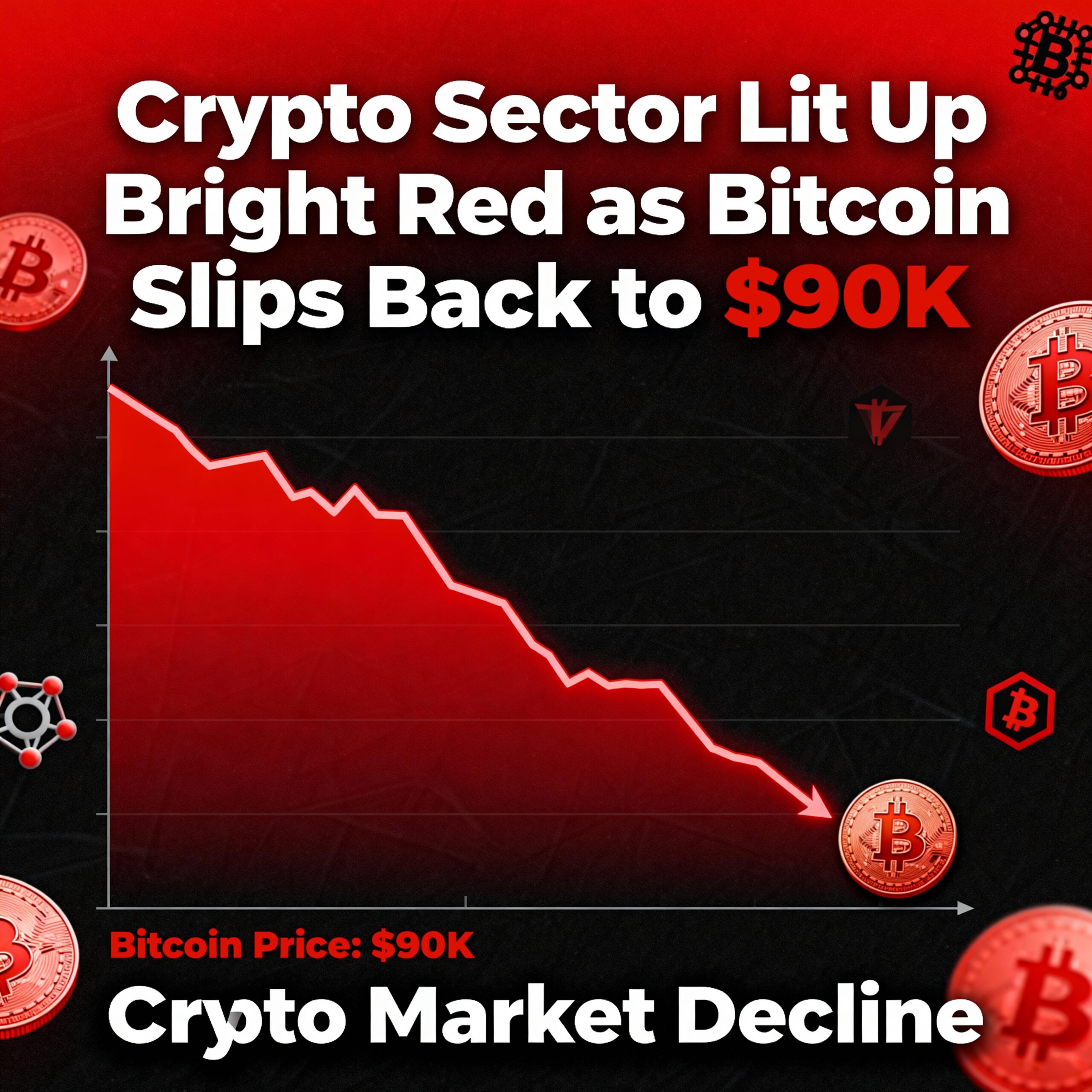
Bitcoin extended its overnight slide on Friday, retreating to $90,000 in early U.S. trading and erasing the bulk of the rebound that followed last Sunday night’s sharp sell-off, when prices briefly plunged to $84,000. The weakness arrived earlier than the market’s now-familiar Sunday evening swoon, giving traders an unwelcome head start to the holiday weekend.
While softer-than-expected private inflation readings offered a glimmer of optimism that the downturn might stabilize, the broader setup continues to support analyst expectations for a period of sideways consolidation into year-end rather than a swift recovery.
The pullback weighed heavily on crypto-related equities. Shares of Strategy (MSTR), Galaxy Digital (GLXY), CleanSpark (CLSK) and American Bitcoin (ABTC) were all down between 4% and 7%, tracking the sector-wide risk-off tone.
Market behavior also aligns with recent patterns highlighted by Velo data, which shows the hour before the U.S. market open and the first hour of trading have been the most consistently bearish stretches over the past six months. Fridays, meanwhile, have been the weakest day of the week on average.
Private inflation data offers a brief lift
The release of University of Michigan Consumer Sentiment figures at 10 a.m. ET injected a bit of relief into the market. Although sentiment surveys are often influenced by political leanings, the data showed a notable cooling in short- and long-term inflation expectations: the 1-year outlook fell to 4.1% versus 4.5% previously and expected, while the 5-year measure declined to 3.2% from 3.4%.
With official economic releases scarce in recent weeks, these private surveys have taken on increased importance. Bitcoin responded with a modest move back toward the $91,000 area immediately after the report.
Markets are widely expecting the Federal Reserve to deliver a rate cut at its final meeting of the year next week. Traders are now turning their attention to the first quarter of 2026, where further easing could become viable if inflation continues to soften—an outcome that would likely support risk assets, crypto included.