Riot Platforms Turns Bitcoin Mining Power Into a $9.1B AI Opportunity
Riot Platforms is showing how electricity infrastructure could become one of the most valuable assets owned by Bitcoin miners, potentially rivaling the importance of their mining capacity.
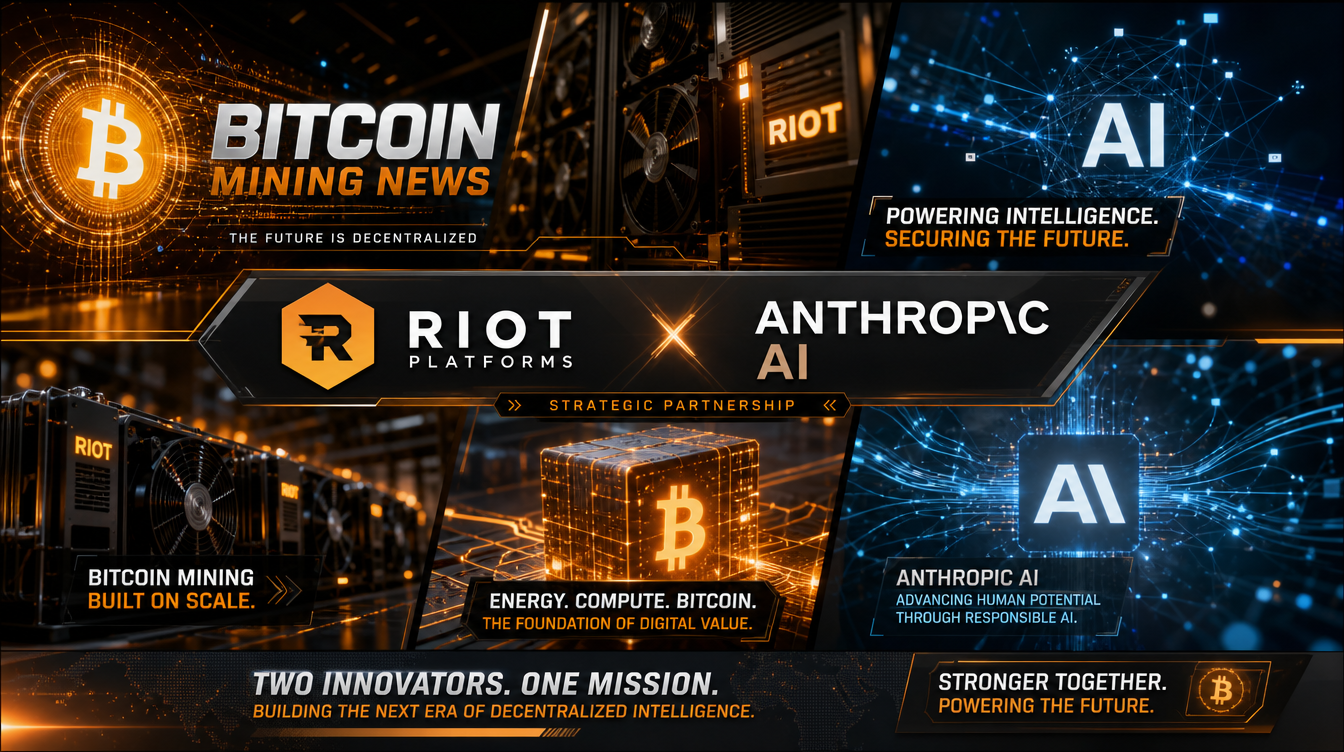
The company has signed a 20-year, $9.1 billion agreement to provide computing infrastructure capacity to Anthropic, converting part of its Texas mining footprint into a long-term source of AI-related revenue. Unlike traditional Bitcoin mining income, the deal is not directly tied to BTC prices, network difficulty or block rewards.
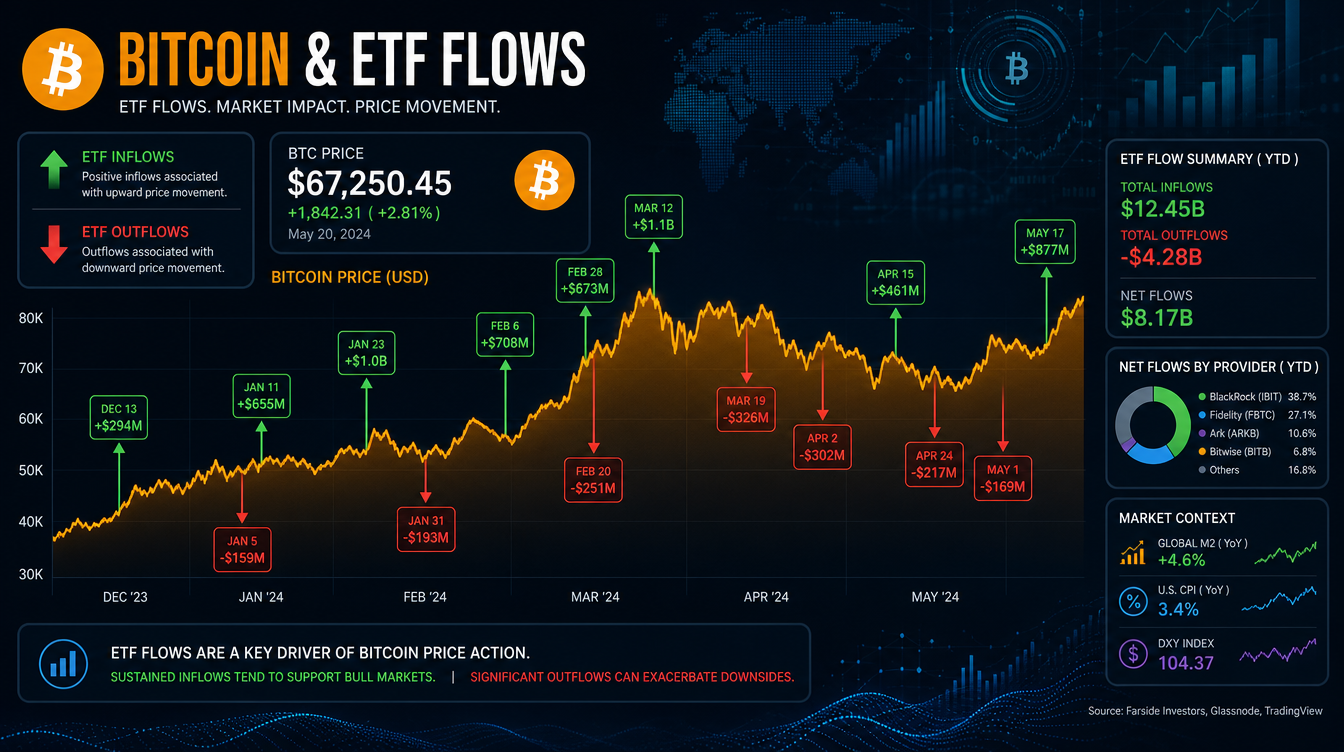
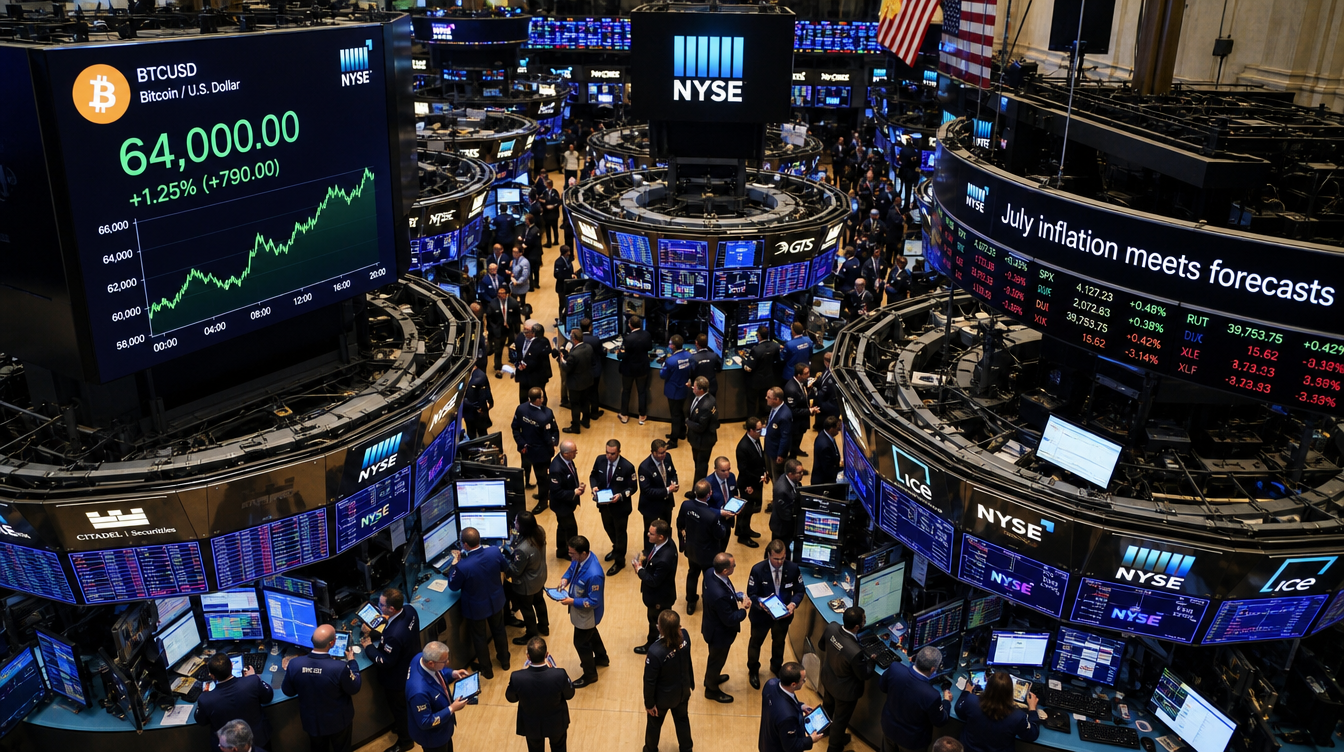
The agreement was announced as Bitcoin remained relatively stable, falling roughly 0.2% over 24 hours to about $64,000. Daily BTC trading volume was approximately $22 billion.
Riot said it will supply 191 megawatts of capacity from its Rockdale, Texas, facility under the 20-year contract. The company initially identified the customer only as a leading frontier AI laboratory, but Bloomberg later reported that Anthropic is the tenant.
Under the initial agreement, which runs through June 2048, Riot expects to generate $9.1 billion in revenue. Two additional five-year extensions could increase the total contract value to $16.1 billion if both options are exercised.
The announcement initially sent Riot shares sharply higher. Bloomberg reported that the stock climbed 25% to $24.40 in after-hours trading. CNBC said shares had also gained more than 20% during regular trading before most of the increase was erased, showing that investors remain cautious about assigning an immediate and permanent premium to the deal.
Riot’s Shift From Mining to AI Infrastructure
Riot, formerly known as Bioptix, has evolved significantly over the years. After moving from biotechnology into Bitcoin mining, the company is now increasingly positioning its land and electricity resources as AI infrastructure assets.
Its Rockdale campus already has two tenants, including a partnership involving Advanced Micro Devices, adding another source of revenue beyond Bitcoin mining.
The strategy reflects a broader transformation across the publicly traded mining sector. Investors are increasingly looking at miners based on their access to electricity, land and data-center facilities rather than simply their hash rate and Bitcoin production.
This approach can help reduce exposure to the factors that make traditional mining businesses highly volatile, including BTC prices, network difficulty and changes in mining rewards.
Cipher Mining, Hut 8 and TeraWulf have already developed reputations as companies combining Bitcoin mining with AI or high-performance computing infrastructure. Riot is now moving in the same direction, with its Anthropic agreement putting a greater spotlight on the value of its power resources.
Why the Anthropic Deal Is Different From Mining Revenue
Riot’s agreement with Anthropic operates more like a long-term infrastructure lease than a conventional Bitcoin mining business.
The company will not be responsible for running AI GPUs or selling computing services directly. Instead, Riot will provide access to electricity, land and data-center infrastructure, while the tenant supplies its own hardware and computing operations.
This makes the contract materially different from Riot’s Bitcoin mining revenue. Mining income can change rapidly based on BTC prices, network difficulty and the scheduled reduction in block rewards following Bitcoin halvings.
A long-term contracted agreement provides a more predictable revenue stream. By securing fixed or predetermined pricing over an extended period, Riot can reduce the impact of Bitcoin’s market and mining volatility on part of its business.
Anthropic is also expanding its infrastructure commitments through multiple providers. Bloomberg reported that the company has agreed to an approximately $10 billion deal with infrastructure startup Volta Infra Holdings and committed to purchasing nearly $45 billion in computing capacity from Elon Musk’s xAI.
The agreements indicate that Anthropic is building a diversified infrastructure network to meet rising demand for AI computing. That trend is increasingly relevant to Bitcoin miners, which control large amounts of power and land that can potentially be repurposed for AI workloads.
The $16.1B Potential Value Comes With Conditions
Riot’s $16.1 billion figure represents the maximum potential value of the agreement rather than guaranteed revenue. Both five-year extension options would need to be exercised for the contract to reach that level.
For valuation purposes, the $9.1 billion expected under the initial 20-year term is therefore the more important figure.
The revenue opportunity will also take several years to fully develop. Data Center Dynamics reported that the first capacity is expected to become operational in late 2027, with full deployment projected for mid-2028.
Regulatory and grid constraints in Texas could also affect the broader AI data-center expansion. CNBC cited Compass Point analyst Michael Donovan, who noted that increased ERCOT scrutiny of new power projects could slow speculative development.
However, the same restrictions could make Riot’s existing grid-connected infrastructure more valuable. As AI companies compete for limited electricity capacity, projects that already have approvals and access to the grid could gain a significant advantage.
For Riot, the Anthropic agreement therefore represents more than a new customer. It demonstrates how Bitcoin miners can monetize their power infrastructure in a rapidly growing AI economy while reducing their reliance on traditional mining revenue.