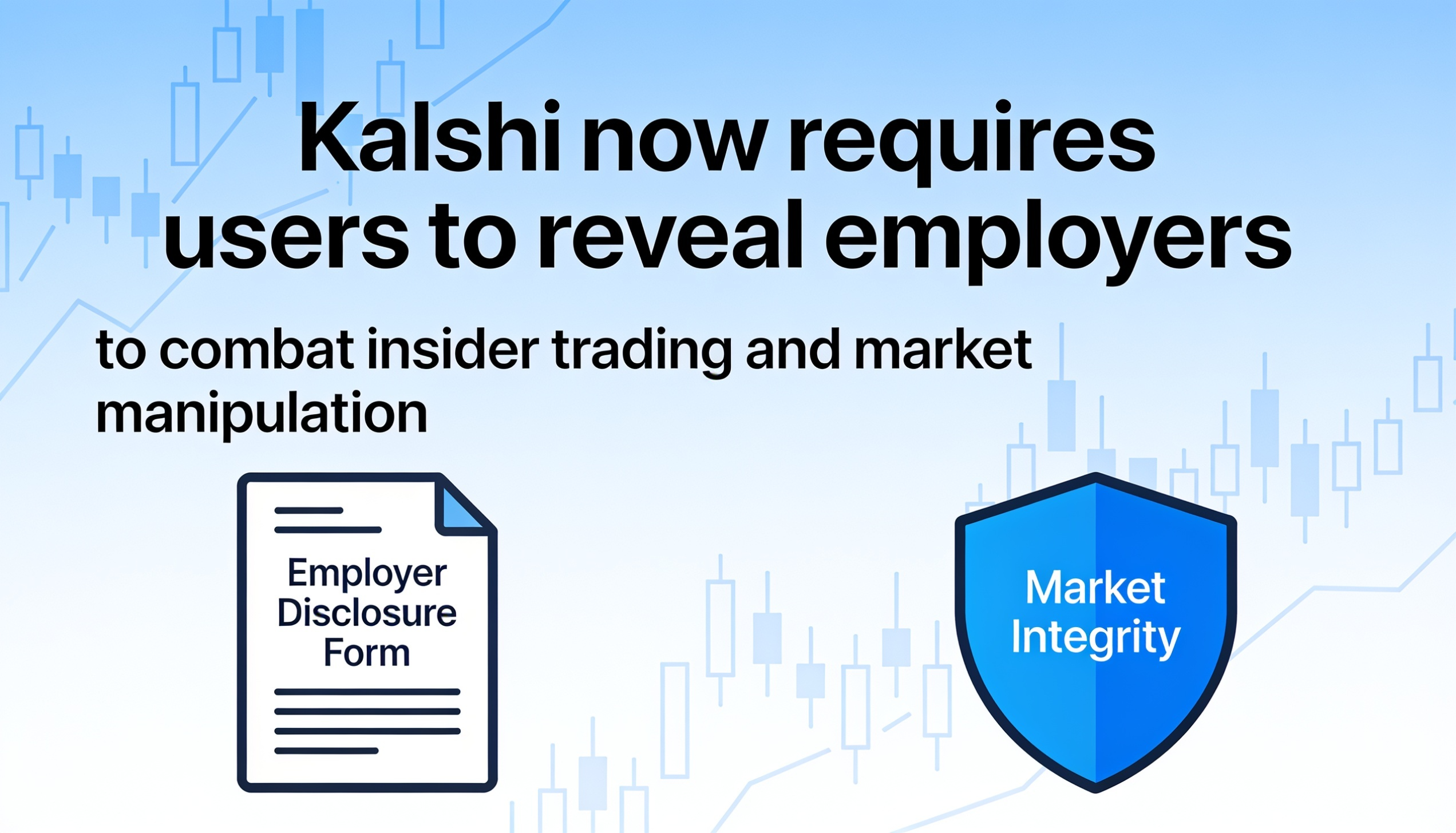
Kalshi rolled out new compliance measures on Tuesday aimed at prediction markets it sees as more vulnerable to insider trading and manipulation.
The platform said it will require certain users to disclose their employers as part of a broader push to strengthen oversight and limit abusive trading activity.
As a federally regulated exchange, Kalshi noted that the rules will apply only to contracts flagged as higher-risk, where traders may face additional screening before being approved to participate.
The company said the changes take effect immediately and are based on recommendations from an independent Surveillance Audit Committee that reviewed its monitoring systems, enforcement procedures, and internal controls.
“For markets with elevated insider or manipulation risk, we now collect employment information prior to participation,” Kalshi said, adding that the aim is to identify participants who may have access to material non-public information.
The update comes amid rising scrutiny of prediction markets from regulators and researchers. Studies of Polymarket activity between 2023 and 2025 have found that a small share of traders accounted for a large portion of price moves, while several high-profile cases have involved alleged insider betting tied to sensitive real-world events.
Kalshi said it blocked more than 100 suspected insider trades in the first quarter, conducted over 150 investigations, referred more than 20 cases to law enforcement, and issued multiple disciplinary actions, though it did not release case details and the figures could not be independently verified.
In addition to employer disclosure requirements, the platform is introducing a new risk-scoring system that assesses markets based on manipulation risk, regulatory sensitivity, and national-security factors, with the ability to restrict or reject listings deemed too risky.
It has also launched whistleblower tools that allow users to report suspicious trading activity directly within markets.
Taken together, the changes reflect a broader effort to build stronger surveillance and compliance systems as prediction markets grow, with observers saying such infrastructure is increasingly necessary for institutional-level credibility.