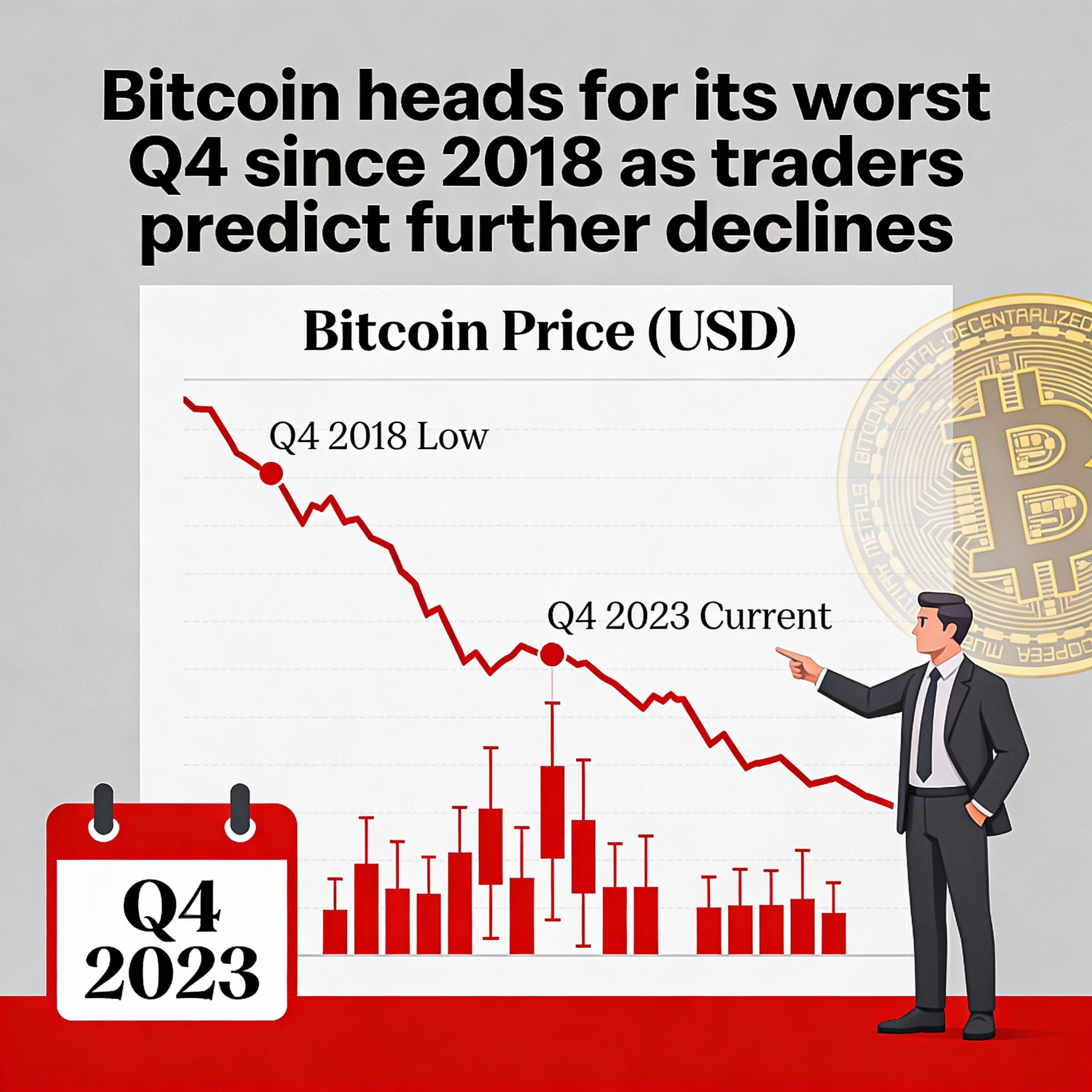
Bitcoin is heading toward one of its weakest fourth-quarter performances outside of major bear markets, underscoring lingering caution across the crypto market despite a brief rebound.
Data from CoinGlass shows bitcoin has fallen more than 22% so far in Q4, a rare decline for a period that has historically produced some of the asset’s strongest gains. The recent push back toward $90,000 has provided a short-term lift, but analysts warn it is unlikely to signal a durable recovery following one of the softest second halves in recent years.
Major cryptocurrencies have remained largely range-bound over the past 24 hours. XRP, ether, Solana’s SOL, Cardano’s ADA, and Dogecoin each rose by up to 2%, while Aave’s AAVE continued to slide amid an ongoing governance dispute, making it the weakest performer with roughly a 7% decline.
Total crypto market capitalization has once again surpassed $3 trillion, a key psychological threshold that has repeatedly acted as a dividing line between buyers and sellers over the past month. Analysts caution that the rebound reflects technical factors and market exhaustion rather than renewed conviction.
Alex Kuptsikevich, chief market analyst at FxPro, described the recent strength as largely technical, resulting from a low base after weeks of selling pressure.
“The crypto market is attempting to recover, but this is not yet a true rebound,” Kuptsikevich said. He noted that sentiment has improved only modestly, with the fear and greed index rising to 25 — indicating that traders are stepping back from extreme pessimism but remain hesitant to take on risk.
Bitcoin was trading near $88,000 during Asian morning hours on Tuesday, testing the upper end of a range that has held since early last week. Kuptsikevich cautioned that short-term momentum could be misleading. Bitcoin remains roughly 30% below its 2025 peak and continues to trade below levels seen at the start of the year.
“Attempts to bring year-to-date performance back to flat provide little comfort,” he said, noting that disappointment has largely replaced the optimism that fueled markets earlier this year.
Seasonal trends reinforce the cautious outlook. While the fourth quarter has historically delivered strong rallies, it has also produced sharp drawdowns in periods of tightening liquidity and macro uncertainty. Recent sessions suggest the market remains vulnerable to abrupt reversals, particularly during U.S. trading hours, where gains from Asian and European markets have repeatedly faded.