Morgan Stanley Files for Bitcoin and Solana ETFs, Signaling Deeper Crypto Commitment
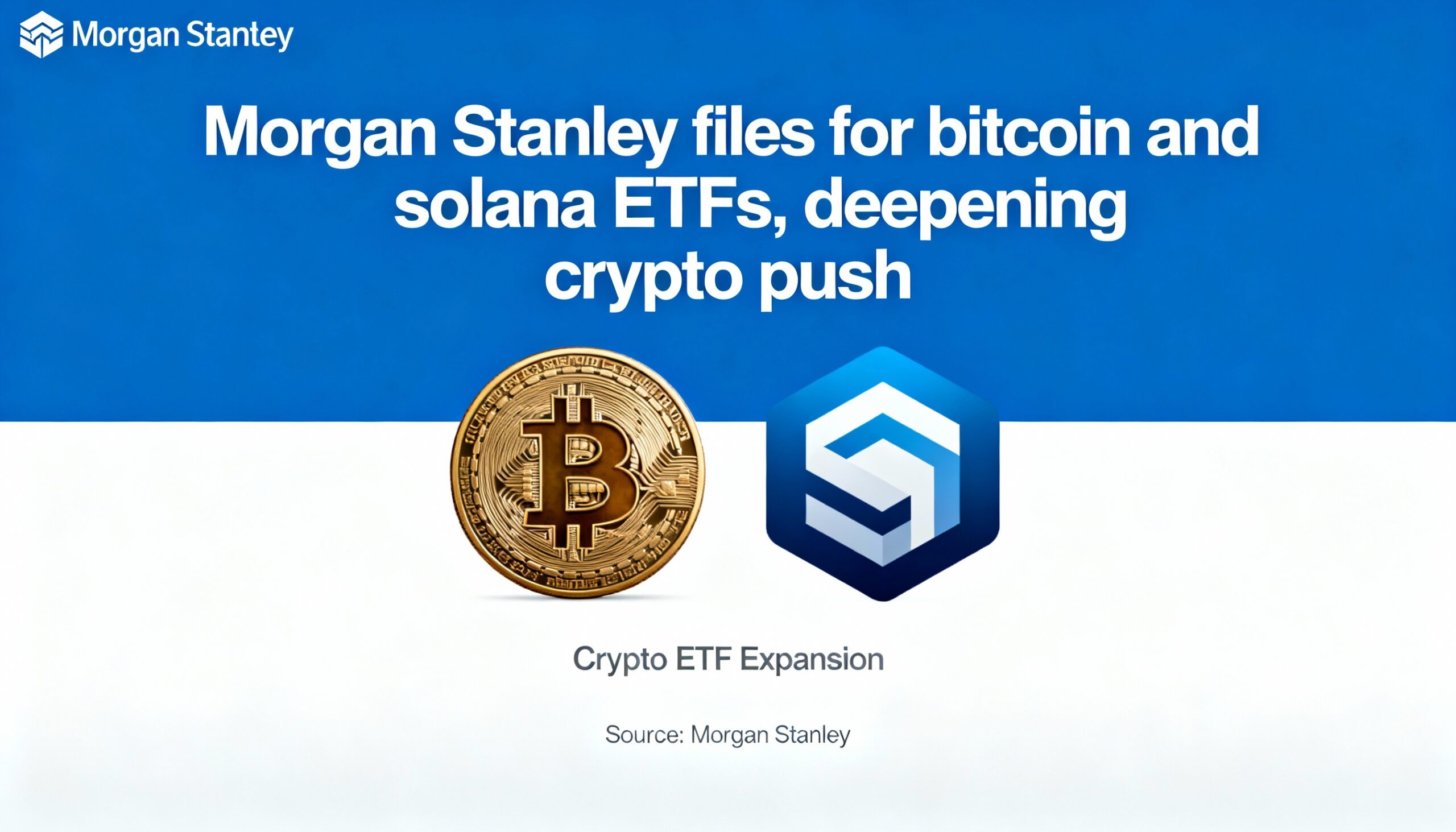
Morgan Stanley has filed with the U.S. Securities and Exchange Commission to launch a spot bitcoin (BTC $91,796) exchange-traded fund and a Solana trust, marking a significant step in the bank’s digital asset ambitions.
The proposed Morgan Stanley Bitcoin Trust, detailed in a Form S-1 submitted Jan. 6, is structured as a passive ETF designed to track the price of bitcoin, net of fees and expenses. Shares would list on a national securities exchange under a ticker yet to be announced. The fund will hold bitcoin directly, without using derivatives or leverage, and its net asset value will be calculated daily using a benchmark derived from major spot exchanges. Shares will be created and redeemed in large blocks by authorized participants, either in cash or in kind, while retail investors can trade shares on the secondary market through brokerage accounts.
Morgan Stanley’s filing comes amid rapid growth in U.S. spot bitcoin ETFs, which now hold $123 billion in total net assets — roughly 6.57% of bitcoin’s market capitalization — according to SoSoValue. Net inflows to these products have exceeded $1.1 billion so far in 2026. The Morgan Stanley Solana Trust, also filed with the SEC, aims to track the price of SOL and joins a category that has grown to over $1 billion in net assets following cumulative inflows of nearly $800 million.
Deeper Push Into Crypto
The filings underscore Morgan Stanley’s shift from distributing third-party crypto products to creating in-house vehicles, signaling a higher-conviction strategy in digital assets. The move is likely driven by the strong economics of ETFs and trusts, highlighted by substantial fee revenue generated by competitors such as BlackRock, whose spot bitcoin ETFs became a top revenue source last November, with allocations approaching $100 billion.
Morgan Stanley’s extensive wealth management network — which began offering crypto access to clients last October — allows the firm to integrate its own ETFs directly into client portfolios, retaining management fees internally rather than paying them to third-party managers.