Bitcoin and Major Cryptos Start 2026 Strong on Allocations and Safe-Haven Flows
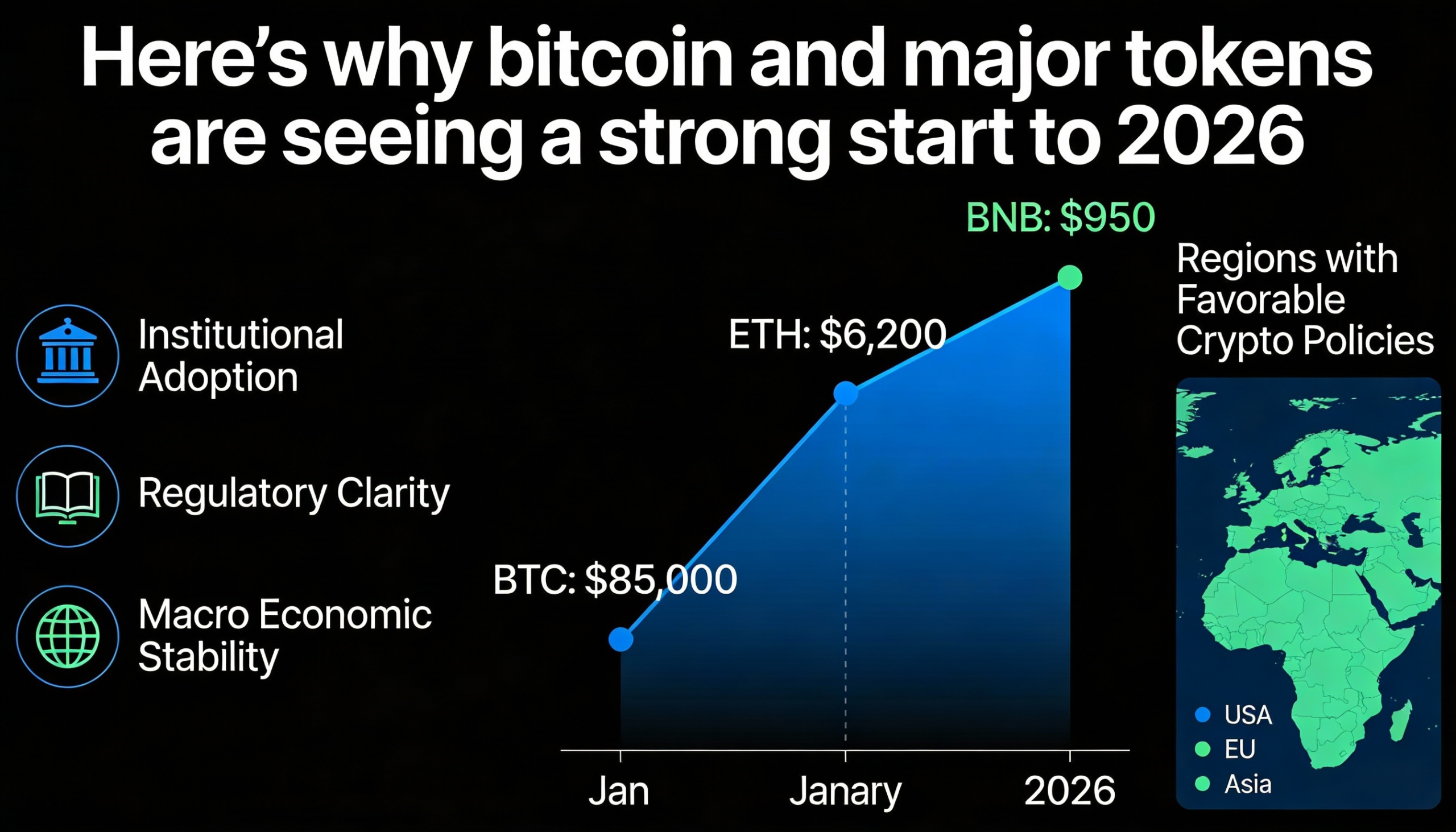
Bitcoin (BTC $91,607) and the broader crypto market have kicked off 2026 with robust gains, fueled by new-year allocations, safe-haven demand, and early institutional inflows.
Market Moves
Bitcoin traded near $93,700 on Tuesday, up roughly 1% over 24 hours and more than 7% since January 1. Ether (ETH $3,197) gained nearly 2% to $3,224, rising about 9% week-to-date. Among large-cap tokens, XRP (XRP $2.24) led the pack with a 13% one-day jump to $2.40 — up nearly 29% on the week. Solana (SOL $136.82) rose 12%, while Dogecoin (DOGE $0.1483) climbed 23% over the past seven days.
Tax-Related Selling Eases
The late-December downturn was driven by U.S. tax-loss selling and year-end portfolio adjustments. With that pressure fading, analysts see room for a rebound.
“Crypto’s alignment with broader risk assets appears more like a regime shift, supported by the end of tax-loss harvesting and renewed policy optionality,” said QCP Capital.
Geopolitical Safe-Haven Flows
Monday’s U.S. military strike on Venezuela contributed to safe-haven demand in Bitcoin and gold. Speculation that Venezuela’s oil supply could increase under U.S. guidance may be generating disinflationary expectations, potentially supporting lower interest rates.
ETF Inflows and Options Positioning
U.S.-listed spot ETFs started 2026 with strong inflows, reversing a two-month institutional de-risking trend. Eleven funds collectively added over $1 billion in the first two trading days, stabilizing thin holiday liquidity. Options data from Deribit shows traders buying Bitcoin $100,000 calls and Ether $3,200–$3,400 calls, signaling expectations of further near-term gains.
Liquidity Remains Thin
Despite positive momentum, spot market liquidity is still low, making prices sensitive to large trades. Vikram Subburaj, CEO of Giottus exchange, noted that while momentum is constructive, shallow order books increase the risk of sharp pullbacks. ETF inflows and desk activity provide baseline support, but broad-based conviction is not yet fully established.