Ethereum is entering a new phase as two major upgrades — PeerDAS and zkEVMs — move from research into real-world implementation, co-founder Vitalik Buterin said.
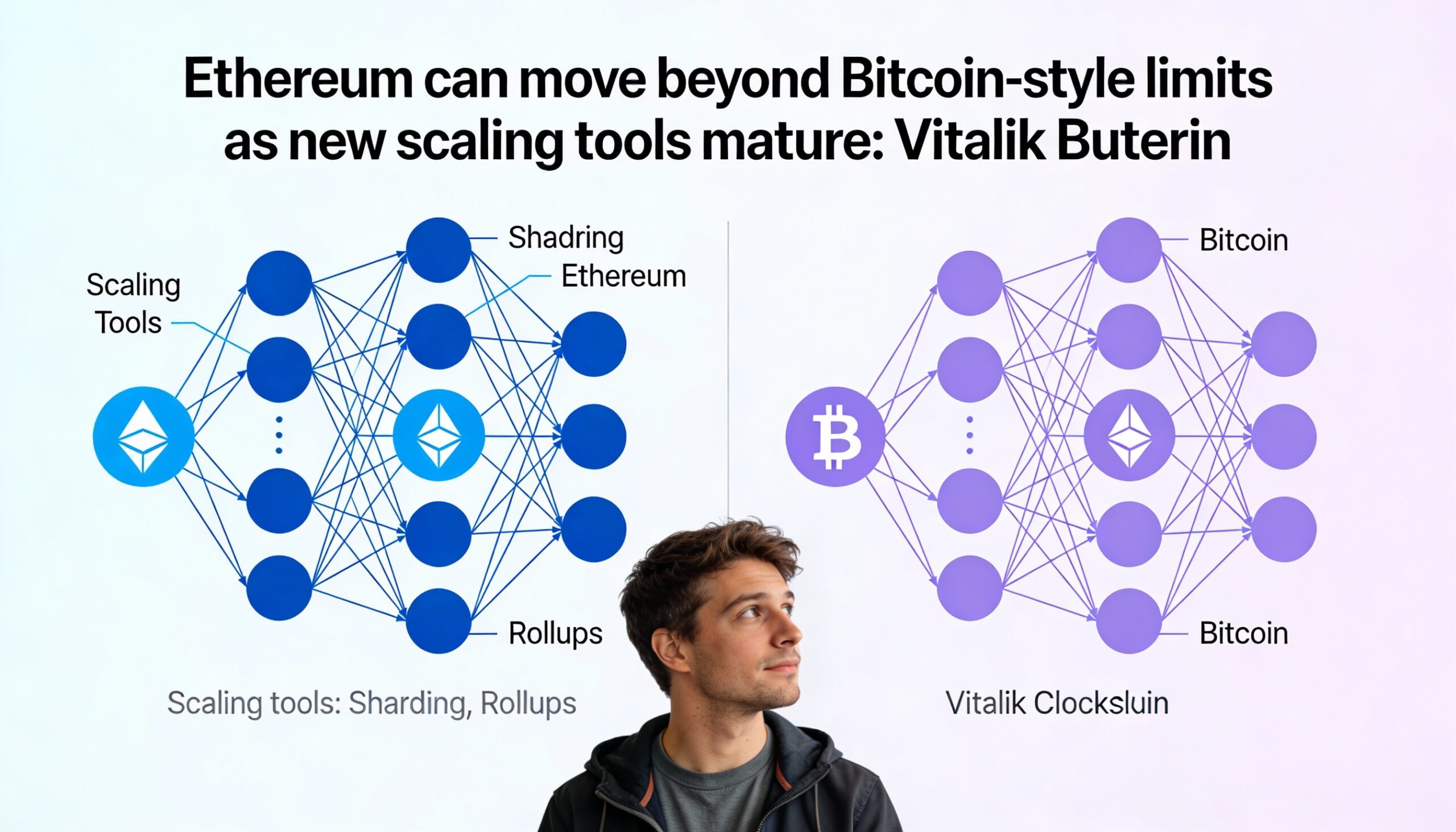
In a post on X, Buterin said the combination could transform Ethereum into “a fundamentally new and more powerful kind of decentralized network” by addressing a key blockchain limitation: achieving high bandwidth and throughput without compromising decentralization or consensus.
He illustrated the challenge with two models from the internet era. Peer-to-peer systems like BitTorrent can move large amounts of data in a decentralized way but do not require consensus. Bitcoin, on the other hand, prioritizes decentralization and consensus but remains low-bandwidth because every node must verify the same work. Ethereum’s next stage aims to combine all three.
PeerDAS, the first component, is now live on Ethereum’s mainnet. The data availability sampling system lets nodes confirm that transaction data exists without downloading it in full. As a prototype for full Data Availability Sampling, PeerDAS is crucial for Ethereum’s sharding-based scaling plans, enabling light clients to verify shard data efficiently while keeping the network secure and decentralized.
The second component, zkEVMs, has reached production-quality performance. Remaining work focuses on safety, robustness, and proving reliability at scale, with limited zkEVM nodes expected to appear in 2026.
Looking further ahead, Buterin highlighted distributed block building as a long-term goal, where block assembly is spread across multiple participants. This approach could reduce censorship risks and improve geographic fairness.
According to Buterin, Ethereum’s scaling strategy is increasingly about dividing verification work across the network rather than requiring every node to process all data — a step toward higher throughput without sacrificing decentralization.