Sony’s Web3 initiative, Soneium, has announced plans to launch its native ecosystem coin, SONEIUM, on October 26. The project aims to build a blockchain-based economy that brings entertainment intellectual property (IP), creators, developers, fans, and investors together.
Soneium currently supports more than 250 applications covering gaming, music, anime, films, collectibles, and fan-generated content. Its upcoming phase will focus on tokenized intellectual property, potentially creating new fundraising opportunities for creators and rights holders while allowing fans to support entertainment projects.
Moriusa, a character-based intellectual property owned by Tokyo-based entertainment group Super State Holdings, will be the first project featured in the initiative. Soneium also plans to partner with K-pop IP company DayOneDream to tokenize royalties from concert-related businesses.
These initiatives highlight the broader purpose of Sony’s Soneium coin: connecting entertainment brands with communities that want to participate in their commercial success.
Rather than positioning itself solely around cryptocurrency trading, Soneium intends to develop an economic framework built on the value of creative content. Its planned offerings include IP Vault, which would provide indirect access to entertainment investment opportunities, and IP Bond, a bond product backed by entertainment businesses.
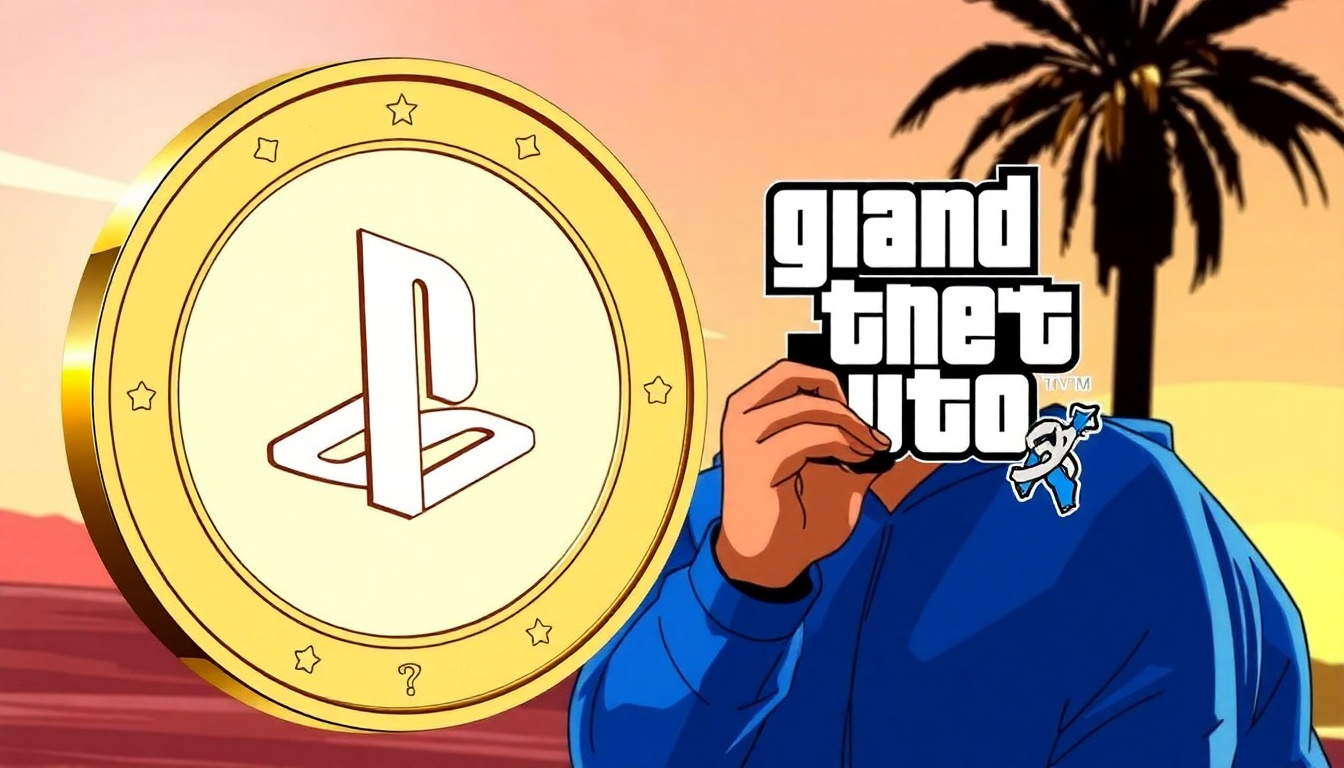
The announcement also raises an important question for the gaming community: could blockchain technology eventually find a place in PlayStation and major franchises such as Grand Theft Auto VI?
PlayStation and GTA 6 Fuel Speculation About Gaming’s Crypto Future
PlayStation is an obvious focal point when considering Sony’s influence across the gaming industry. Meanwhile, GTA 6 is expected to become one of the largest entertainment launches of its generation, illustrating the enormous commercial potential of major gaming franchises.
This has prompted questions about whether blockchain technology could eventually give fans opportunities to participate in gaming economies beyond purchasing and playing games.
Soneium’s proposed infrastructure aims to make IP licensing, attribution, and royalty payments programmable on-chain. In principle, these capabilities could support officially licensed digital collectibles, authorized fan-created projects, and alternative ways to finance entertainment ventures.
For the gaming industry, this opens up several possibilities. Fans could eventually support independent developers or gain access to tokenized assets linked to licensed entertainment projects.
However, any connection to PlayStation or GTA 6 remains speculative. The announcement does not confirm plans to integrate SONEIUM into PlayStation games, nor does it establish that Rockstar Games intends to introduce blockchain features into GTA 6.
Soneium Puts Creators at the Center of Its Token Strategy
A Soneium executive said the platform aims to help creators finance future projects on a larger scale while enabling new forms of creative expression and deeper engagement with fans.
This approach reflects the economic model the company hopes to develop. Tokenized intellectual property could help creators raise funds from their communities, while programmable revenue-sharing systems could distribute earnings according to predefined terms.
Soneium is also developing an Onchain IP Architecture comprising an IP Registry, an IP Graph, and an IP Execution Layer. These components are designed to connect creative works with their ownership records, licensing conditions, and revenue distribution arrangements.
The infrastructure could become increasingly relevant as artificial intelligence makes creating, modifying, and remixing digital content easier. Connecting intellectual property with licensing rules and payment mechanisms could help creators and rights holders manage their work in an increasingly complex digital environment.
By combining entertainment financing, digital ownership, and programmable licensing, Soneium is pursuing a broader vision than that of a traditional gaming token. Whether this strategy eventually extends to PlayStation or major franchises such as GTA 6, however, remains uncertain.