HSBC: Tether Downgrade by S&P Highlights De-Pegging Risk, Boosts Higher-Rated Stablecoins
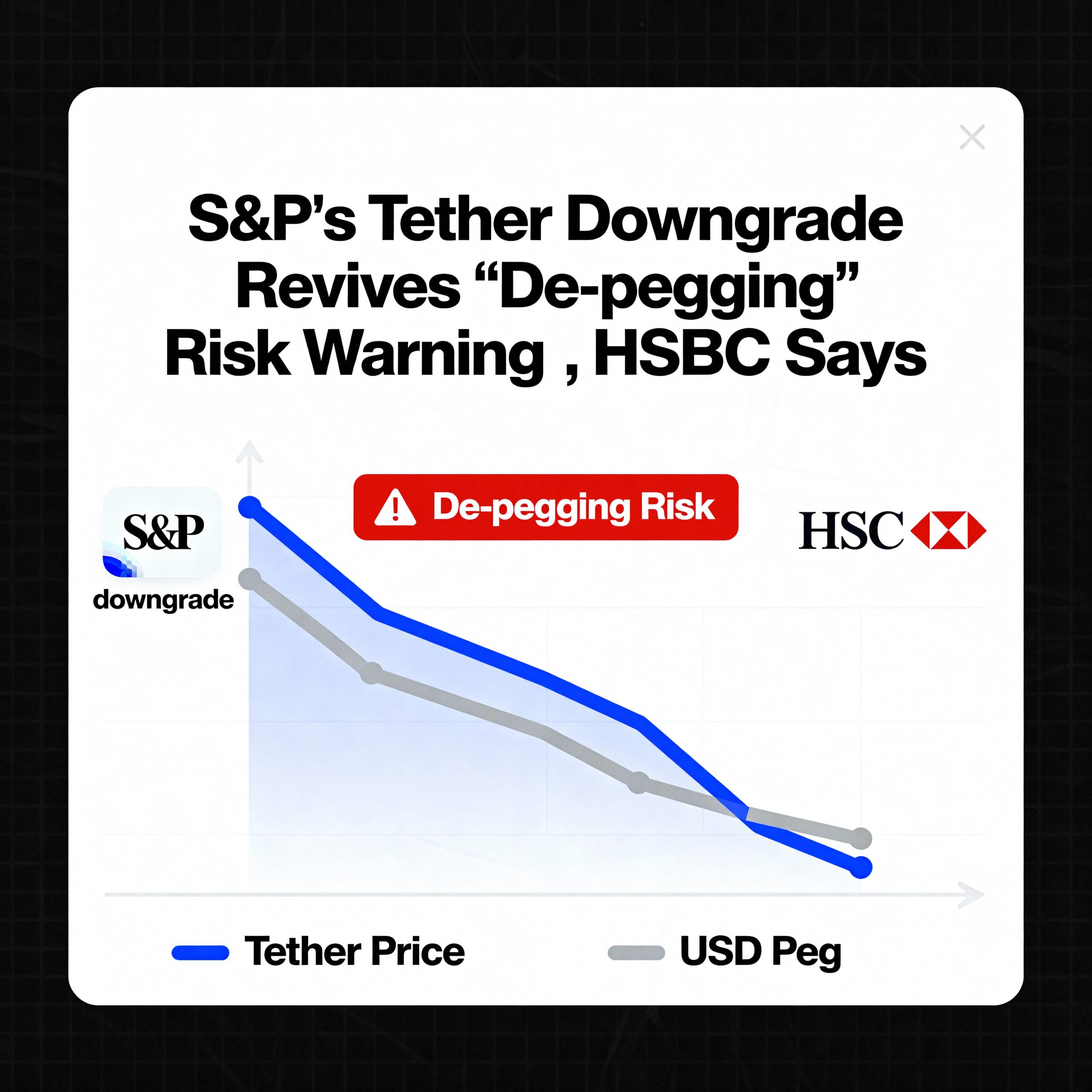
HSBC said S&P Global Ratings’ downgrade of Tether’s reserve assessment to “weak” highlights the de-pegging risk inherent in stablecoins—a risk not present in other tokenized assets.
Analysts Daragh Maher and Nishu Singla noted that if holders rush to redeem, stablecoin issuers need highly liquid, low-risk reserves to maintain the peg; otherwise, the token’s price can fluctuate.
Stablecoins, pegged to fiat or other assets, underpin much of the crypto ecosystem, enabling payments and cross-border transfers. Tether’s USDT is the largest stablecoin, followed by Circle’s USDC. Because these coins are treated as infrastructure, reserve concerns can ripple across exchanges, trading pairs, and DeFi protocols.
S&P’s five-point reserve rating—from “very strong” to “weak”—underscores that governance, transparency, and reserve quality are critical for institutional adoption. The downgrade reflects Tether’s growing exposure to higher-risk assets relative to cash and short-term Treasuries.
HSBC said the shift may drive institutions toward regulated, transparent stablecoins. Circle’s USDC, rated higher than USDT, is well-positioned to benefit, while Tether plans a U.S.-based, dollar-backed coin to meet stricter compliance standards, showing how issuers may tailor products by jurisdiction and audience.