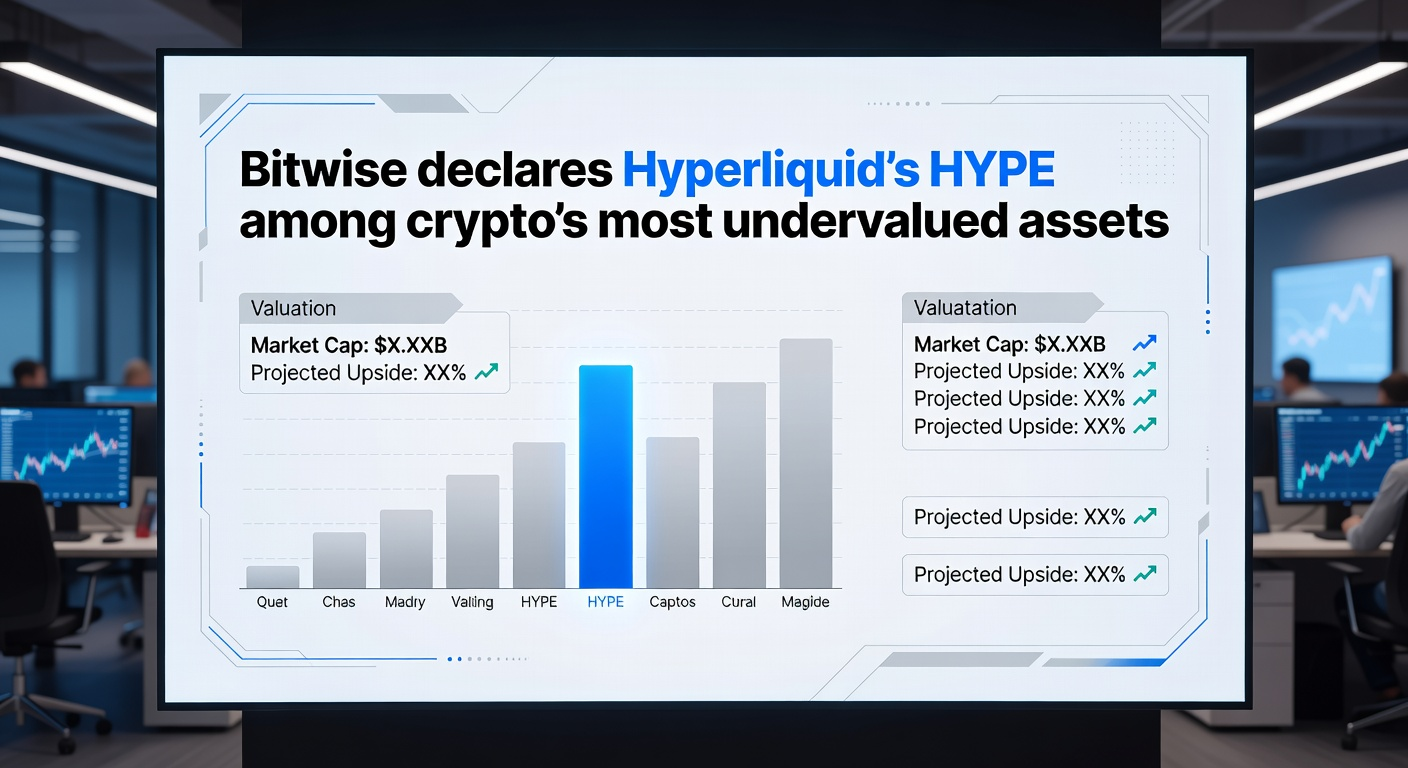
Bitwise argues that the market is substantially undervaluing Hyperliquid’s HYPE token, saying investors are still treating the project as a narrow crypto derivatives venue rather than a fast-scaling “super-app” for global financial trading.
In a Tuesday blog post, Bitwise CIO Matt Hougan said the market is making “two errors” when pricing Hyperliquid: it is underestimating the size of the opportunity the platform is targeting, and it is failing to recognize how directly HYPE captures value from platform usage.
The HYPE token rose more than 8% over the past 24 hours, trading near $48.70 at the time of reporting.
“Today’s prices suggest you’re being offered the second at the cost of the first,” Hougan said, referring to Hyperliquid’s ambition to expand beyond crypto into equities, commodities, foreign exchange, and prediction markets.
Hyperliquid began as a decentralized perpetual futures exchange but has since expanded its scope into multiple asset classes, including equities and commodities, alongside prediction markets. This broader push has helped drive increased trading activity and rising investor interest.
Hougan estimates the platform is generating between $800 million and $1 billion in annualized revenue and is valued at roughly 10–14 times its buyback stream. He noted this compares favorably with traditional exchanges such as Robinhood (HOOD) and CME Group (CME), which trade at higher valuation multiples despite slower growth.
Bitwise also emphasized Hyperliquid’s tokenomics model, where 99% of trading fees are used to buy back HYPE. According to Hougan, this structure creates a direct link between platform activity and token value, aligning growth with tokenholder returns.
The report further pointed to a more supportive U.S. regulatory environment, suggesting that signals from SEC Chair Paul Atkins indicate growing openness to “super-app” financial platforms that integrate multiple markets under one system.
Finally, Hyperliquid’s partnerships with Coinbase (COIN) and Circle (CRCL) are seen as reshaping stablecoin economics by shifting value away from issuers and toward trading platforms. Analysts suggest this could strengthen demand for HYPE while potentially putting pressure on Circle’s profit margins.