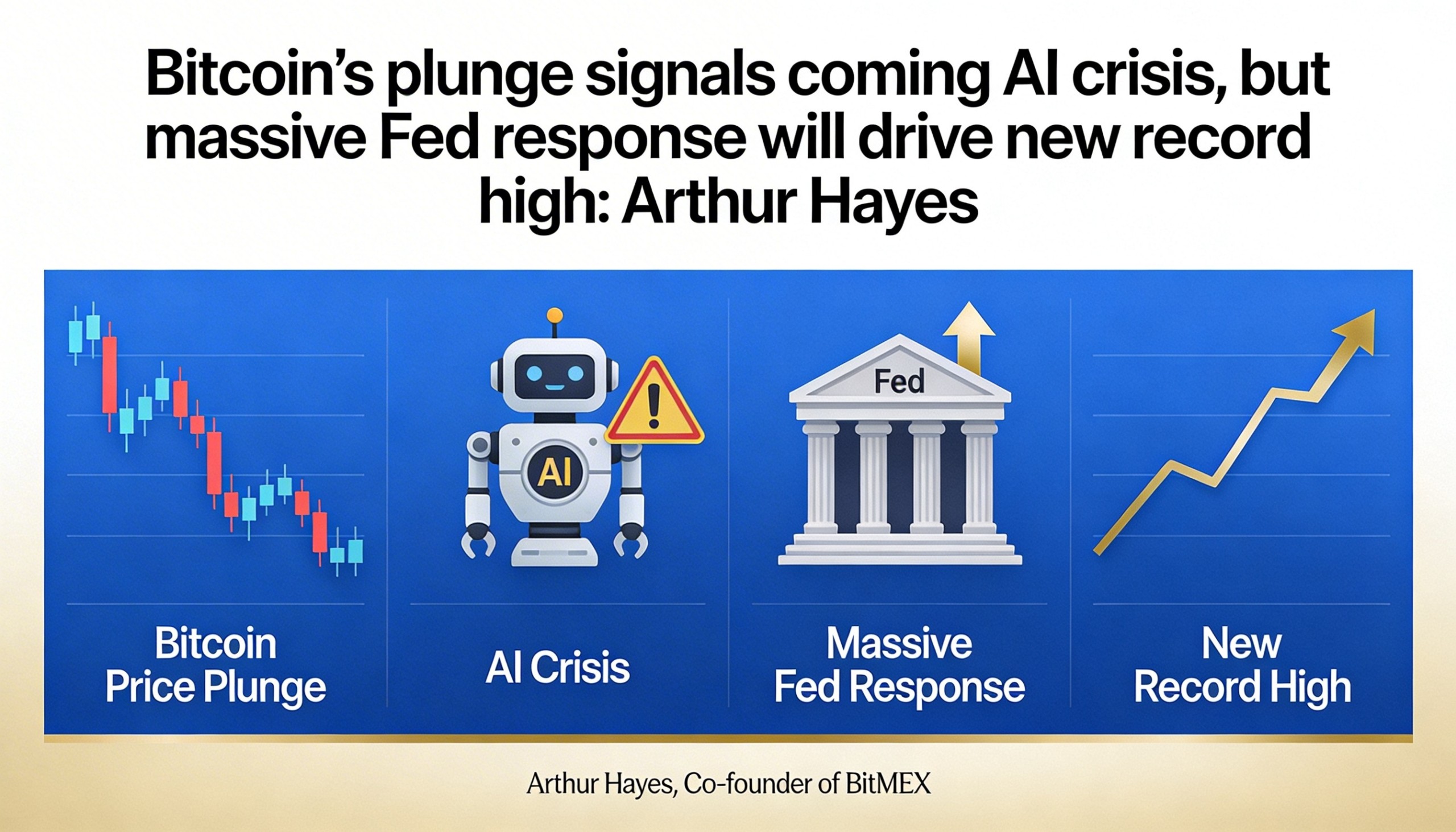
The rapid acceleration of artificial intelligence could lead to large-scale job displacement, setting off a wave of consumer defaults and banking stress, according to Arthur Hayes.
The BitMEX co-founder believes bitcoin’s roughly 52% drop from its October peak is acting as an early warning signal. BTC has fallen from $126,000 to around $67,000, even as the Nasdaq has held relatively steady. That divergence, Hayes argues, suggests crypto markets are pricing in a looming credit contraction that equity investors have yet to confront.
In his essay, “This Is Fine,” Hayes describes bitcoin as the “global fiat liquidity fire alarm,” calling it the most responsive freely traded asset to changes in credit conditions. In his view, the sharp repricing in BTC reflects expectations of significant debt destruction across the financial system.
Hayes models a scenario in which AI displaces 20% of America’s 72.1 million knowledge workers. The resulting income shock could trigger an estimated $557 billion in consumer credit and mortgage defaults — roughly half the scale of the 2008 financial crisis. Regional banks, he warns, would be especially vulnerable, potentially forcing the Federal Reserve into unprecedented monetary expansion.
Although deflationary shocks initially weigh on risk assets, Hayes contends they ultimately benefit bitcoin once policymakers intervene. Markets tend to price in the damage first, he argues, before rebounding sharply as central banks inject liquidity.
He also highlighted gold’s recent outperformance versus bitcoin as another cautionary indicator. A rising gold price alongside a slumping BTC, he suggests, signals growing fears of a deflationary, risk-off event within the U.S.-led financial order.
Should the Fed respond with emergency liquidity measures similar to those deployed during the March 2023 regional banking turmoil, Hayes expects bitcoin to surge from its lows. Prolonged money printing, in his view, would drive the cryptocurrency to new record highs.
Still, he warned that further downside could precede any rescue. Political dysfunction or delayed action may allow bitcoin to slip below $60,000 before policymakers step in. Until then, Hayes advises investors to remain liquid, avoid leverage and wait for clear confirmation of renewed monetary easing before aggressively re-entering risk markets.