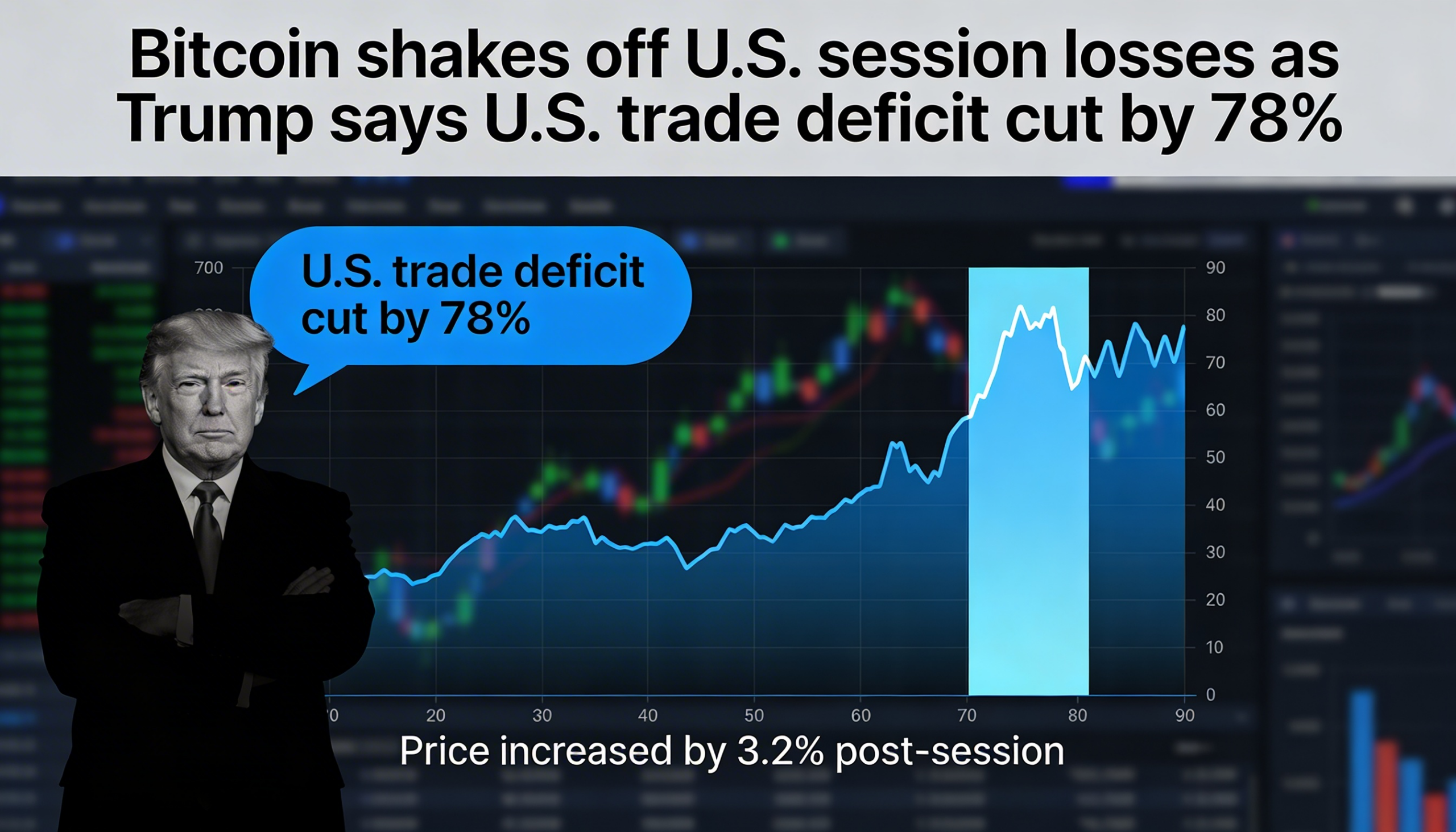
Bitcoin saw another bout of volatility Thursday, recovering toward $67,000 after slipping to roughly $65,900, as traders evaluated renewed trade rhetoric from U.S. President Donald Trump.
In a Truth Social post late Wednesday, Trump said tariffs had reduced the U.S. trade deficit by 78% and suggested the balance could flip into surplus later this year — a development he described as unprecedented in decades. For financial markets, however, the focus was less on the specific figure and more on what tougher trade policy could mean for inflation and interest rates.
Tariffs often function like a tax on imports, raising the risk of higher consumer prices. That dynamic can complicate the Federal Reserve’s policy path, especially if inflation proves sticky. When investors anticipate rates staying elevated for longer, the U.S. dollar typically strengthens, tightening financial conditions and pressuring risk assets.
Bitcoin has increasingly traded as a macro-sensitive asset in recent weeks, responding to shifts in liquidity and rate expectations rather than crypto-specific headlines.
Recent economic data has also kept trade in the spotlight. In early January, the U.S. trade deficit narrowed sharply to about $29.4 billion — the smallest gap since 2009 — reflecting softer imports, firmer exports and the ripple effects of tariff threats. Economists cautioned, however, that a sizable portion of the improvement stemmed from fluctuations in non-monetary gold flows, which can distort monthly readings.
If tariff discussions evolve into sustained dollar strength and tighter financial conditions, bitcoin’s rebounds may struggle to hold. If the rhetoric fades, market attention is likely to shift back to capital flows, leverage and whether bulls can reclaim recently lost technical levels.