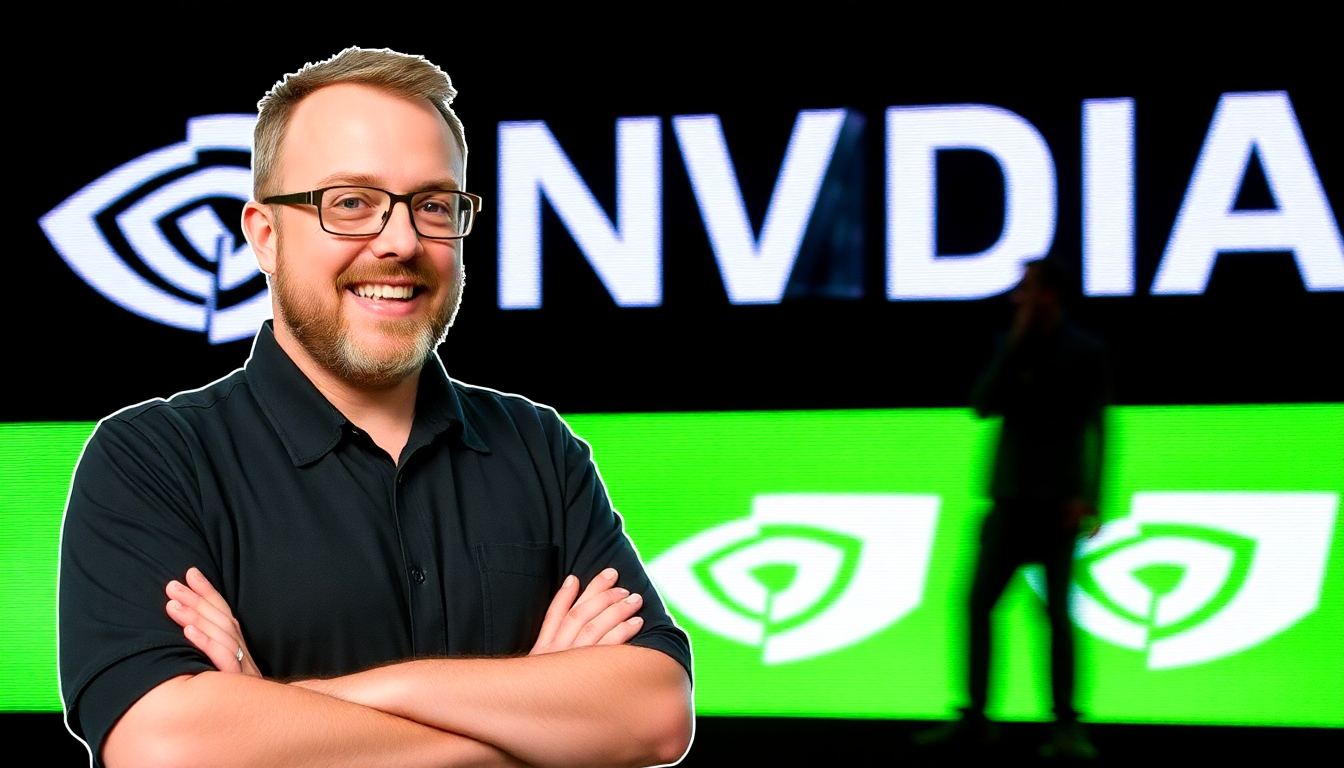
Nvidia may be approaching a significant change in leadership, with Rene Haas emerging as a possible candidate to succeed longtime CEO Jensen Huang. Haas, who played a major role in expanding Arm’s position in the global semiconductor industry, is reportedly attracting attention as Nvidia considers its future leadership.
Bloomberg reported that Nvidia’s executive search firm had contacted Haas while exploring potential candidates for the chief executive position. Haas previously worked at Nvidia for seven years before joining Arm in 2013. He eventually became Arm’s CEO in 2022, leading the company’s expansion as demand for AI computing infrastructure accelerated.
If selected, Haas would bring experience from both semiconductor companies to Nvidia’s next stage of development. His appointment could also influence the direction of the AI industry and its relationship with cryptocurrency markets.
Could a leadership transition accelerate investment in artificial intelligence, and how might that affect Bitcoin and other digital assets?
Rene Haas Expanded Arm’s AI Business. Could Nvidia Be His Next Challenge?
Haas has considerable experience with Nvidia, having managed its computing products division from 2006 to 2013. His previous position gave him firsthand knowledge of the company before it became a dominant force in artificial intelligence.
His achievements at Arm provide another indication of his potential leadership approach. During fiscal 2026, Arm generated $4.92 billion in revenue, increasing from $4.01 billion a year earlier. Its profit before tax also rose from $756 million to $960 million.
The company has gradually expanded beyond its traditional business of licensing chip designs. In March 2026, Arm introduced its own AGI CPU for AI data centers, signaling a broader ambition to participate directly in the growing AI infrastructure market.
Arm’s technology has an extensive global reach, powering more than 99% of smartphones sold worldwide. Its processor designs are also used in computing systems operated by major cloud providers and Nvidia.
Under Haas’s leadership, Arm has strengthened its position in the artificial intelligence industry. At Nvidia, he could face a different challenge: expanding an already dominant business into additional areas of computing and infrastructure.
Nvidia’s current financial performance provides a substantial foundation for such an expansion. The company reported $115.8 billion in quarterly revenue in its latest results, including $107.6 billion from its data center business. This represented a 103% increase in total revenue compared with the previous year.
Meanwhile, Nvidia’s next-generation Vera Rubin platform has entered production, with shipments already beginning. A potential new CEO would inherit an exceptionally strong growth business but would also need to determine how Nvidia should maintain its competitive position as the AI industry evolves.
If Haas brings the same expansion strategy he implemented at Arm, Nvidia could increase its focus on complete computing platforms, advanced data center systems, and broader AI applications.
Such a move could encourage another round of investment across the technology sector, benefiting businesses involved in semiconductor manufacturing, cloud computing, AI infrastructure, and potentially the wider digital asset ecosystem.