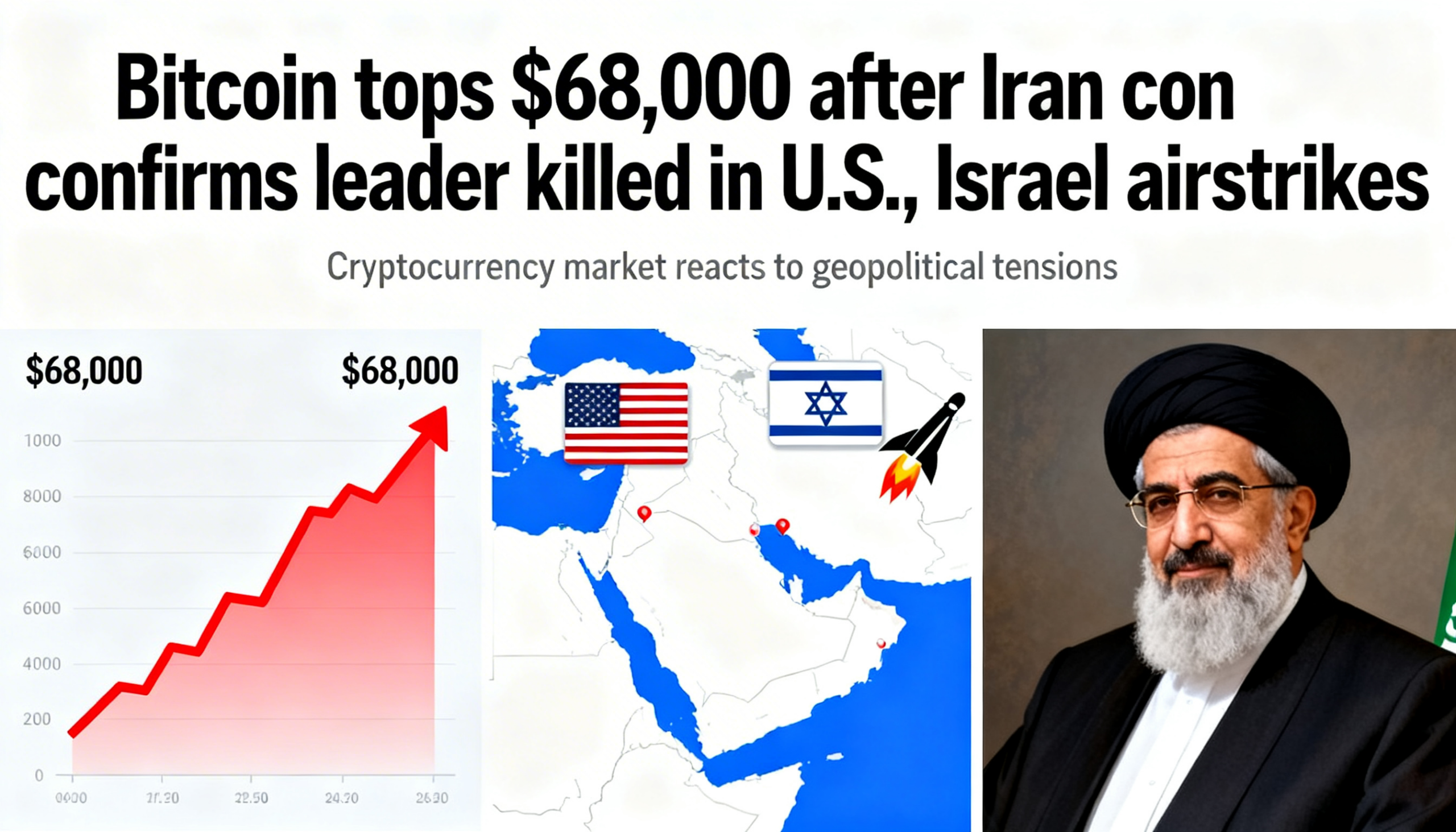
Bitcoin surrendered its overnight gains during Asian trading as escalating hostilities in the Middle East rattled global markets, pressuring U.S. equity futures and pushing oil prices sharply higher.
The cryptocurrency briefly approached $67,000 before retreating below $66,000. S&P 500 e-mini futures slid 1.4% to 6,790 after earlier rising to 6,857, signaling a broader shift toward risk-off positioning. Crude oil extended its rally, climbing more than 7% worldwide on concerns over potential supply disruptions.
Open-source intelligence accounts on X reported that Iran expanded missile strikes against U.S. assets in Bahrain, Kuwait and the UAE. The widely followed War & Gore OSINT account said Tehran also targeted the Ras Tanura refinery operated by Saudi Aramco, the world’s largest oil producer.
Separately, the BBC reported that Israel launched another wave of airstrikes in Lebanon, striking positions linked to Hezbollah, Iran’s most prominent regional ally.
Stephen Coltman, head of macro at 21Shares, said Iran’s approach appears designed to raise the economic and strategic costs for Washington by widening the conflict and threatening key energy infrastructure. Disruptions to oil and LNG flows through the Strait of Hormuz could intensify inflationary pressures globally.
“Wars tend to be inflationary, lifting commodity prices and expanding fiscal deficits,” Coltman said, adding that while markets initially reacted with a sell-off, sustained instability could ultimately support perceived store-of-value assets such as bitcoin.
The latest escalation began over the weekend after U.S. and Israeli forces carried out strikes described as preemptive efforts to limit Iran’s missile capabilities and nuclear program. Despite the heightened geopolitical risk, bitcoin has yet to show consistent safe-haven demand, instead trading in step with broader market sentiment.