Here’s a more concise and polished rewrite:
Indian regulators continue to take a hardline stance on cryptocurrencies, even as governments and financial institutions worldwide move toward broader adoption of digital assets and blockchain technologies.
From tokenization and stablecoins to strategic crypto reserves, global momentum is building. In contrast, Indian authorities remain skeptical, holding firmly to their long-standing opposition.
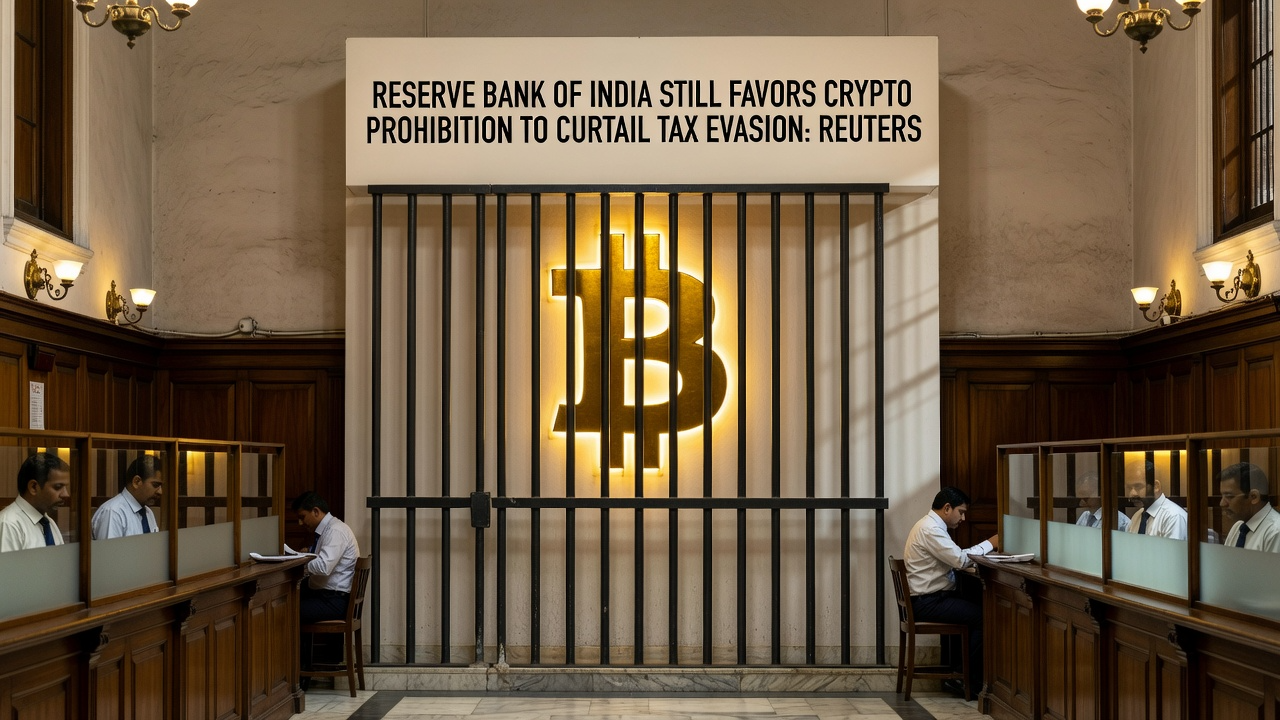
Government documents reviewed by Reuters indicate that the Reserve Bank of India (RBI) still supports a policy “leaning toward prohibition,” while tax officials are increasingly concerned about major compliance gaps.
This position persists despite India’s sizable crypto base—nearly 39 million users out of a population of around 1.5 billion—holding an estimated $2.1 billion in digital assets as of May.
The RBI has consistently argued that banks and financial institutions should be restricted from holding, trading, or offering exposure to cryptocurrencies and privately issued stablecoins, citing risks to financial stability.
It has also opposed rupee-backed stablecoins, not just dollar-pegged ones, warning they could undermine seigniorage and create stress during market volatility.
CoinDesk has reached out to the RBI for comment.
Meanwhile, tax authorities are alarmed by underreporting. In the financial year ending March 2023, fewer than one in four of the 645,000 individuals who traded crypto reported their gains.
Monitoring transactions on offshore exchanges and peer-to-peer platforms—especially those conducted in rupees—remains difficult, complicating enforcement and taxation.
Since the Supreme Court struck down the RBI’s 2018 banking ban, crypto has operated in a regulatory grey area in India—neither fully prohibited nor clearly governed. A draft bill proposed in 2021 to ban private cryptocurrencies was never introduced, and policymaking has repeatedly stalled.
Although the government has spoken about balancing innovation with risk control, recent internal documents suggest that key agencies are still reluctant to fully embrace digital assets.
India’s cautious approach is also tied to macroeconomic vulnerabilities. Its heavy reliance on energy imports and ongoing current account deficits expose it to external shocks. This was evident when rising tensions with Iran drove oil prices higher, increasing import costs and pushing the rupee to record lows.
Authorities worry that widespread crypto adoption could accelerate capital outflows, bypass traditional banking systems, and worsen the country’s external imbalance.