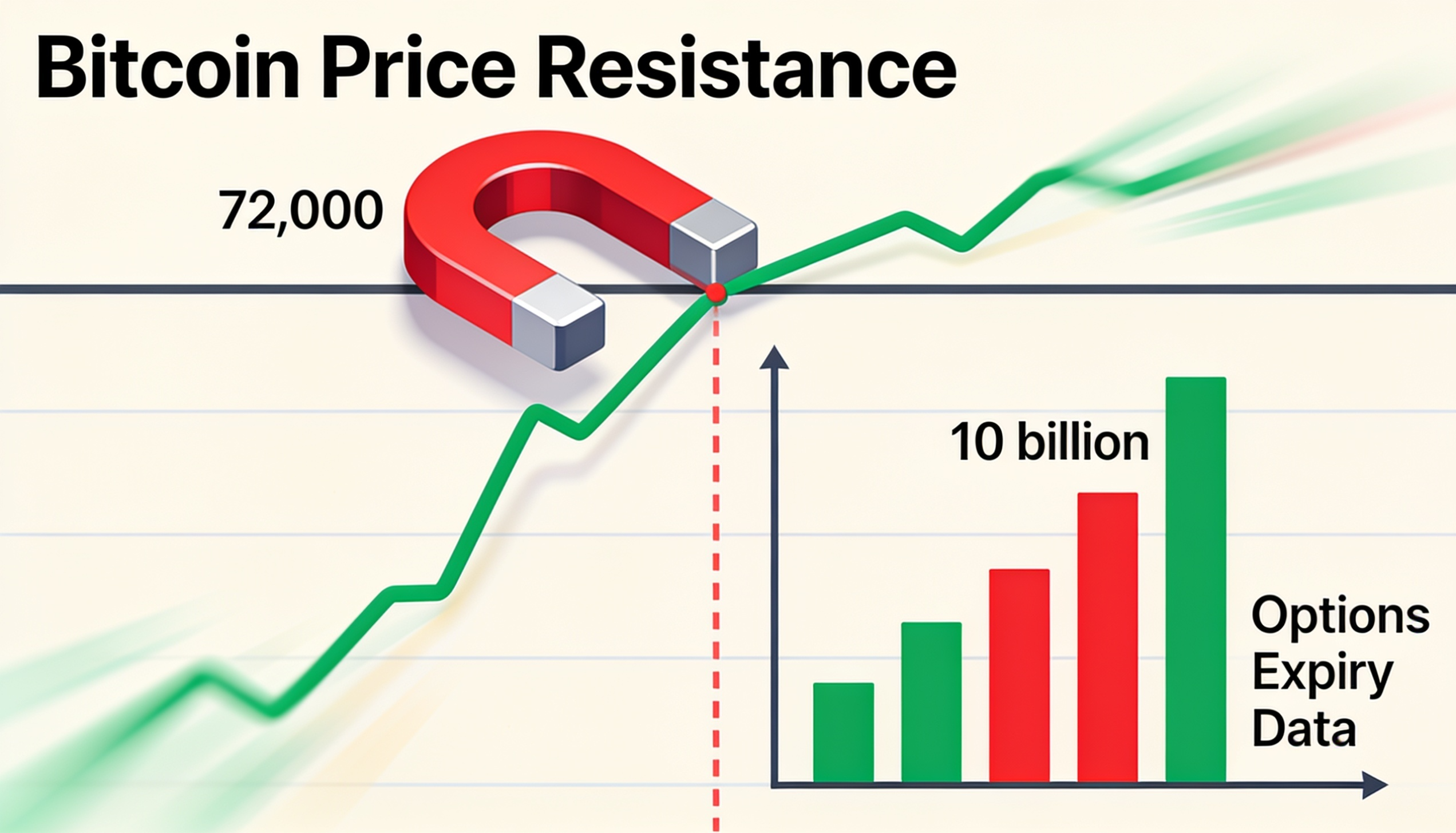
Bitcoin’s drop heading into Friday’s quarterly options expiry has again put the “max pain theory” under scrutiny, as prices remain well below the widely watched $72,000 level.
The asset’s slide to roughly $61,700 comes ahead of about $10 billion in options expiring on Deribit at 8:00 ET Friday, reviving debate over whether prices tend to gravitate toward max pain levels before major settlements.
Max pain is the price at which options buyers—those holding calls and puts—would suffer the largest losses at expiry, while sellers of those contracts would benefit the most.
According to the theory, option writers may have an incentive to steer spot prices toward that level ahead of expiry, creating a “pinning” effect around max pain. The idea gained popularity after BTC often appeared to drift toward those levels during several 2020–2021 expiries.
But this week’s decline from around $67,000 to below $60,000 has moved prices further away from the $72,000 max pain mark, undermining that narrative.
The move aligns with skepticism from market veterans such as Tony Stewart of Pelion Capital, who has long argued that max pain has limited real influence in crypto markets.
Recent expiries have also shown little evidence of consistent price pinning, further weakening confidence in the theory.
“Friday’s expiry is something to keep an eye on with $10.2 billion rolling off Deribit with max pain at $72,000, well above spot,” said Wintermute OTC trader Jasper De Maere. “Despite the narrative, recent expiries haven’t mechanically pinned prices the way people expect.”
Even so, the expiry remains a major market event, with Deribit describing it as one of the largest liquidity rollovers of the year, a dynamic that can still contribute to elevated volatility as positions are closed or rolled forward.