Here’s another rewritten version with a more concise and publication-ready style:
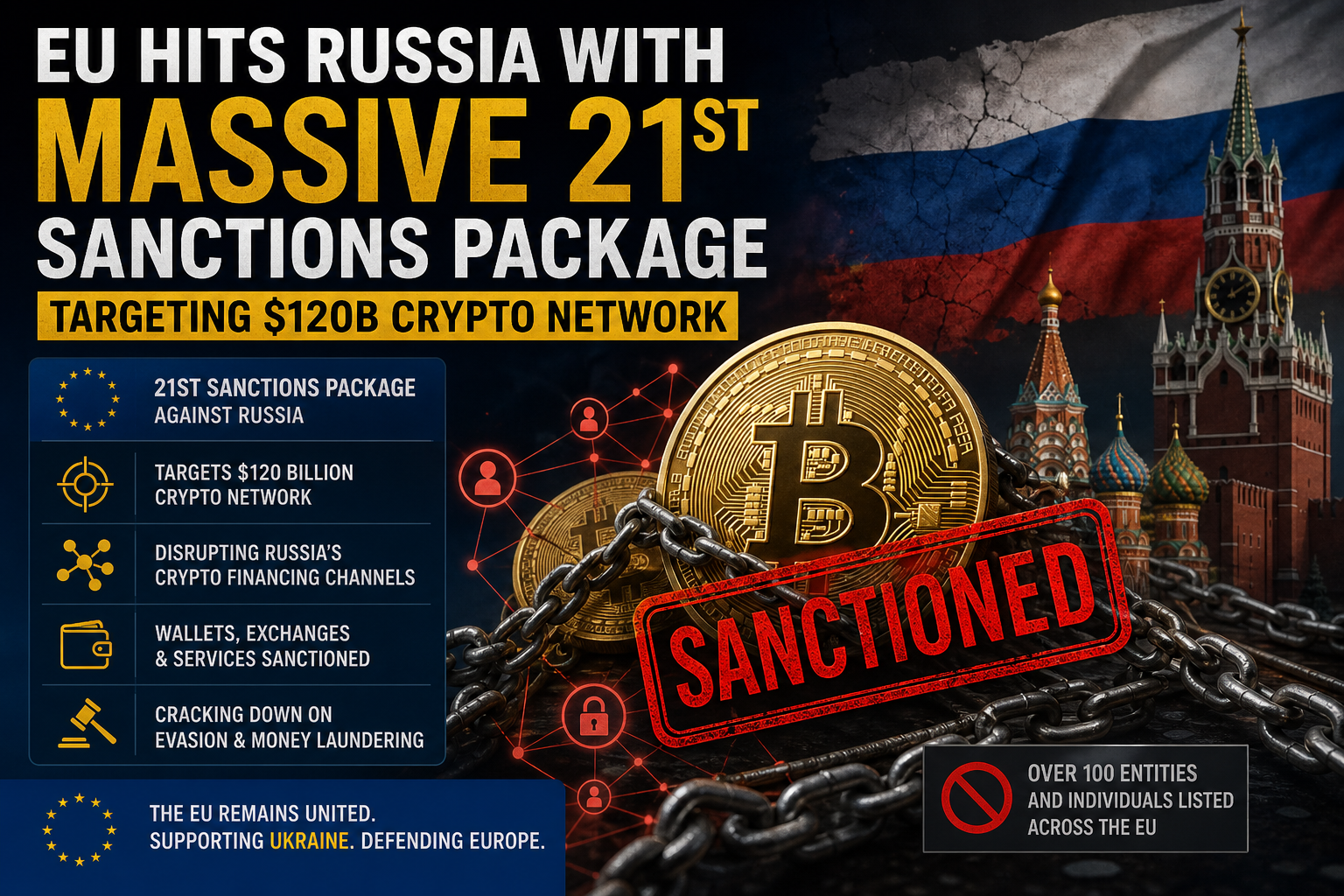
The European Union is weighing its first-ever ban on crypto service providers outside the bloc as part of its latest sanctions package against Russia. The measure would target 14 crypto-related platforms, although the EU has not yet revealed their identities.
The bloc’s 21st sanctions package expands restrictions linked to the cross-border A7 network, adding four entities connected to its operations, including its newer ties in Africa.
The EU is also extending its transaction ban to 14 unnamed crypto service providers based in Georgia, Panama, the United Arab Emirates, the Marshall Islands, Kyrgyzstan, and Belarus.
According to blockchain analytics firm Chainalysis, the A7 network—where the A7A5 stablecoin operates—has processed nearly $120 billion in activity. The network has been identified as a system designed to help Russia navigate around international sanctions.
“We are targeting more than 100 banks and crypto operators, over 40 ships connected to Russia’s shadow fleet, and multiple oil refineries in Russia and Belarus,” said Kaja Kallas in a statement.
The EU’s previous sanctions package, announced in April, was described as its largest action against Russia in two years. Officials noted at the time that Moscow was increasingly turning to cryptocurrencies for international transactions.
The new measures come shortly after Russia’s State Duma approved its first comprehensive crypto regulatory framework, with most rules scheduled to take effect on September 1. The legislation establishes guidelines for crypto exchanges, custodians, digital asset providers, traders, and investors.
The latest sanctions package introduces a new option for the EU to impose a complete third-country ban on crypto asset service providers. This would allow the bloc to block transactions between EU-based entities and foreign crypto platforms suspected of supporting Russia’s sanctions evasion efforts.
Alongside the crypto measures, the EU is also freezing assets and restricting access to funds for 94 banks and major financial institutions. Transaction bans will also be expanded to include 33 additional Russian credit and financial organizations.