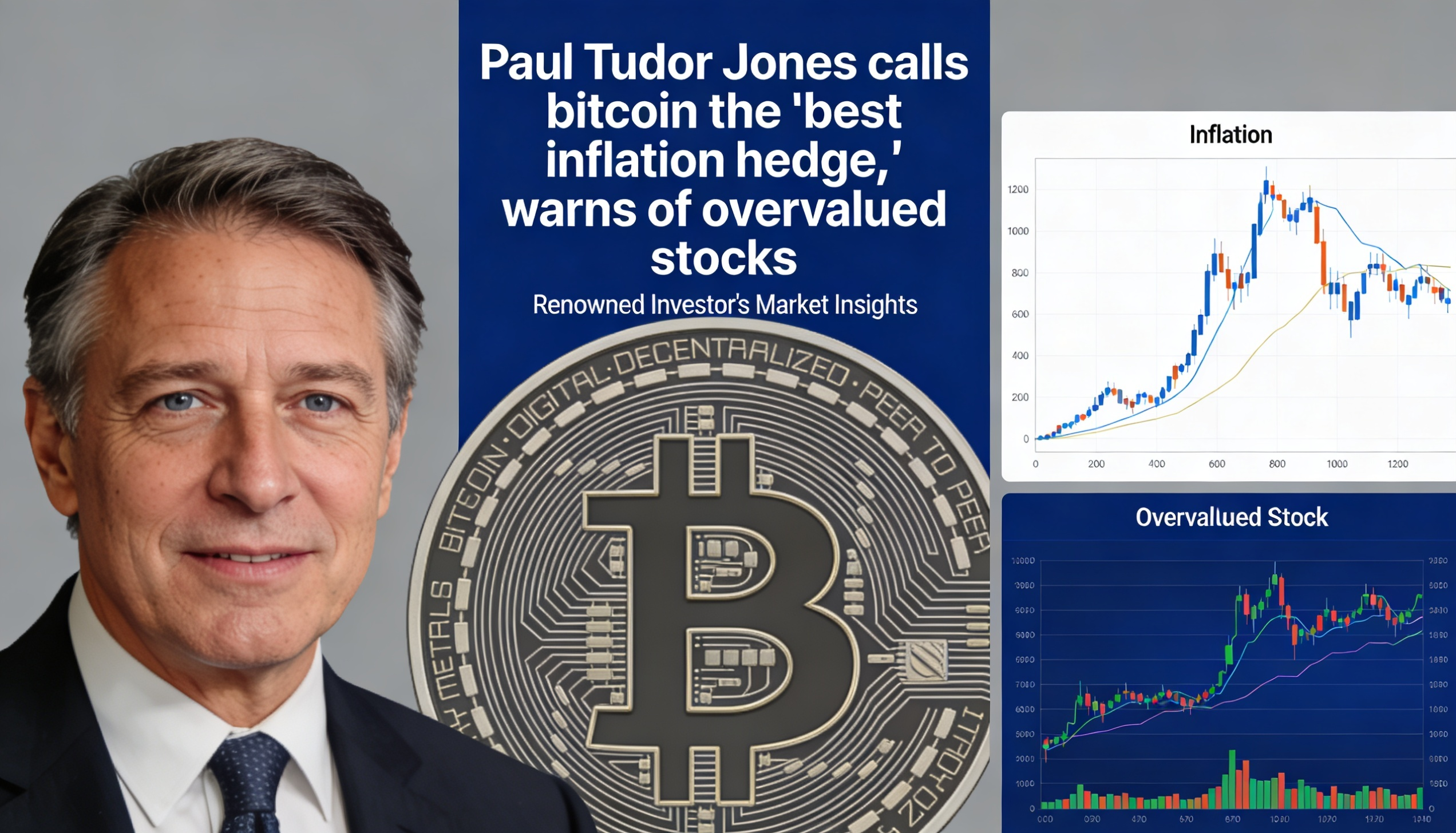
Billionaire investor Paul Tudor Jones is doubling down on bitcoin as the most effective safeguard against inflation, even as he warns that stocks may deliver little to no returns over the next decade.
Speaking on the Invest Like the Best podcast, Jones pointed to bitcoin’s fixed supply as its defining strength. Unlike gold, which sees new supply added each year through mining, bitcoin is capped — a feature he believes makes it the superior store of value in an inflationary environment.
“Bitcoin is the best inflation hedge — better than gold,” Jones said, underscoring its built-in scarcity.
He tied that conviction to past market cycles, particularly the flood of fiscal and monetary stimulus following the 2020 pandemic crash. In such environments, Jones said, inflation-driven trades tend to thrive — and bitcoin stood out as one of the clearest beneficiaries.
“When that kind of intervention hits the system, inflation trades become obvious,” he said.
While optimistic on bitcoin, Jones struck a far more cautious tone on equities. He warned that current valuations leave investors exposed to weak long-term performance, suggesting returns over the next decade could be flat or even negative.
“At these levels, it’s going to be really hard to make money in stocks,” he said.
Jones also pointed to structural headwinds that could weigh on equities, including a wave of high-profile IPOs — such as SpaceX and major artificial intelligence firms — along with a slowdown in share buybacks. Together, these factors could increase the supply of stocks and pressure prices.
Although he stopped short of calling the market a bubble, Jones highlighted the ratio of U.S. stock market capitalization to GDP as a key warning signal. The metric remains near historic highs, approaching levels seen during the dot-com boom.
With the ratio hovering above 250%, he suggested the market is stretched and vulnerable to a pullback.
“We’re heavily exposed to equities,” Jones said, cautioning that any correction could have broader consequences.
A significant downturn, he added, wouldn’t just impact investors — it could ripple through the wider economy. Because a portion of government tax revenue is tied to capital gains, falling markets could shrink fiscal inflows, widen deficits, and place additional strain on bond markets.
“If capital gains go away, deficits expand and bonds get hit,” he said.
Jones warned that such dynamics could trigger a negative feedback loop, where declining markets weaken economic conditions, which in turn deepen financial stress.
“It feeds on itself,” he said. “And that’s what makes it troubling.”