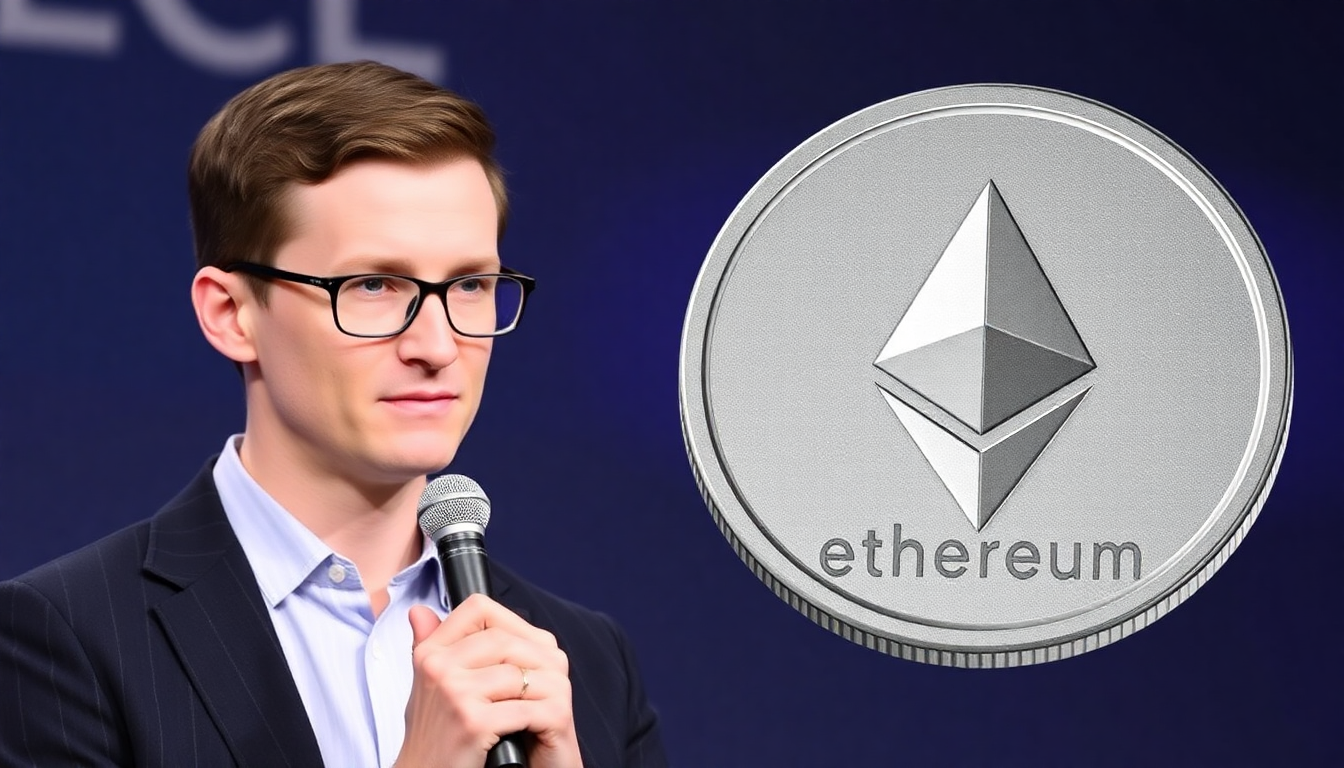
Ethereum co-founder Vitalik Buterin believes the growing preference among younger investors for stocks and digital assets over property could help ease the pressure on housing markets. However, he argues that cryptocurrencies must develop one of the main characteristics that makes real estate appealing as an investment: long-term stability.
Buterin points out that the housing market encourages property owners to favor rising prices, despite the broader benefits of making homes more affordable. Digital assets could offer an alternative for younger investors, but much of the crypto industry remains driven by speculative trading.
“We need the equivalent of those good properties that housing investment has, for modern digital assets,” Buterin said in a post on X.
His statement highlights a major challenge for Ethereum and the wider crypto sector: Can blockchain technology move beyond short-term trading activity and provide a reliable foundation for building wealth over time?
Ethereum’s Development Roadmap Could Address Buterin’s Stability Concerns
Ethereum’s roadmap places increasing emphasis on improving transaction efficiency, network performance, and overall resilience. The upcoming Glamsterdam upgrade is currently progressing through devnet testing, with a mainnet deployment targeted for Q4 2026. Its proposed changes aim to increase the network’s processing capabilities without compromising decentralization.
Among the most notable improvements is Enshrined Proposer-Builder Separation (ePBS). The feature integrates the coordination between block proposers and builders into Ethereum’s core protocol, reducing the network’s dependence on external relays and introducing fewer additional trust assumptions.
The upgrade also includes Block-Level Access Lists, which are designed to allow independent transactions to execute simultaneously rather than requiring the network to process them one after another.
These improvements could make Ethereum more capable of supporting sophisticated financial applications while preserving access for independent node operators. Such progress is essential if digital assets are to become credible long-term financial instruments instead of remaining heavily influenced by speculative activity.
Ethereum already hosts several financial services that could contribute to this transition, including staking, stablecoins, decentralized lending, and tokenized real-world assets. These applications give investors different ways to hold, transfer, and generate utility from digital assets without relying entirely on frequent market trading.
Still, greater network capacity alone will not guarantee stability. Strong security standards, reliable applications, and sustainable financial products will also be necessary.
Discover: The Crypto Presales This Q4 2026
Ethereum’s Long-Term Development Has Yet to Boost ETH Price
Despite its technological progress, Ethereum’s market performance remains under pressure. ETH is trading slightly above $1,800, approximately 63% below its record high of $4,946. This weakness highlights the difference between the network’s long-term development goals and the market’s current assessment of its native cryptocurrency.
Importantly, increased Ethereum network usage does not automatically translate into stronger ETH demand. More applications, transactions, and financial activity can expand the ecosystem without necessarily producing a proportional improvement in the token’s market value.
ETH nevertheless remains essential to the network. It is used to pay transaction fees, secure the blockchain through staking, and serve as collateral throughout the decentralized finance sector. Continued adoption of staking services, stablecoins, and tokenized assets could therefore support its longer-term investment outlook.
Buterin’s argument ultimately addresses a much broader issue than housing affordability. He wants the crypto industry to create financial products that encourage sustainable ownership and long-term value creation rather than constant speculation.
Ethereum already possesses several elements needed to support this vision, including proof-of-stake consensus, programmable smart contracts, and an established decentralized financial ecosystem.
The network’s upcoming upgrades could further strengthen this foundation by improving performance and reliability. However, Ethereum still faces the challenge of proving that its technology can support dependable financial products at scale and make digital assets more attractive to long-term investors.