Here’s a fresh rewrite with a sharper, market-focused tone:
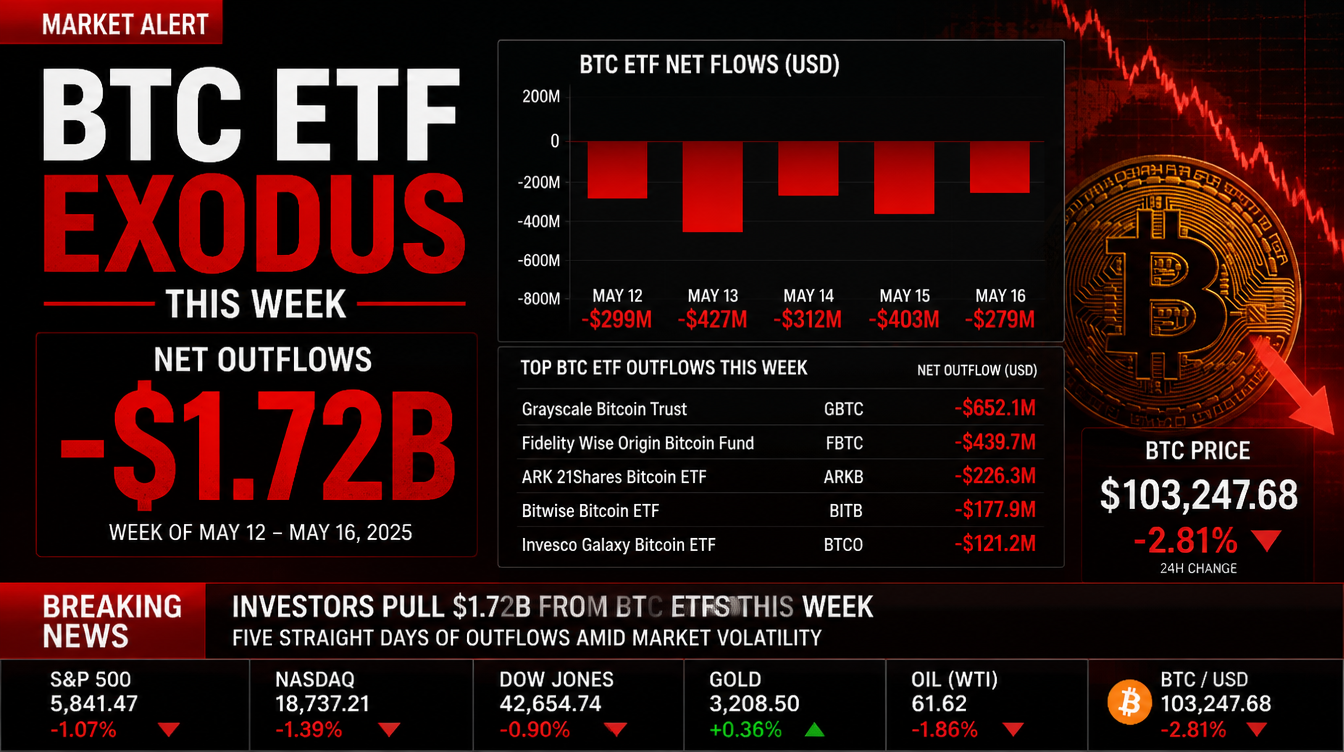
Bitcoin ETF Outflows Spike to $1.72B, Marking Deepest Weekly Pullback in Over a Year
U.S. spot Bitcoin ETFs recorded $1.72 billion in outflows for the week ending June 6, 2026—the largest weekly withdrawal since April 2025. The heavy redemptions came as Bitcoin tumbled nearly 18%, its worst weekly decline of the year, before staging a modest 1.5% rebound to around $63,100.
The outflows were driven by a confluence of macro and geopolitical pressures. Escalating tensions between Iran and Israel pushed oil prices higher by more than 5%, while a stronger-than-expected U.S. jobs report revived fears of prolonged Federal Reserve tightening. At the same time, institutional investors continued reallocating capital toward AI-focused equities, further reducing exposure to crypto within multi-asset portfolios.
Attention has now shifted from the scale of the outflows to their implications—whether this wave of selling is nearing exhaustion or signaling a broader reassessment of Bitcoin’s place in institutional strategies.
ETF Flow Dynamics and Macro Forces: What the Data Reveals
Data from SoSoValue shows the $1.72 billion outflow extends a four-week streak of redemptions, bringing total withdrawals to $5.4 billion. As a result, total spot Bitcoin ETF assets under management have fallen from roughly $104 billion to $94 billion.
A key driver within this trend is BlackRock’s IBIT, which accounted for $440.3 million of the $483.8 million in net outflows on June 1 alone—highlighting its central role as the primary vehicle for institutional selling.
IBIT remains a critical gauge of institutional sentiment, reflecting allocation decisions by large, risk-managed investors since the launch of spot Bitcoin ETFs in early 2024.
Macro conditions have been the dominant force behind the selling. Rising inflation expectations, elevated Treasury yields, and diminishing prospects for near-term Fed rate cuts have weighed heavily on non-yielding assets like Bitcoin. As the opportunity cost of holding BTC increases, institutional investors have opted to reduce exposure via ETFs, the most liquid instruments available.
Friday’s strong labor data reinforced expectations of a “higher-for-longer” rate environment, intensifying pressure on crypto markets.
Meanwhile, Galaxy Research analysts suggest the current outflows reflect a structural repositioning rather than short-term hedging activity, pointing to a more meaningful shift in institutional behavior.
Compounding this trend is the ongoing rotation into AI-related stocks. Companies such as Nvidia, Marvell, and Micron delivered strong gains before pulling back, offering alternative high-growth opportunities. This shift, combined with persistently high Treasury yields, has acted as a sustained headwind for Bitcoin throughout the current outflow cycle.