Here’s a tighter, more streamlined rewrite:
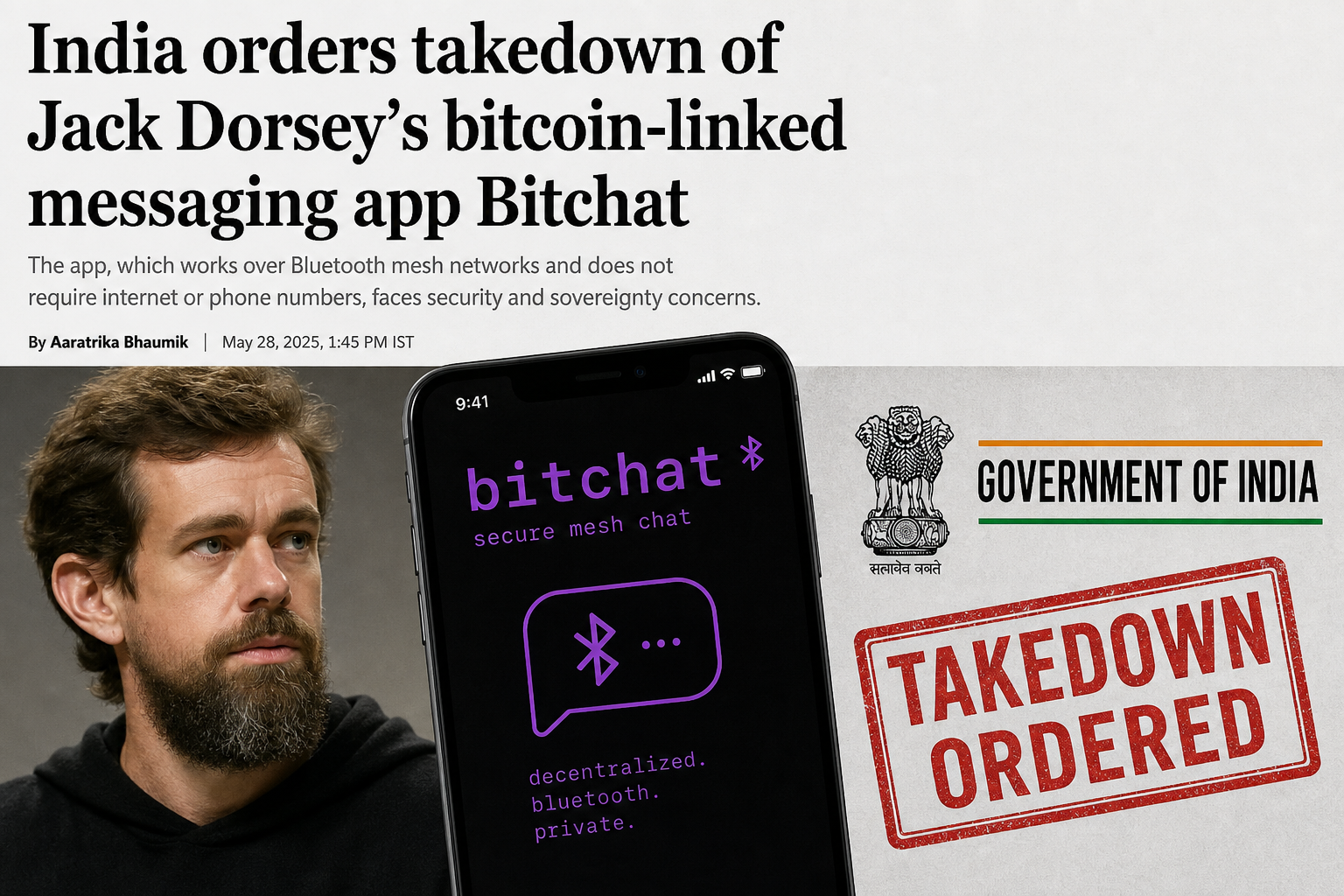
India has moved to block Bitchat, an offline Bluetooth mesh messaging app that enables encrypted communication and even Bitcoin transactions without internet access. The action comes as protesters in Delhi use similar mesh-based tools to stay connected during repeated network shutdowns.
The order was issued by the Indian Cyber Crime Coordination Centre, which operates under the Home Ministry. It directed GitHub to remove three repositories مرتبط with the app within three hours under Section 79(3)(b) of the IT Act.
Authorities argue that Bitchat’s design—no registration, phone numbers, or centralized logs—makes it difficult for law enforcement to track, intercept, or investigate communications.
Developed by Jack Dorsey, Bitchat is a decentralized, open-source app that uses Bluetooth mesh networks to pass encrypted messages directly between nearby devices, eliminating the need for servers or internet connectivity.
It also supports offline Bitcoin transfers by relaying transactions from device to device until one reconnects and broadcasts them to the network—allowing payments to function during blackouts or shutdowns.
That same feature set, praised by Bitcoin supporters for enabling permissionless activity, is now drawing regulatory scrutiny.
Since July 20, protests across India—led by student groups critical of a national exam scandal—have been met with police force and repeated internet suspensions. In response, demonstrators have turned to mesh networking apps like Bitchat to maintain coordination when connectivity is cut.
The government’s takedown order directly targets one of the tools enabling that workaround.
It remains unclear whether GitHub complied within the deadline. As of Friday, the app was still accessible on major app stores.
Even if removed, open-source software like Bitchat is often replicated across multiple platforms, making it difficult to fully eliminate.