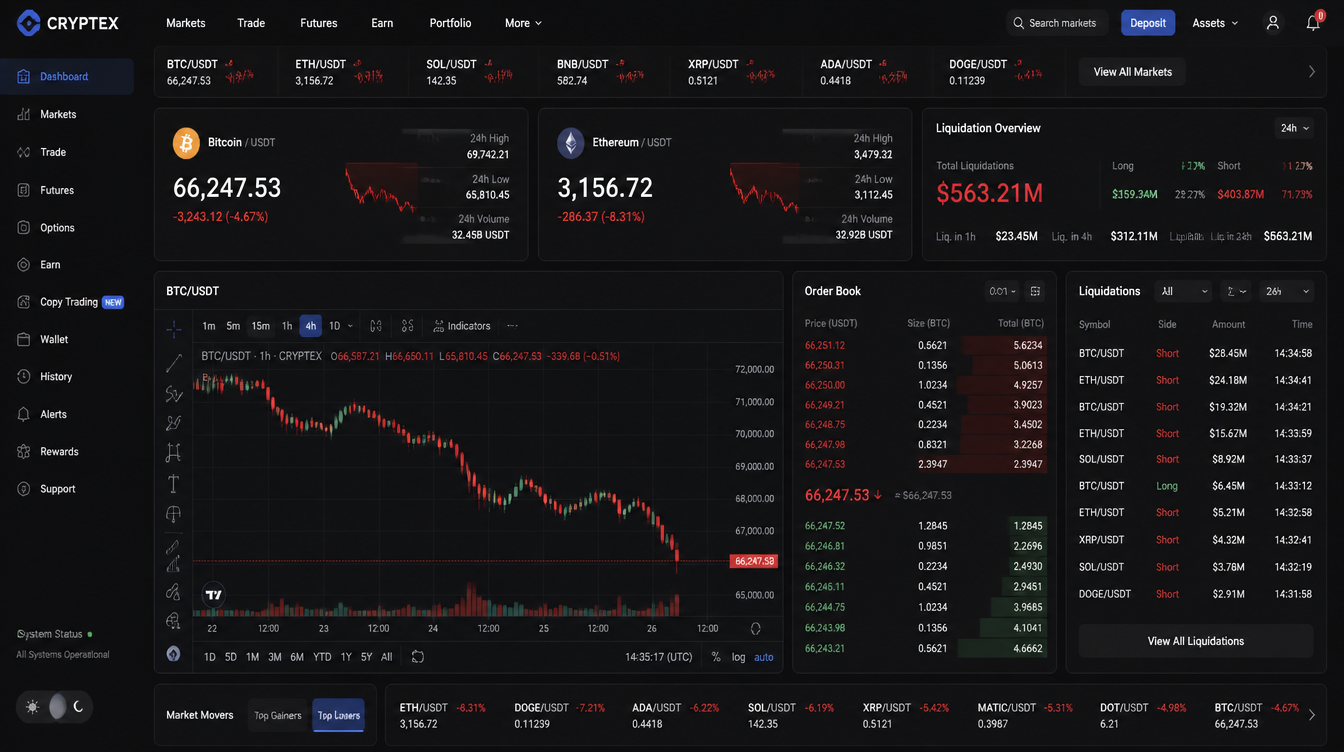
Bitcoin and ether led a sharp wave of liquidations as crypto markets retreated under growing macroeconomic pressure, triggering the largest long wipeout in over three months.
Data from Coinglass shows that $563 million in leveraged bullish positions were liquidated across futures markets in the past 24 hours. The scale of the unwind marks the biggest since Feb. 6, when bitcoin’s drop toward $60,000 erased $1.84 billion in long bets.
By comparison, short liquidations totaled just $65 million, reflecting how heavily traders had leaned bullish ahead of the decline.
Ether accounted for the largest share of liquidations at $244 million, followed by bitcoin at $160 million. Together, the two assets dominated the broader market deleveraging, as falling prices forced exchanges to close out overleveraged long positions.
Such liquidations occur when traders’ collateral is no longer sufficient to cover losses on leveraged trades. While leverage can magnify upside during rallies, it also accelerates losses when markets move lower, often resulting in cascading sell pressure.
That dynamic played out as both bitcoin and ether weakened, dragging the wider crypto market down with them.
Bitcoin has declined about 5% over the past week, slipping below the $77,000 mark, while ether has fallen 10% to trade near $2,129.
The sell-off is largely being attributed to macroeconomic headwinds, particularly stronger-than-expected U.S. inflation data that pushed Treasury yields higher. Rising bond yields globally have reduced demand for risk assets, especially non-yielding ones like cryptocurrencies.
The downturn comes despite a supportive regulatory backdrop in the U.S., where the Clarity Act recently advanced through the Senate Banking Committee, signaling progress toward a comprehensive framework for digital assets.
Even so, the latest market reaction underscores the dominance of macro forces. While regulatory developments may strengthen the long-term outlook, they remain insufficient to counter near-term pressure from tightening financial conditions and weakening risk appetite.