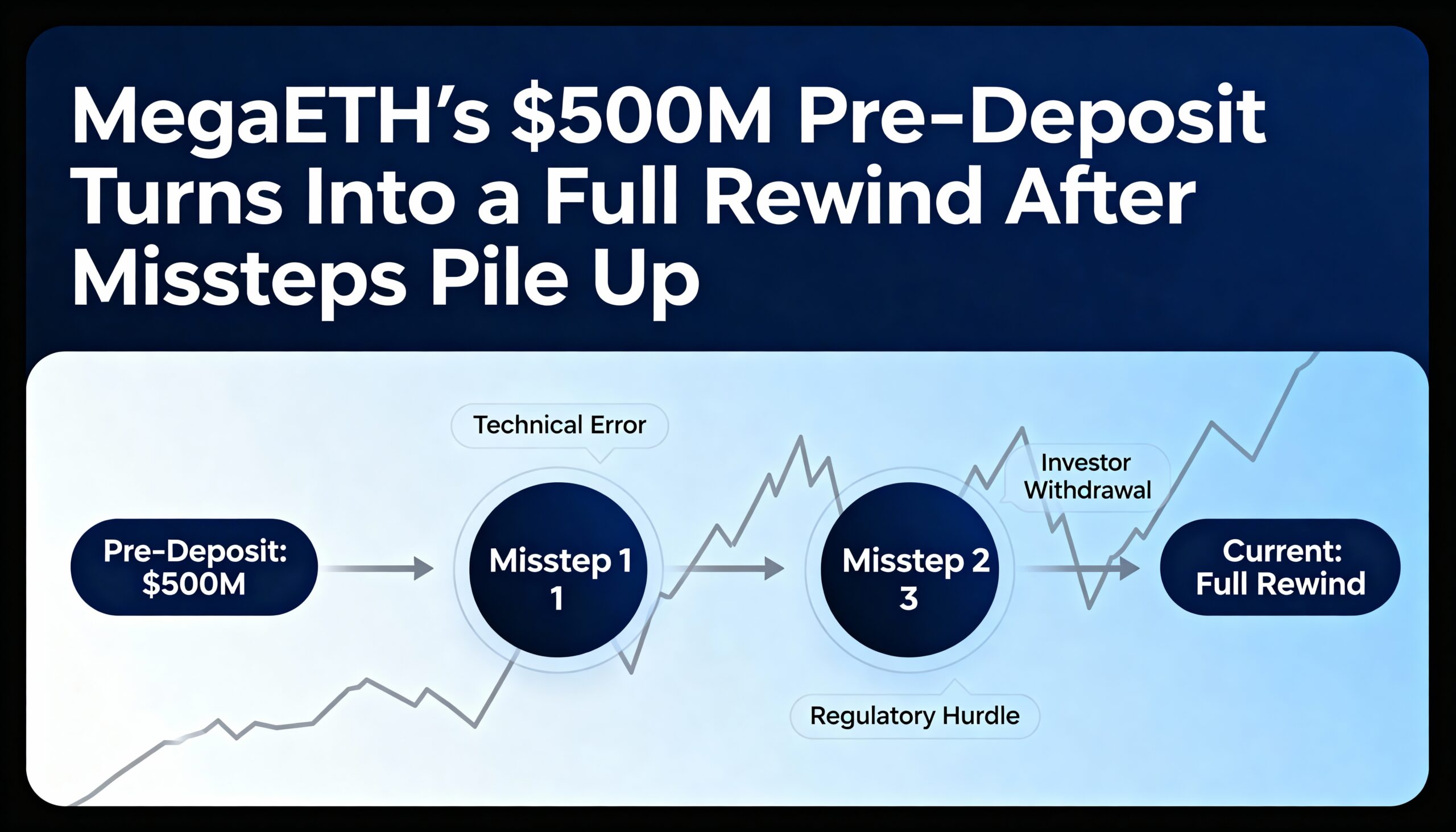
MegaETH is rolling back its pre-launch “Pre-Deposit Bridge” and will refund all user deposits after a series of technical glitches and operational missteps turned the initiative into a chaotic fundraising attempt. The campaign had been designed to preload liquidity for USDm, the stablecoin that will support the Frontier mainnet, but execution issues quickly overshadowed its intended purpose.
The team acknowledged that the rollout “was sloppy” and that user expectations around the $250 million cap were misaligned with MegaETH’s internal goal of pre-seeding collateral to guarantee 1:1 USDm conversion at mainnet. Refunds will be processed through a new smart contract currently under audit.
Issues emerged immediately. Transactions failed at launch because the contract contained an incorrect SaleUUID, prompting a 4-of-6 multisig update. Meanwhile, Sonar, the KYC provider, applied an unexpectedly strict rate limit that blocked large portions of user traffic. The team spent more than twenty minutes identifying and resolving the problem.
When deposits resumed, they opened at a randomized time. Users actively refreshing the page quickly filled the $250 million cap, leaving those relying on official updates locked out. An attempt to raise the cap to $1 billion was executed roughly 30 minutes early by an external party, due to the mechanics of Safe multisig transactions. Subsequent efforts to lower the cap to $400 million and $500 million failed as deposits outpaced updates, forcing the team to suspend the process entirely amid unresolved KYC issues.
MegaETH stressed that no funds were ever at risk and said depositors would be recognized later, though specific details were not disclosed. The USDm and USDC-to-USDm conversion bridge will reopen ahead of Frontier mainnet launch under a more controlled framework.
The incident increases pressure on MegaETH to demonstrate that the remainder of its roadmap and infrastructure are production-ready and can avoid similar operational failures in the future.