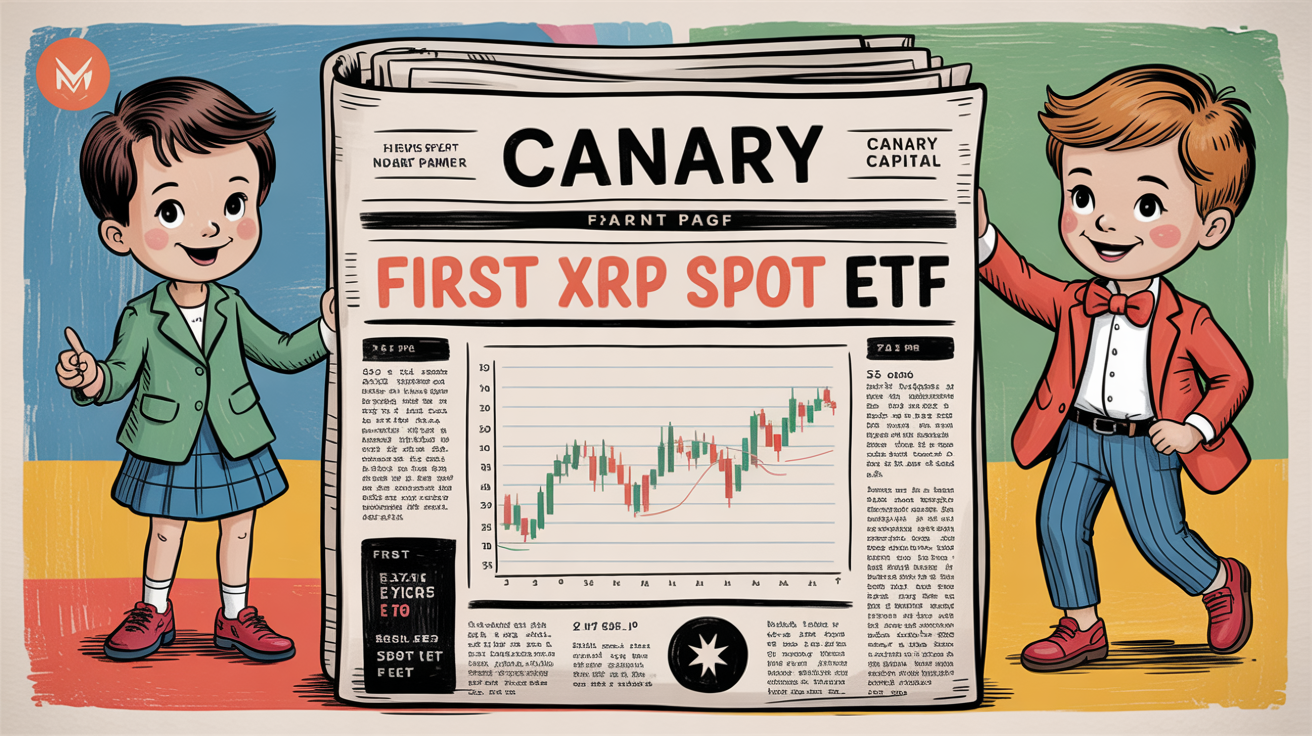
XRP has taken another step into mainstream finance with the debut of its first spot exchange-traded fund, marking the latest expansion of regulated crypto investment products beyond bitcoin, ether, and—most recently—solana.
Canary Capital has rolled out the XRPC Spot XRP ETF, which begins trading today on the Nasdaq. The fund offers direct exposure to XRP’s market performance while operating under the Investment Company Act of 1940, a regulatory structure that requires enhanced investor protections and the use of a qualified custodian for the underlying digital assets.
XRP’s market momentum has been firm heading into the launch. The token is trading around $2.46, posting modest 24-hour gains and climbing roughly 7.8% over the past week, outperforming most other major cryptocurrencies during a period of consolidation across the broader market.
Canary Capital joins several major issuers—Bitwise, Franklin Templeton, and 21Shares among them—that had filed for similar products. However, Canary became the first to secure clearance to bring a spot XRP ETF to investors.
“XRP remains one of the most established and widely utilized digital assets globally,” said Steven McClurg, CEO of Canary Capital. “Making XRP accessible through a regulated ETF removes key adoption barriers and supports the continued advancement of a blockchain network we believe will have an important role in future financial infrastructure.”
Although XRP does not follow a proof-of-stake consensus model, the ETF incorporates mechanisms that allow investors to gain access to blockchain-related reward features typically associated with staking or yield participation. This places the fund within an emerging class of next-generation digital asset ETFs designed to marry straightforward price exposure with on-chain economic incentives.
The launch of XRPC underscores the rapid evolution of the U.S. crypto ETF market. As regulators and issuers experiment with new ways to translate blockchain-native features into compliant investment products, traditional investors now have more avenues than ever to engage with digital assets through familiar brokerage platforms—without the complexities of direct token management.