Here’s another clean rewrite with a more compact, financial-news tone:
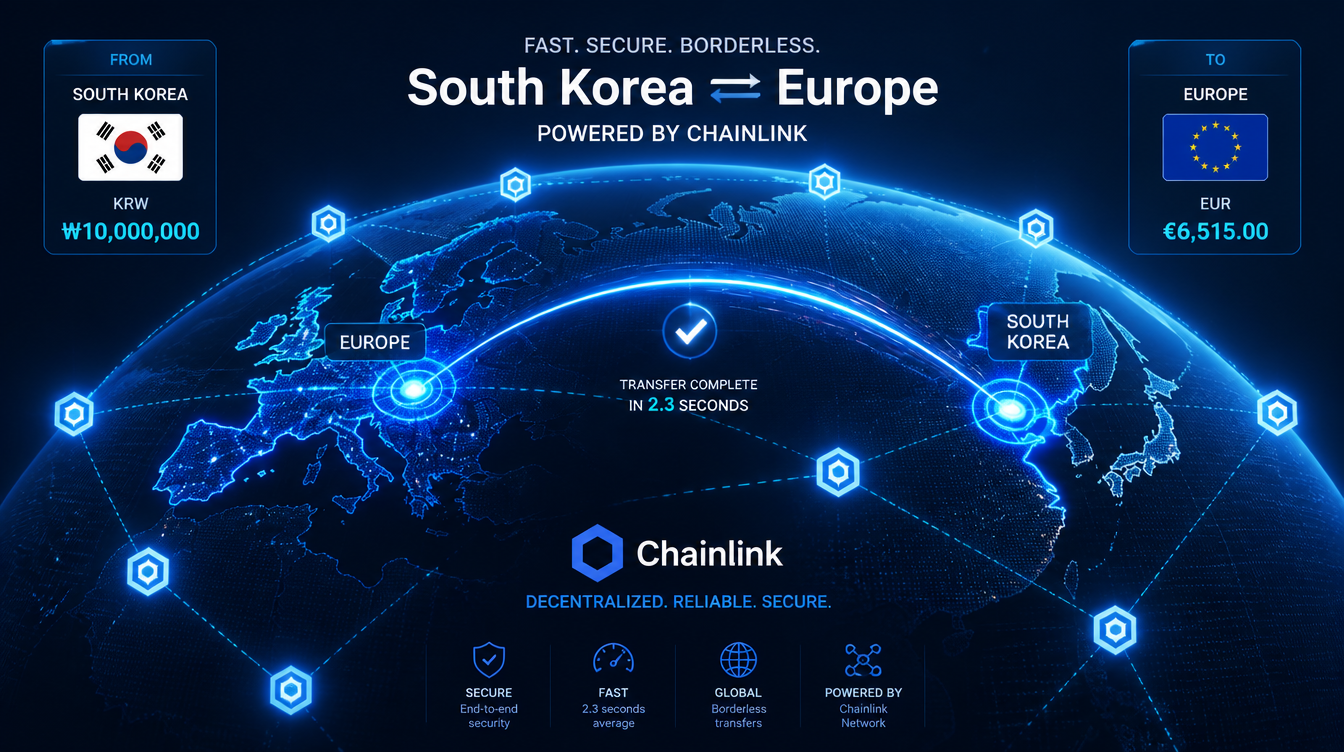
The initiative, dubbed Project Pangea, aims to use stablecoins to settle multimillion-dollar foreign exchange trades between Europe and South Korea in near real time.
Chainlink said it has joined a banking consortium collectively overseeing more than $10 trillion in assets, with the goal of enabling real-time, stablecoin-based cross-border FX settlement within the next year.
According to Niki Ariyasinghe, Chainlink’s vice president for Asia-Pacific and the Middle East, the coalition seeks to reshape global FX markets. Alongside Chainlink, participants include Qivalis, a euro stablecoin consortium backed by 37 European banks, and UniKA, a Korean banking group representing more than 10 commercial lenders.
The project explores replacing the traditional T+2 settlement cycle with near-instant T+0 settlement using regulated euro- and Korean won–pegged stablecoins, which are designed to maintain a 1:1 value with their underlying currencies.
A key element of the effort is testing atomic payment-versus-payment (PvP) settlement, where both sides of a trade settle simultaneously or not at all, reducing counterparty and settlement risk.
Ariyasinghe stressed that the initiative is focused on production-grade infrastructure rather than experimentation.
“This is not just a POC,” he said. “Everyone is coming in with their eyes wide open. The objective is real infrastructure… with live transactions within a legal and regulatory framework over the next 12 months.”
The project targets the Europe–South Korea trade corridor, which processes more than $150 billion in goods and services annually. It also reflects broader regional adoption trends, with industry data suggesting that Asia accounts for around 60% of global stablecoin payment activity.
Ariyasinghe said this highlights strong underlying demand, particularly in markets where traditional financial infrastructure is less developed and tokenized cash is filling operational gaps.
Rather than replacing legacy systems, Project Pangea is designed as a middleware layer. Banks will initiate transactions via SWIFT, while Chainlink’s infrastructure translates those instructions into atomic settlement operations on the Pangea L1 Network.
The system is built to integrate with SWIFT and ISO 20022 standards, allowing banks to connect to blockchain rails without overhauling existing payment infrastructure.
While some observers may view the initiative as competing with Ripple’s cross-border payment efforts, Chainlink described it as complementary rather than competitive.
“I wouldn’t necessarily describe it as a rival,” Ariyasinghe said. “We’re a technology provider. It’s about applying the tech where it creates value and scaling it organically.”
Ultimately, the goal is to reduce the time capital remains trapped in transit.
“If money is stuck for days, it can’t be used,” he said. “Reducing that delay is clearly beneficial for users.”
By shortening settlement from days to near real time, participating institutions aim to cut liquidity costs, lower risk, and improve capital efficiency in global trade flows.