Australian lawyer and XRP commentator Bill Morgan has drawn attention after calling on Ripple to reduce how much XRP it re-locks from its monthly 1 billion escrow releases. He argues that accelerating the move toward full circulation could strengthen XRP’s positioning as a hard money asset and remove the persistent supply overhang that continues to weigh on sentiment.
Although the idea itself is not new, Morgan’s latest framing sharpens the debate. Ripple’s CTO Emeritus has already made clear that there are limits to how far the company is willing to adjust its escrow mechanics.
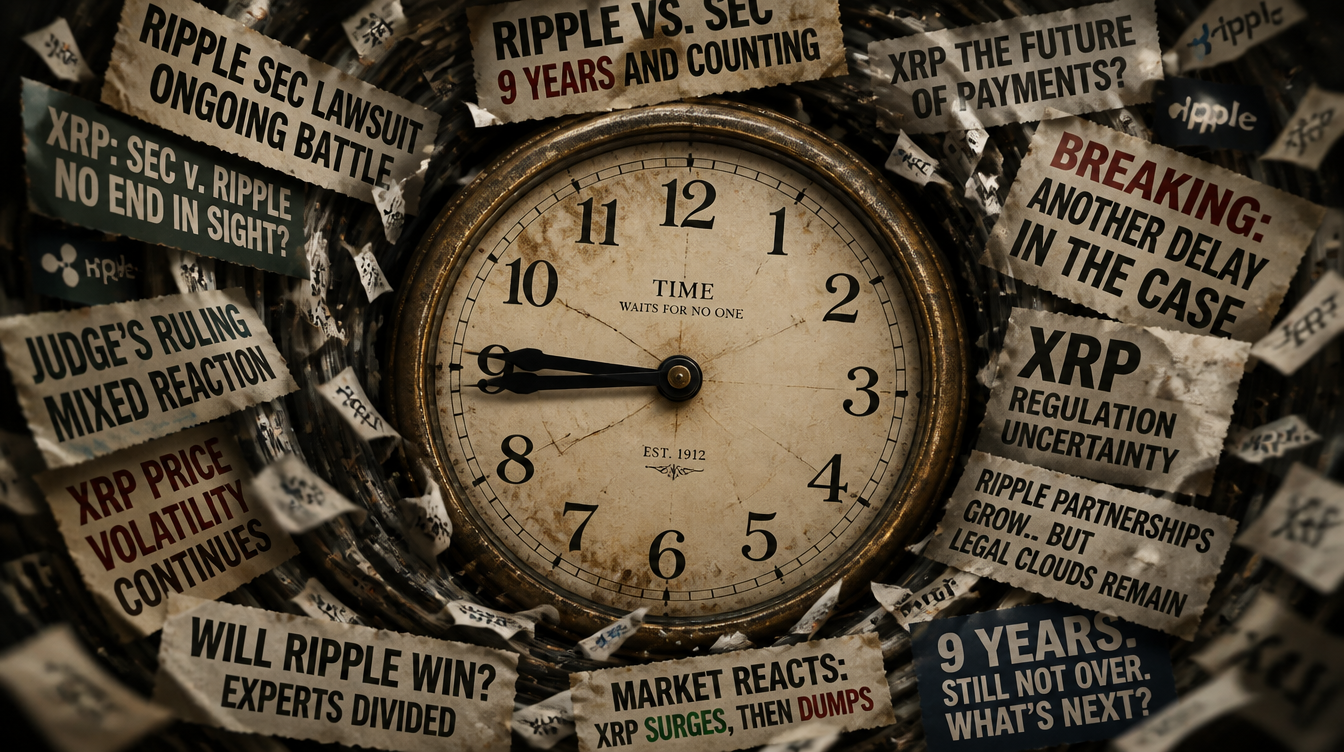
With about 32.74 billion XRP still locked and the current release structure implying a roughly nine-year path to full circulation, the underlying setup gives weight to Morgan’s argument. The issue now being debated within the XRP community is whether the perceived supply overhang is meaningful—and whether Ripple has both the incentive and flexibility to compress the timeline.
XRP escrow system and supply dynamics
Ripple introduced its escrow system in 2017 by locking 55 billion XRP into 55 separate on-ledger contracts, each releasing 1 billion XRP on the first day of each month. The goal was to ensure predictable, transparent issuance and prevent sudden supply shocks from Ripple’s holdings.
In practice, however, the system also created a rolling schedule. Ripple uses what it needs for operations and institutional distribution, then re-locks the remaining XRP into new escrow contracts, continuously extending the distribution timeline.
This structure leads to three key implications. Reducing relocks would shorten the path to full circulation. Faster release could eliminate the perception of hidden or delayed supply that some believe suppresses valuation. And a fully circulating supply is often viewed as more attractive to institutional investors who prefer clear, fixed fundamentals over uncertain future issuance schedules.
Morgan has previously defended the escrow system against claims that it is designed to suppress price. He has also pointed out that XRP still rallied from roughly $0.50 to above $3.00 between late 2024 and early 2025 even while monthly releases continued. His current argument focuses on accelerating what he considers a valid and orderly distribution process.
David Schwartz’s counterpoint
Ripple CTO Emeritus David Schwartz has not supported speeding up the escrow process and has firmly rejected more extreme proposals, including burning the escrowed XRP entirely.
Schwartz has referenced Stellar’s token burn as an example, arguing that supply reduction tends to produce only short-lived price effects rather than lasting structural value changes. He maintains that Ripple’s current approach—relocking unused XRP—is intentional and designed to provide stability and predictability.
This stance is consistent with Ripple’s long-standing escrow design, which treats controlled issuance as a feature that supports institutional adoption. Any acceleration would require Ripple to weigh potential benefits against the risk of higher short-term selling pressure—something the company has not shown willingness to accept.
Recent regulatory progress, including MiCA-related approvals in Europe, further highlights Ripple’s focus on compliance and predictable supply mechanics as part of its institutional strategy.
What the debate signals about XRP
At a deeper level, the discussion reflects two competing narratives within the XRP community. One view, aligned with Morgan, sees full circulation as a step toward a “hard money” framework where valuation is driven purely by demand. The other sees Ripple’s managed distribution as essential for maintaining institutional trust and market stability.
A third concern sits underneath both positions: if XRP supply increases faster without matching demand growth, additional tokens could translate directly into selling pressure. Current market behavior does not clearly suggest strong enough demand absorption to offset a faster release schedule without impacting price.
Ultimately, the debate highlights a broader identity question for XRP—whether controlled issuance is a strength that supports adoption, or a constraint that delays the asset’s transition into full market maturity.