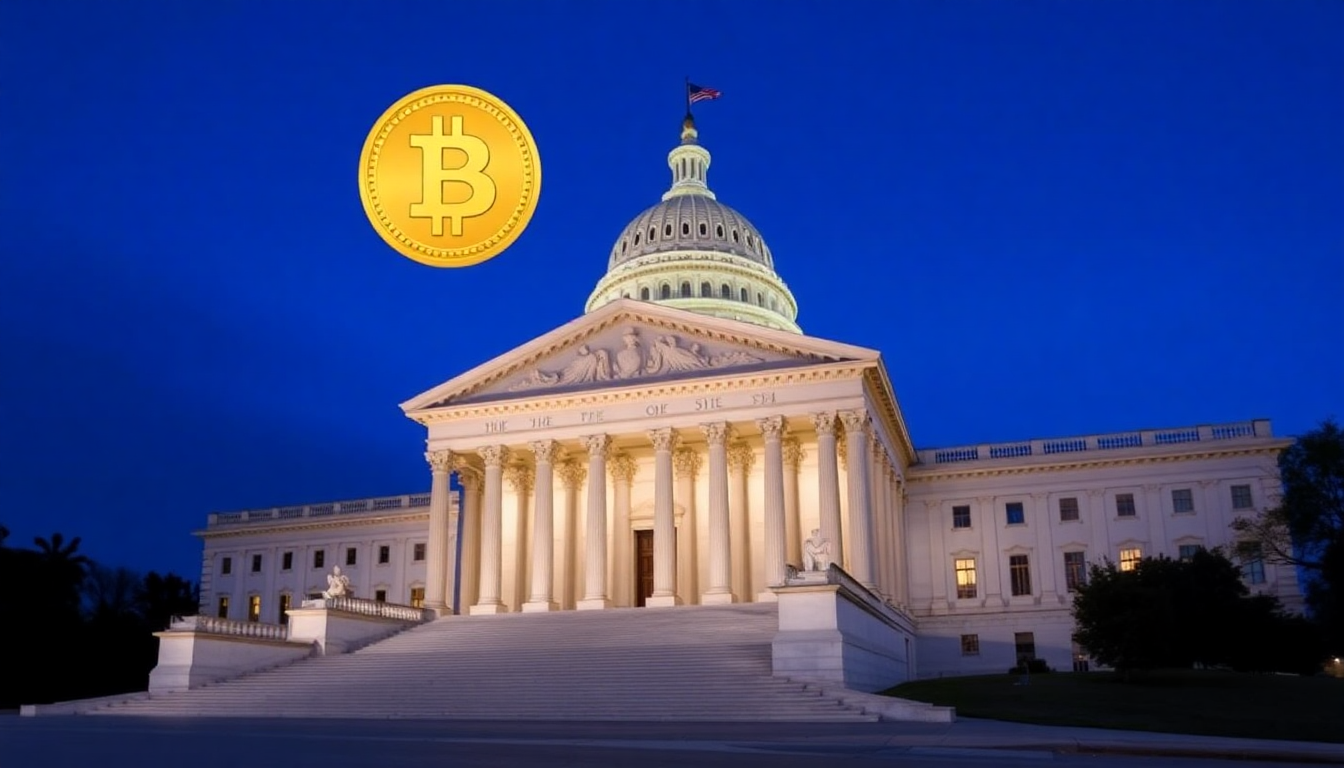
The U.S. Senate’s latest attempt to advance the Digital Asset Market Clarity Act ended without enough votes Tuesday, putting the years-long effort to establish federal rules for the crypto market on uncertain footing.
A procedural vote to move the legislation forward ended 49-50. The bill needed 60 votes to clear the Senate’s procedural hurdle, but failed to reach that threshold.
The vote followed years of lobbying and advocacy by the crypto industry, which has spent hundreds of millions of dollars seeking comprehensive market structure legislation. While the Senate process represented the furthest the effort had advanced, the latest result leaves industry lobbyists, advocacy organizations, political action committees and crypto executives facing a significant setback.
Negotiations Break Down
The legislation could now return to negotiations unless lawmakers find a difficult-to-achieve route to revive it during the final weeks of the congressional session after the November midterm elections.
The bill did not even secure a simple majority, with several Republicans joining the opposition. That result adds another obstacle to efforts to complete the legislation during the current congressional session.
Bipartisan negotiators had worked through more than 600 pages of proposed compromises. But disagreements remained over several provisions, including ethics rules designed to limit senior government officials’ financial relationships with crypto businesses.
As the November elections approached, political pressure added another layer of difficulty to the negotiations and made it harder for lawmakers to settle the remaining disputes.
Senator Cynthia Lummis, the Republican lead negotiator, delivered a final appeal on the Senate floor before the vote. She urged lawmakers to support the measure and argued that the United States should establish rules that allow it to lead in the digital economy.
The appeal was not enough to produce the 60 votes required.
Focus Shifts to U.S. Regulators
With congressional action stalled, crypto companies and investors are likely to place greater attention on initiatives already underway at the SEC and CFTC.
Both agencies have been developing policies intended to create more predictable rules for the digital asset sector. Industry participants hope those efforts can provide enough certainty to encourage businesses and investors that have delayed entering the market.
The SEC recently unveiled a proposal known as Regulation Crypto Assets, or Reg Crypto. The measure is intended to establish a pathway for crypto projects to raise capital and launch without immediately facing certain regulatory requirements.
The agency is also preparing to begin approving a limited form of securities tokenization, a development that could eventually alter the way securities transactions are conducted in the U.S.
Regulatory action, however, does not necessarily provide the permanence that legislation can offer. SEC Chairman Paul Atkins has said that new crypto rules and exemptions from registration requirements will not be durable without a statutory foundation from Congress.
Much of the SEC’s crypto policy has so far been delivered through guidance that can be changed or withdrawn relatively easily. Formal rules can also be modified through the regulatory process.
Crypto Groups Look Toward the Elections
The Senate defeat also puts the industry’s political organizations in a position where they must determine how to respond to lawmakers who opposed the bill.
Fairshake, one of the industry’s major crypto-focused super PACs, had not yet decided how it would treat senators who voted no, according to a person familiar with the group’s planning.
The decision comes ahead of the Nov. 3 election, which will determine the makeup of the next Congress and the party majorities that will have significant influence over future crypto legislation.
Crypto industry PACs are expected to continue working to elect additional lawmakers who support digital asset legislation, with the broader objective of reaching a level of congressional support that can eventually produce market structure laws.
The Clarity Act’s central objective is to establish clearer classifications for different digital assets and blockchain projects while defining the responsibilities of federal regulators. The legislation would also expand the CFTC’s authority to oversee crypto spot markets.
GENIUS Act Remains a Major Legislative Milestone
The industry’s current setback follows a significant legislative achievement earlier in 2025, when the Guiding and Establishing National Innovation for U.S. Stablecoins, or GENIUS Act, won broad bipartisan backing and became law.
The stablecoin measure came after the crypto sector endured failures and prominent scandals in 2022. Within three years, the industry had moved from that period of turmoil to securing major federal legislation governing stablecoin issuers, which regulators are now implementing.
The current Congress is scheduled to finish its work at the end of the year, with the next Congress taking office in January.
A Democratic majority in either chamber would require future crypto legislation to gain Democratic support. The House is widely expected to be a particularly important contest, while a Democratic Senate majority could place Senator Elizabeth Warren at the head of the Senate Banking Committee.
Representative Maxine Waters, if she returns to lead the House Financial Services Committee, is not expected to make crypto market structure a leading priority.
The failed vote therefore leaves the Clarity Act without a straightforward route to passage in the current session, while future efforts will depend on negotiations among lawmakers, regulatory developments and the composition of the next Congress.