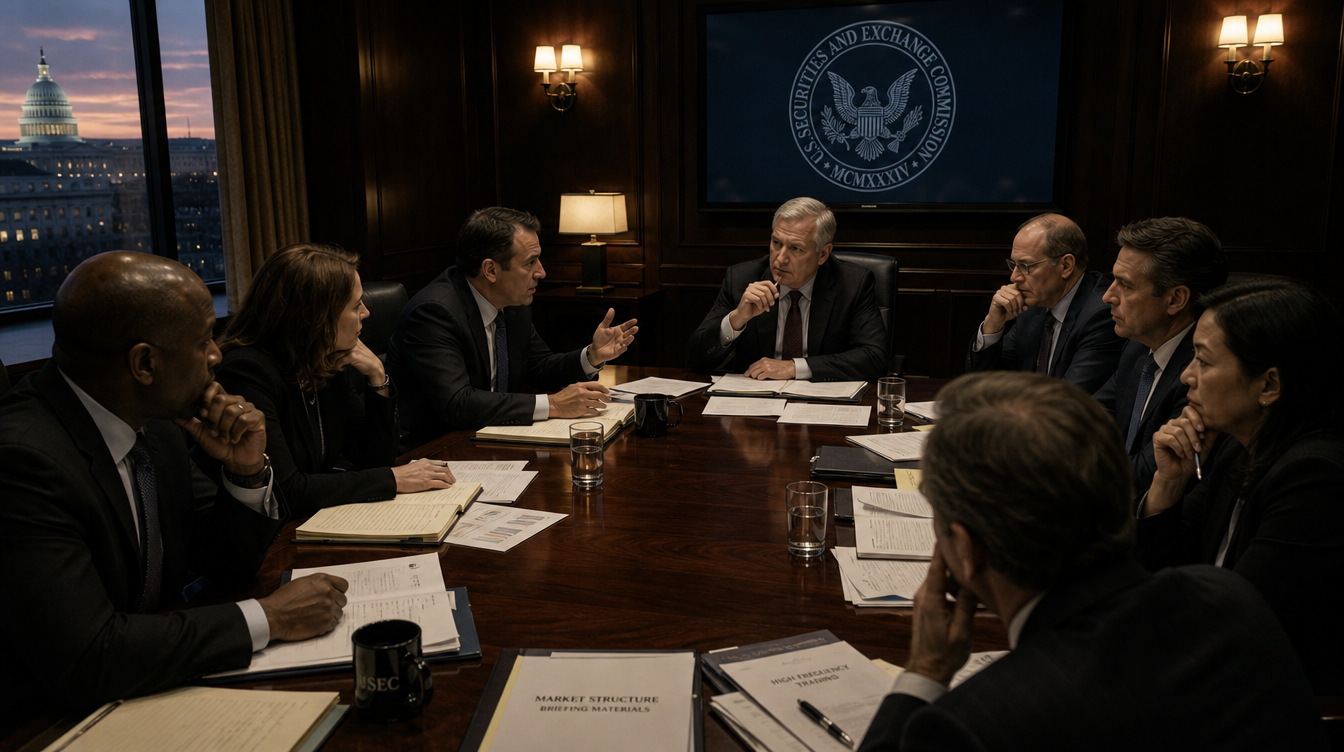
The U.S. Securities and Exchange Commission is expected to delay its long-awaited “innovation exemption” for tokenized securities after concerns from the White House and Wall Street raised questions about the proposal’s legal foundation and potential impact on financial markets.
The SEC had been preparing to release at least part of the exemption alongside Friday’s now-canceled meeting on its separate “Reg Crypto” initiative, according to three industry sources familiar with the discussions.
The exemption could have been unveiled as early as Friday and was designed to reduce regulatory barriers for companies issuing and trading tokenized securities on blockchain networks under existing securities laws.
The SEC had scheduled Friday’s open meeting to discuss “Reg Crypto,” a separate proposal aimed at creating a framework for crypto projects seeking to raise funds through token offerings. Officials were also expected to provide details on the innovation exemption, although the measure was not expected to immediately enter a formal notice-and-comment process. The agency canceled the meeting late Thursday.
One source said the White House was concerned the exemption could “kick a hornet’s nest” while Congress continues negotiations over the Digital Asset Market Clarity Act. The concern is that moving ahead with the proposal could complicate efforts to reach agreement on broader crypto legislation.
SEC officials are also reportedly reviewing whether the agency has sufficient legal authority to grant such sweeping relief. The review includes questions about economic analysis and whether the SEC has followed all required procedures before introducing the exemption. Industry participants have reportedly been told the initiative may remain on hold until the Clarity Act’s fate becomes clearer.
Wall Street Pushes Back on Tokenization Plan
Traditional financial firms have also raised objections to the SEC’s approach.
The Securities Industry and Financial Markets Association (SIFMA), which represents major broker-dealers and investment banks, has reportedly emerged as a significant source of resistance to the initiative, according to an industry source.
One of the group’s main concerns is how blockchain-based trading platforms would operate under existing U.S. market-structure rules, particularly requirements that brokers seek the best possible execution for customers.
Under Regulation NMS, prices are generally linked across exchanges, while brokers are required to execute trades at the best available protected quotation. Applying the same framework to decentralized platforms or automated market makers could prove more complicated because pricing and execution costs can differ from those on traditional exchanges.
The SEC proposed eliminating Rule 611 of Regulation NMS, known as the Order Protection Rule, in June. The proposal was widely viewed as an effort to remove one of the key regulatory barriers facing tokenized securities.
SIFMA has argued that significant changes to market structure should be addressed through formal rulemaking rather than exemptions or no-action relief.
In a June 30 letter to the SEC, the group said major structural changes should be handled through a transparent process that gives market participants and the public an opportunity to review and comment on the proposals.
The SEC did not immediately respond to questions about the timing of its latest crypto policy decisions.
SEC Has Delayed the Exemption Before
The latest postponement is not the first setback for the innovation exemption.
The SEC appeared prepared to release the measure in May after repeatedly pushing back its own deadline. At the time, the proposal was thought to potentially allow security-token issuers to offer digital assets without maintaining control over the underlying securities.
That possibility raised concerns among traditional securities issuers over the potential creation of synthetic versions of stocks and other assets.
The SEC ultimately did not publish the proposal. Commissioner Hester Peirce later told CoinDesk that she did not expect the exemption to cover synthetic securities. She said the framework was instead expected to support tokens representing digital versions of the same underlying equity securities that investors could already purchase.
Tokenization Draws Growing Wall Street Interest
The delay comes as tokenization becomes an increasingly important part of the digital asset sector, with Wall Street exploring the possibility of putting stocks, bonds and funds on blockchain networks.
Nasdaq and the New York Stock Exchange have both announced plans to develop infrastructure for tokenized securities. The Depository Trust & Clearing Corporation, a major component of the U.S. securities market, also completed its first live production transactions involving tokenized securities last month as part of a test.
The potential market is significant. Citi analysts have estimated that tokenized assets could grow into a $5.5 trillion market by 2030.
Under Chairman Paul Atkins, the SEC has increasingly promoted tokenization as a potential way to modernize financial markets. However, regulators and industry participants continue to debate how traditional assets should be brought onto blockchains and how decentralized trading venues can operate within existing U.S. securities and market-structure rules.