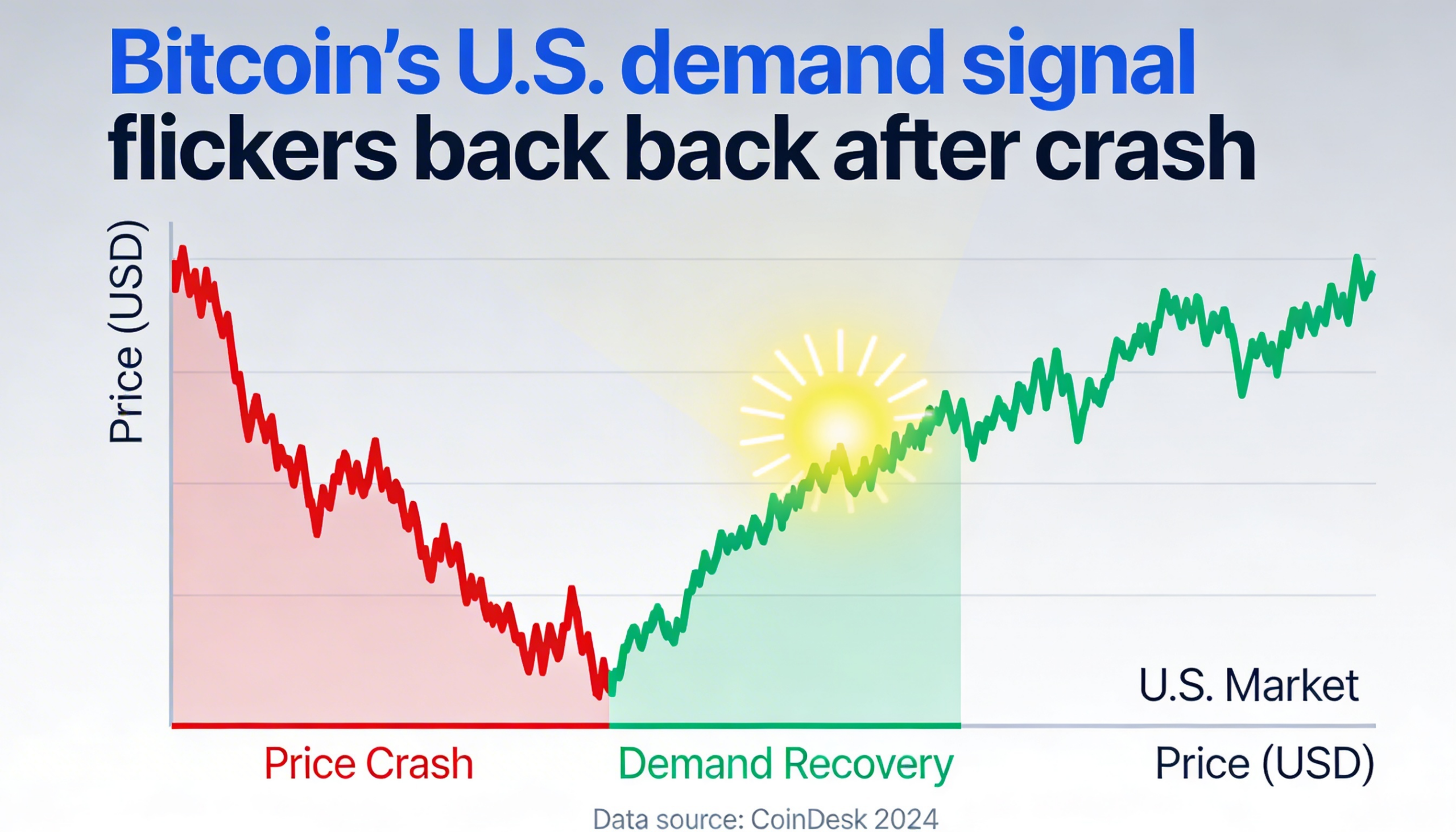
Bitcoin’s bounce from last week’s sharp selloff is being mirrored by a gradual improvement in a closely watched gauge of U.S. demand, though the signal stops short of confirming a broader shift back to risk-on positioning.
After plunging toward $60,000 in its most aggressive decline since the 2022 FTX fallout, bitcoin (BTC) has recovered strongly, climbing back toward the $70,000 area. Alongside that move, the Coinbase Bitcoin Premium Index has rebounded from deeply negative levels.
The index — which measures the price difference between bitcoin on Coinbase and the global average — improved from around -0.22% at the peak of the selloff to roughly -0.05% by Tuesday. While still below zero, the narrowing gap indicates that U.S.-based buyers stepped in as liquidation-driven pressure began to subside.
Coinbase is often viewed as a proxy for institutional and dollar-denominated flows. When the premium turns sharply negative, it typically signals either aggressive selling from U.S. investors or a lack of participation. The recent recovery toward neutral suggests dip-buying interest emerged as prices stabilized.
However, the premium has yet to flip positive — a development that historically aligns with sustained accumulation and stronger conviction among U.S. funds. For now, the data suggests opportunistic buying rather than a decisive change in broader sentiment.
Trading activity across the market supports that cautious reading. Data from Kaiko shows aggregate volumes on major centralized exchanges remain well below their late-2025 highs. Spot volumes continue to trend lower overall, reflecting gradual participation decline rather than a surge in fresh capital.
In thinner liquidity environments, prices can rebound sharply once selling exhausts itself. But without deeper and sustained inflows, those recoveries can struggle to maintain momentum.
Bitcoin is currently trading just under $70,000, marking a gain of more than 15% from its recent intraday low, though it remains down over 10% on the week.