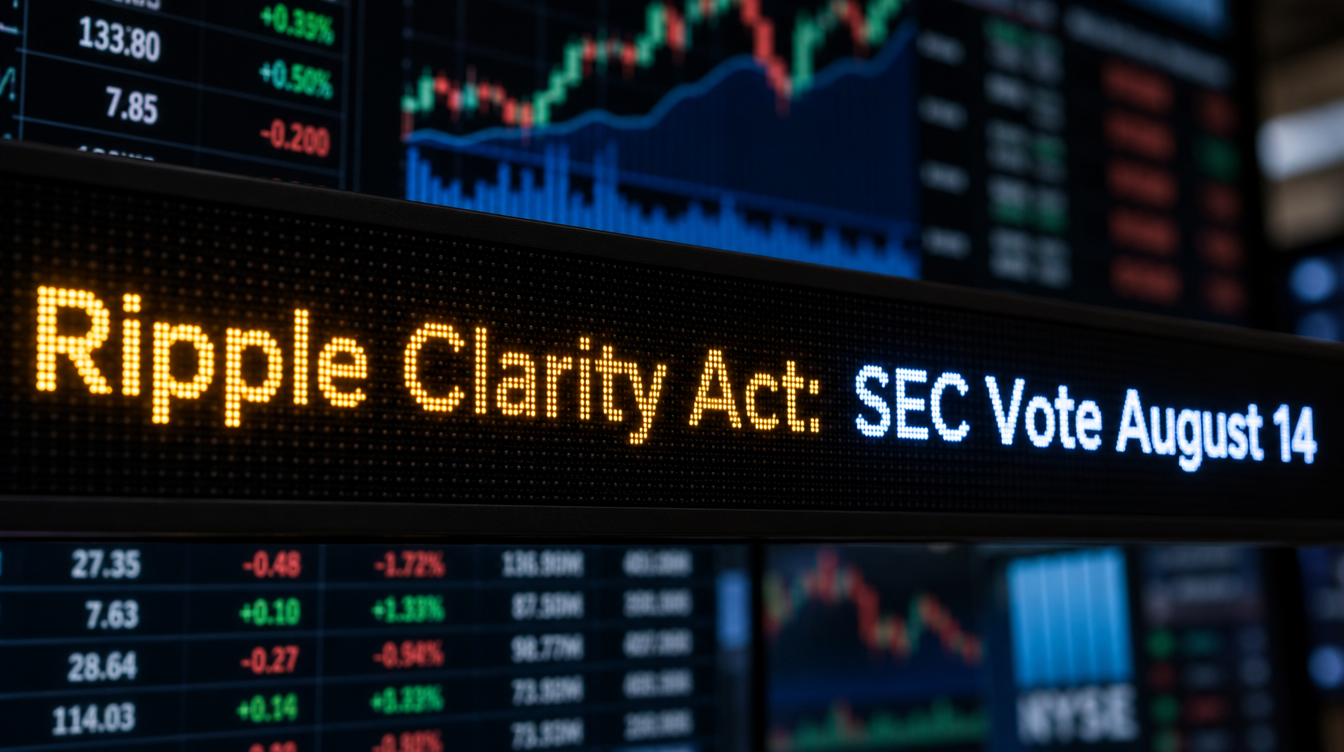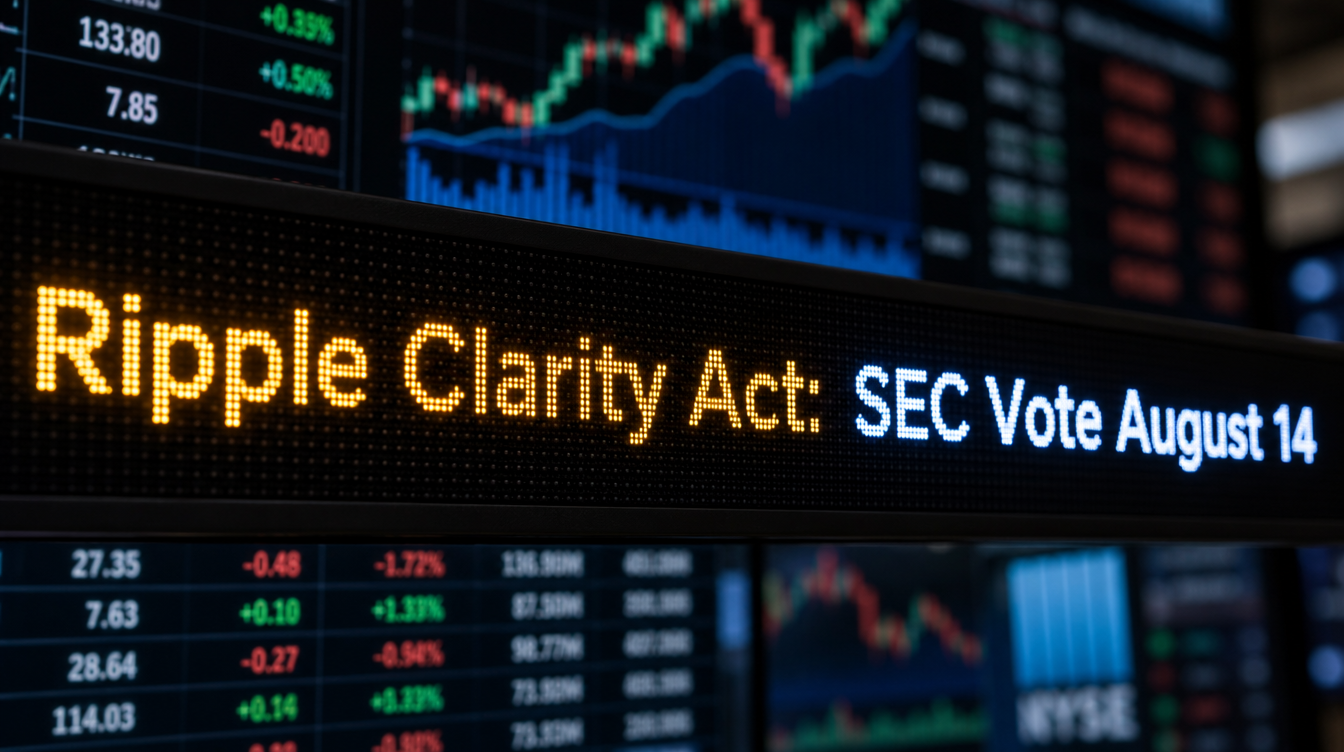
The SEC is scheduled to vote on August 14, 2026, on whether to publish its “Regulation Crypto” proposal for public comment, adding another major development to the ongoing Ripple CLARITY Act debate. The proposed framework would establish a tailored offering system under the Securities Act for investment contracts involving crypto assets, potentially replacing existing staff guidance and policy statements with more formal regulations.
If the commissioners approve the proposal, it would initiate the SEC’s formal rulemaking process. However, publication would not mean the rules are immediately effective or final. The agency would first collect feedback from the public, consider potential changes, and later return a final version to the commission for approval.
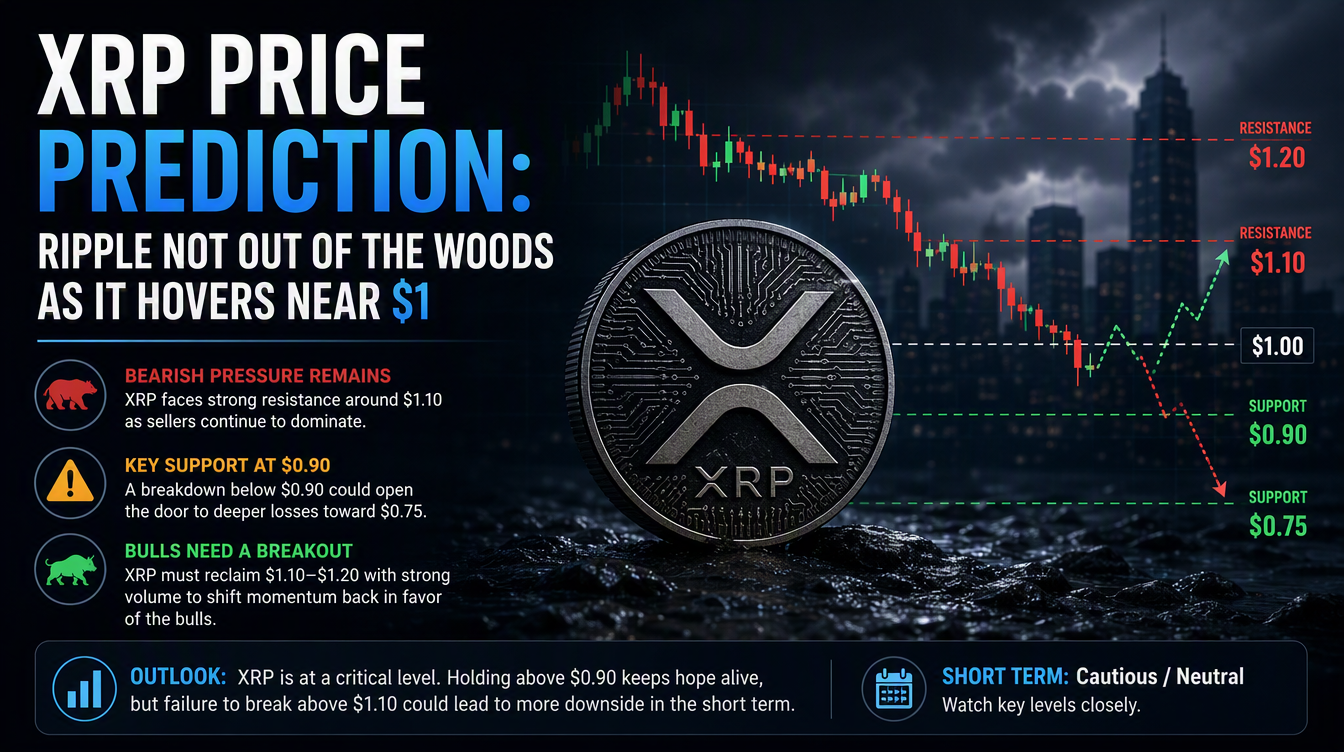
The SEC’s move comes as the Senate failed to advance the CLARITY Act before the August recess and is not expected to resume consideration until September. Against this backdrop, XRP is hovering just above the critical $1 level, with regulatory uncertainty continuing to weigh on market sentiment and price direction.
SEC Pushes Forward While Congress Waits
The SEC’s three commissioners will decide whether the proposed framework should move to the public-comment stage. Approval would launch a formal regulatory process designed to create clearer and more lasting rules for companies operating in the digital-asset sector.
SEC Chairman Paul Atkins has made crypto regulation a key focus of his tenure. The latest proposal follows the Senate’s failure to move the Digital Asset Market Clarity Act forward before lawmakers left for the August recess, leaving the legislation in a holding pattern.
The agency has traditionally addressed crypto through enforcement actions, staff guidance and policy statements. Formal notice-and-comment rulemaking would provide a more structured route toward establishing permanent regulations.
Potential Impact of Regulation Crypto
The Regulation Crypto proposal is expected to outline an exemption that could allow eligible crypto projects to raise funds without automatically falling under the SEC’s registration requirements. It could also establish when the agency’s securities jurisdiction may end after the managerial efforts tied to an investment contract have effectively run their course.
The framework could help resolve a major issue in U.S. crypto regulation: whether an asset associated with an investment contract must continue to be classified as a security after the original circumstances surrounding the investment have changed.
Greater clarity on this issue could help crypto projects understand their regulatory responsibilities at different stages, potentially making fundraising and long-term development easier to navigate.
TD Cowen analyst Jaret Seiberg suggested that Regulation Crypto could be the first of several crypto-focused proposals from the SEC following the stalled congressional legislation. The initiative also comes after collaboration between the SEC and Commodity Futures Trading Commission on crypto-asset classifications and rules governing tokenized securities.
Why the SEC Vote Matters for XRP Investors
For XRP holders and traders tracking the CLARITY Act, the key point about the August 14 meeting is that the SEC is only considering whether to publish the proposal. It will not be voting on a final regulatory framework.
If commissioners approve publication, the document could offer additional details about potential exemptions for qualifying crypto projects and explain when securities-law oversight might no longer apply. It could also provide greater clarity around the importance of managerial efforts in determining whether an investment contract remains subject to securities regulations.
Any changes, however, would depend on the public-comment process and subsequent SEC action.
SEC Rulemaking Fills the Gap as CLARITY Act Stalls
The delay surrounding the CLARITY Act leaves SEC rulemaking as one of the main channels for establishing clearer federal rules governing crypto offerings. The agency’s initiative could therefore provide the industry with additional regulatory guidance while Congress works toward broader legislation.
Atkins has continued to call for congressional legislation to establish clear guardrails for the U.S. crypto market. The two approaches can move independently, with the SEC’s proposal concentrating specifically on the regulatory treatment of crypto-related investment contracts.
For XRP, the August 14 vote could therefore be an important regulatory milestone, even though it would only mark the beginning of the rulemaking process rather than the adoption of final rules.