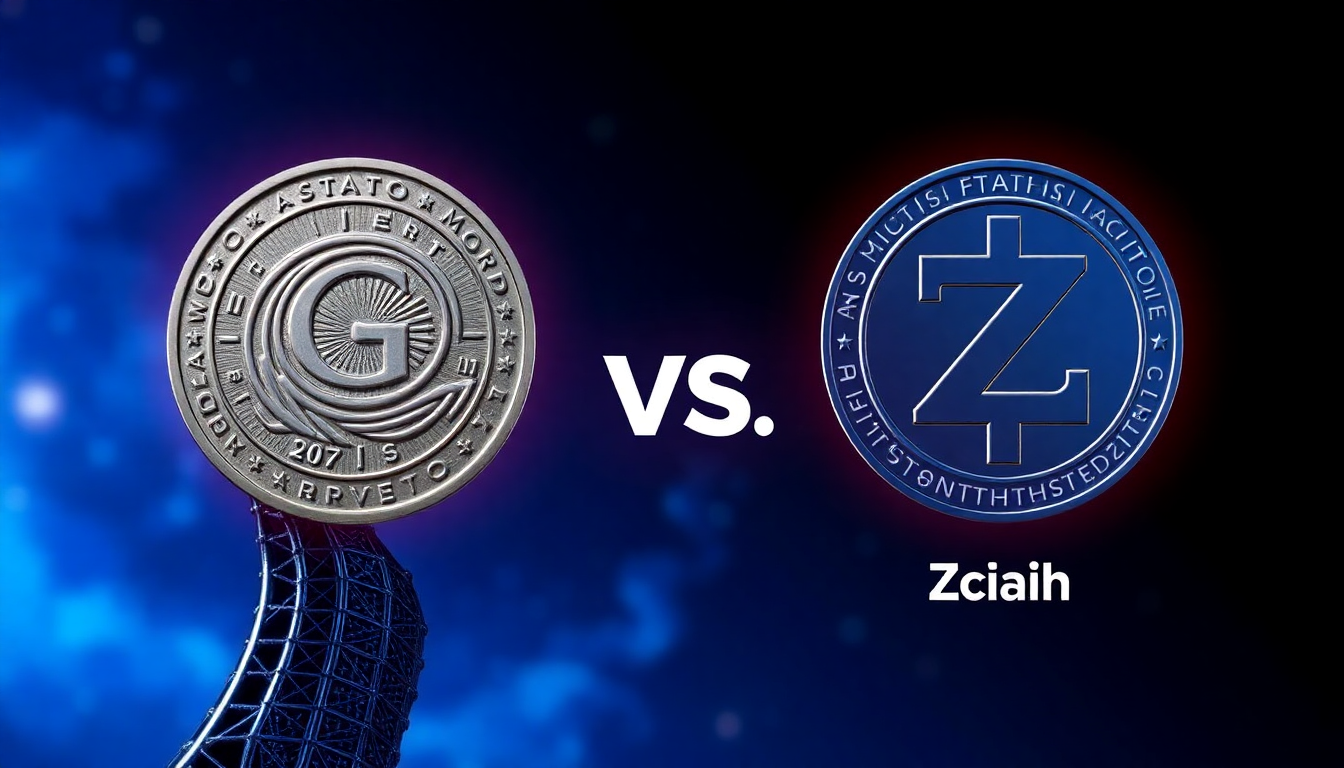
Privacy cryptocurrencies could attract significant investor attention in 2027 as concerns about financial monitoring, transaction confidentiality, and institutional adoption continue to increase. Google Gemini AI has highlighted two major contenders in this sector, Monero (XMR) and Zcash (ZEC), while examining which asset could deliver stronger gains during the next market cycle.
Although both projects focus on protecting users’ financial information, their approaches differ considerably. Monero makes transaction privacy compulsory across its network, whereas Zcash offers optional privacy features that could make it more accessible to institutions seeking a balance between confidentiality and regulatory requirements.
With the possibility of another major crypto bull market in 2027, both cryptocurrencies could attract fresh capital. However, their technological differences, adoption prospects, and regulatory exposure could determine which one ultimately delivers better returns.
Monero and Zcash Take Different Routes to Cryptocurrency Privacy
Monero has developed a strong reputation as one of the leading privacy-focused cryptocurrencies. Unlike transparent blockchain networks, where transaction details can be examined publicly, Monero is designed to keep financial activity confidential by default.
The network uses ring signatures, Ring Confidential Transactions (RingCT), and stealth addresses to obscure transaction participants and amounts. Together, these technologies help conceal the sender, recipient, and value of individual transfers.
One of Monero’s biggest advantages is that privacy cannot simply be switched off. Its confidentiality protections are built into the network and apply to transactions by default.
This makes XMR particularly attractive to users seeking a decentralized digital payment system that protects financial information from public scrutiny. Its relevance could increase as blockchain surveillance and transaction-tracking technologies become more sophisticated.
However, Monero’s privacy-first approach also creates regulatory difficulties. Several exchanges operating in different jurisdictions have restricted or removed XMR trading, potentially limiting its accessibility to institutional and retail investors.
Zcash offers a more flexible alternative through zero-knowledge cryptography, which allows users to conduct shielded transactions while retaining the option of transparent transfers.
Its privacy features enable users to conceal transaction information through shielded addresses. Viewing keys also allow selected information to be shared with auditors and other authorized parties when necessary.
This approach could help Zcash appeal to institutional investors that want greater financial confidentiality without completely sacrificing compliance and transparency requirements.
The difference between the two models could become increasingly important as investors expand their search for opportunities beyond established cryptocurrencies such as Bitcoin and Ethereum.
Gemini AI Identifies Growing Privacy Demand as a Potential Market Catalyst
Interest in privacy-focused cryptocurrencies is gradually expanding beyond their traditional user communities. Zcash has strengthened its institutional positioning through the development of its ecosystem, the emergence of regulated investment products, and growing attention toward its privacy technology.
Monero continues to benefit from its established market position, decentralized architecture, and consistent transaction privacy guarantees.
The growing visibility of blockchain transactions is another factor supporting the long-term investment case for both projects. As cryptocurrency usage expands, blockchain analytics companies gain access to increasingly large amounts of publicly available transaction information.
This could encourage individuals, businesses, and other market participants to seek stronger financial confidentiality.
However, regulatory developments could create considerable uncertainty for privacy coins in 2027.
The European Union’s Anti-Money Laundering Regulation (AMLR) is expected to become applicable on July 10, 2027. Its provisions include restrictions concerning crypto-asset accounts involving anonymity-enhancing coins.
Importantly, the regulatory framework covers privacy-enhancing features that operate both by default and optionally. This means that neither Monero’s mandatory privacy model nor Zcash’s optional approach automatically guarantees protection from regulatory restrictions.
From a technical perspective, investors will also need to monitor longer-term market structures to determine which cryptocurrency is gaining strength ahead of 2027.
For Monero, establishing a consistent higher-high pattern following its previous major market cycle could provide an important bullish signal. Reclaiming former resistance levels and converting them into support could create conditions for another substantial rally, particularly if investors begin rotating capital into privacy-focused assets.
XMR also benefits from a predictable supply structure. Its permanent tail emission introduces 0.6 XMR every two minutes, providing an ongoing mining incentive while allowing its inflation rate to decline gradually.
Zcash has a different monetary structure, with a maximum supply capped at 21 million coins. This fixed supply could strengthen its scarcity narrative, similar to Bitcoin.
However, ZEC’s future performance will depend on whether institutional interest translates into sustained buying pressure and whether the token can establish stronger long-term support levels.
Both projects could benefit from a broader cryptocurrency bull market. Nevertheless, Zcash’s previous price appreciation could also expose it to profit-taking and potentially sharper corrections.
XMR vs. ZEC: Which Privacy Cryptocurrency Could Rally More in 2027?
Both Monero and Zcash have the potential to deliver substantial gains during the next cryptocurrency market cycle, although their projected price movements could vary.
In an optimistic 2027 scenario, Zcash could potentially reach a price range of $1,600 to $2,400. This outlook would depend on continued institutional adoption, greater usage of shielded transactions, and stronger demand for privacy-focused financial infrastructure.
Monero could potentially advance toward $900 to $1,400. If demand for censorship-resistant digital payments increases significantly, an even more bullish scenario could emerge.
These projections are speculative rather than guaranteed price targets. Regulatory restrictions, market volatility, and changing investor sentiment could significantly affect both cryptocurrencies.
Despite these uncertainties, Monero has one important advantage: its established position as a cryptocurrency specifically designed around financial privacy.
Zcash may have a stronger institutional adoption story, but Monero offers a more direct solution for users who consider transaction confidentiality essential.
If financial anonymity becomes a major investment theme in 2027, Monero could benefit from increased demand as investors and users look for alternatives to transparent blockchain networks.
Gemini AI Favors Monero (XMR) as a Privacy Coin to Watch in 2027
Although Zcash could attract additional institutional capital and potentially deliver impressive price appreciation, Monero appears to have a compelling case for stronger percentage gains over the longer term.
Its established reputation, mandatory privacy architecture, and focus on censorship-resistant digital payments could position XMR to benefit from growing demand for financial confidentiality.
Zcash still has considerable potential, particularly if institutional adoption continues expanding. However, Monero’s dedicated privacy model could become a more significant advantage if financial anonymity emerges as one of the cryptocurrency industry’s leading narratives in 2027.
Ultimately, the competition between XMR and ZEC will depend on regulatory developments, real-world adoption, and capital flows. If privacy becomes a major priority during the next bull market, Monero could be among the cryptocurrencies attracting the strongest investor interest.