Simple Mining rejected BIP-110 over the weekend despite operating its mining hardware through Ocean, a pool that had been signaling support for the controversial proposal by default.
The company used Ocean’s DATUM protocol, which allows individual miners to determine how their blocks are constructed rather than automatically adopting the pool’s preferred settings.
Simple Mining said it mined Bitcoin block 961,634 on the main chain Sunday, two blocks after BIP-110 supporters split from the network.
“Hashrate is a vote you cannot fake, and we decided the proposal wasn’t worth following,” the company said on X.
Simple Mining confirmed that it produced block 961,634 through Ocean’s DATUM system without signaling support for BIP-110. The proposal had attracted only about 2.6% of Bitcoin’s hashrate at its peak, well below the 55% support required.
The decision stands out because Ocean began signaling for BIP-110 by default in July and accounted for nearly all of the proposal’s limited miner support before the split occurred.
BIP-110, formally known as Bitcoin Improvement Proposal-110, aims to temporarily restrict the amount of non-financial data, including images and text, that can be stored within Bitcoin transactions.
DATUM allowed Simple Mining to reject the proposal while remaining connected to Ocean’s mining pool. The protocol gives miners the ability to create their own blocks using their preferred Bitcoin software while still contributing hashpower to the pool and sharing in its rewards.
Typically, mining pools aggregate computing power from numerous operators and handle block construction on their behalf. The pool generally selects transactions and determines which software signals are included in the blocks.
DATUM instead puts much of that control in the hands of individual miners.
Simple Mining used that flexibility to produce block 961,634 without the BIP-110 signal, saying it had chosen not to signal and that the Bitcoin chain continued through its block.
The episode illustrates how Ocean could effectively appear on both sides of the weekend’s chain split. Fork tracker Mempool reported that a miner connected to Ocean produced the first block accepted by the BIP-110 branch on Saturday. Simple Mining later mined through the same pool but chose the opposing position, producing a block that stayed on Bitcoin’s dominant chain.
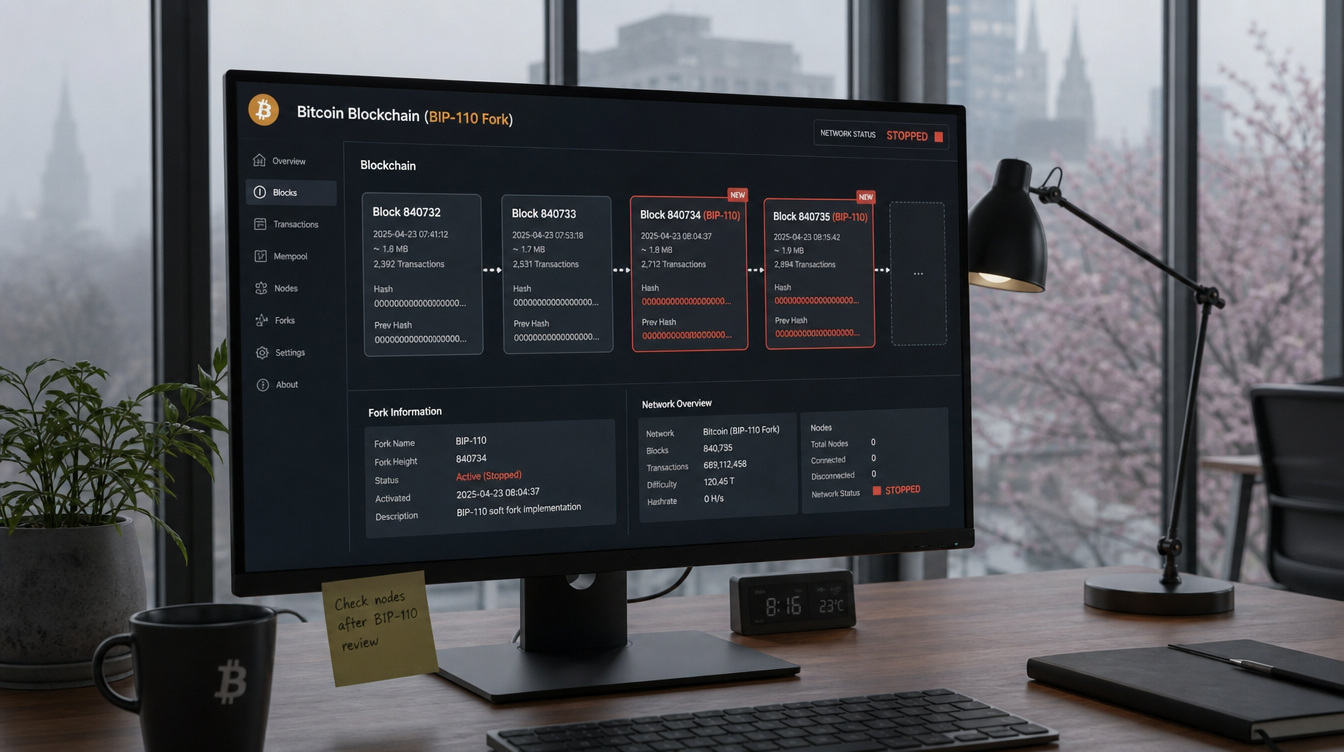
BIP-110 nodes began rejecting blocks that lacked the proposal’s signal at block 961,632. By then, miner support had reached only around 2.6%, far short of the 55% threshold required by the proposal.
The BIP-110 chain subsequently stalled after producing blocks 961,632 and 961,633. Meanwhile, the main Bitcoin network continued adding blocks approximately every 10 minutes.
By Monday, a live blockchain tracker showed the main chain at block 961,725, putting the BIP-110 branch more than 200 blocks behind.
The episode highlights the distinction between a mining pool’s default policy and the choices individual miners can make when using infrastructure such as Ocean’s DATUM protocol.