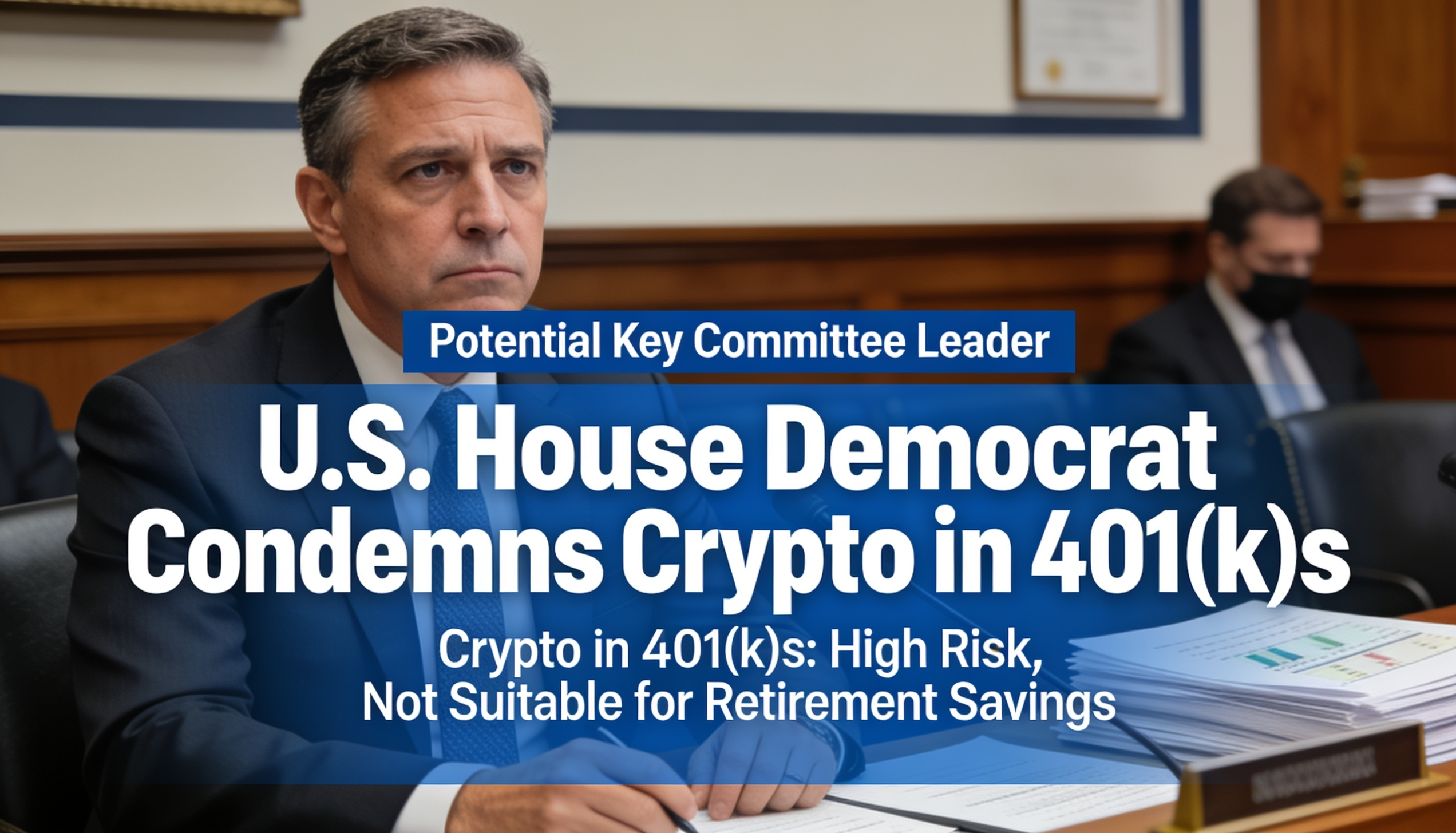
Maxine Waters, the leading Democrat on the House Financial Services Committee, has called on the Department of Labor to abandon its proposal involving alternative investments.
Waters, who could soon regain leadership of the committee if Democrats secure a victory in the November elections, is urging regulators to reconsider a plan that would allow 401(k) retirement plans to include alternative assets such as cryptocurrencies.
The proposal, introduced by the Labor Department in March, follows an executive order from President Donald Trump directing that retirement accounts be opened to a broader range of investments, including private equity, private credit, real estate, commodities, and digital assets. In response, Waters submitted an 11-page letter this week, pressing for the proposal to be withdrawn.
In her letter, Waters argued that it is premature for the department to endorse digital assets for retirement savings while the Securities and Exchange Commission is still working to establish a comprehensive investor protection framework. She warned that the risks extend beyond the well-known volatility of cryptocurrencies, pointing to deeper issues across the digital asset ecosystem, such as declining trading volumes, reduced developer activity, and waning user engagement.
Waters, who previously chaired the committee, could return to that role if Democrats regain control of the House in the upcoming midterm elections. Current betting data from Kalshi suggests an 82% probability of that outcome. Although the committee does not directly oversee 401(k) policy, it plays a key role in supervising the SEC, the primary regulator of investment markets.
Addressing Acting Labor Secretary Keith Sonderling, Waters cautioned that the proposal could expose retirement savers to a largely unregulated digital asset market that has already caused significant investor losses.
The proposal stems from an executive order issued by Trump last August, which directed federal agencies to provide individuals with access to the potential growth and diversification benefits of alternative investments through their retirement plans.