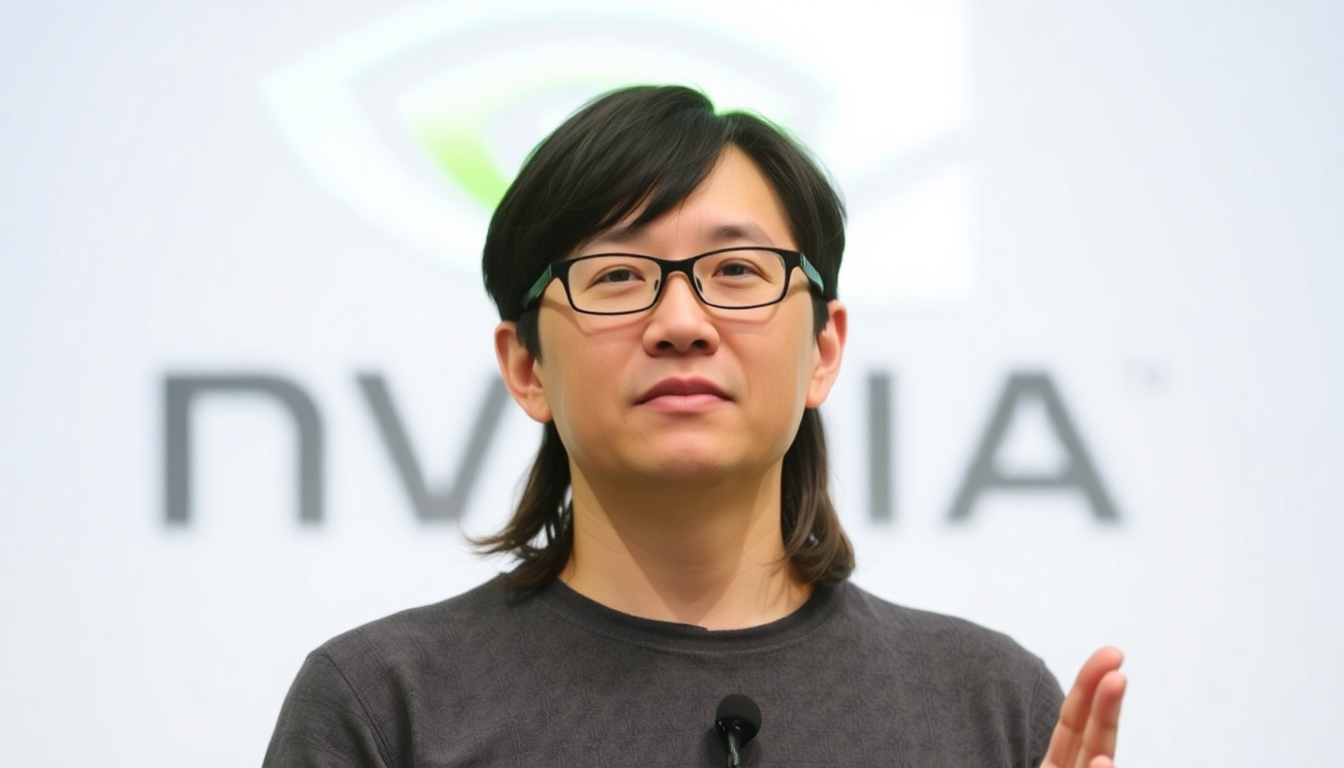
Jensen Huang’s reported departure from Nvidia has triggered speculation about who could take charge of the chipmaker permanently, with an Apple executive reportedly emerging as a potential candidate. The leadership shake-up has also put pressure on Nvidia shares, raising questions about how NVDA has responded to the news.
On November 12, 2026, Nvidia announced that co-founder Jensen Huang had immediately stepped down as President, Chief Executive Officer, and a member of the company’s board.
The unexpected move followed mounting controversy surrounding Huang’s personal relationships and allegations involving possible national security concerns. Nvidia CFO Colette Kress has been named Interim CEO while retaining her financial responsibilities. The board also appointed longtime director Harvey C. Jones as its first-ever Chairman and initiated the process of finding a permanent replacement. An executive from Apple has reportedly become one of the early names under consideration.
Investors reacted negatively to the announcement. Nvidia shares plunged more than 10% during premarket trading, adding to an ongoing decline that had already erased hundreds of billions of dollars in market value. By midday, NVDA was moving between the mid-$150s and low-$160s.
What Led to Jensen Huang’s Resignation From Nvidia?
Huang’s exit follows growing attention surrounding two alleged extramarital relationships, with reports raising questions about both corporate conduct and potential national security risks.
The first controversy concerned Alice Huang, a businesswoman reportedly associated with Megaspeed, a Singapore-based AI company with significant business ties to Nvidia. U.S. authorities have reportedly identified her as a suspected asset linked to China’s Ministry of State Security.
According to reports, Jensen Huang was photographed with her on several occasions. These revelations raised concerns about possible foreign intelligence targeting involving one of the world’s most influential technology executives.
Huang later apologized to Nvidia employees for his infidelity but firmly denied exposing sensitive company information or putting national security at risk.
The situation became more complicated after reports surfaced alleging another relationship with Kimberly Powell, Nvidia’s vice president of healthcare and a senior employee who reported directly to Huang.
The two controversies reportedly led Nvidia’s board to launch an internal review. Following a late-night discussion, directors accepted Huang’s resignation.
The alleged relationship involving a subordinate, combined with the reported national security concerns surrounding the first controversy, added significant pressure to the company’s leadership structure.
Who Is Colette Kress? Apple Executive Johny Srouji Emerges as a Potential Successor
Colette Kress has held the position of Executive Vice President and Chief Financial Officer at Nvidia since September 2013. Following Huang’s departure, she has assumed temporary leadership of the company while continuing to manage its financial operations.
Before joining Nvidia, Kress spent nearly 25 years working in senior finance positions across major technology companies.
Her professional background includes serving as CFO of Cisco’s Business Technology and Operations organization and Microsoft’s Server and Tools division. She also held earlier positions at Texas Instruments.
Kress graduated with a finance degree from the University of Arizona and later earned an MBA from Southern Methodist University.
During her tenure at Nvidia, the company’s revenue increased from approximately $4 billion to more than $200 billion, reflecting its transformation into a dominant supplier of AI accelerators and advanced computing hardware.
As Interim CEO, Kress is expected to maintain operational stability while the board evaluates candidates for the permanent leadership position.
One name reportedly attracting attention is Apple’s Johny Srouji. His experience overseeing Apple’s semiconductor development and hardware engineering operations could make him a potential contender to lead Nvidia through its next phase of growth.
Hyperliquid NVDA Perpetuals Track the Sharp Decline in Nvidia Shares
Hyperliquid allows traders to speculate on Nvidia’s stock through leveraged perpetual contracts, providing continuous market access without requiring them to purchase actual NVDA shares.
These derivatives closely follow the underlying stock and have experienced heightened activity as the controversy surrounding Huang intensified.
After the first reports about the alleged relationships and Nvidia’s internal investigation emerged in early November, the platform’s NVDA perpetual contract began reflecting the weakness in the traditional equity market.
The contract dropped from approximately $170–$175 to the mid-$150s, trading around $158–$160 on November 12. This represents a decline of roughly 9%–11% over the latest trading sessions, with additional losses compared with levels recorded before the controversy.
Open interest has remained elevated at hundreds of millions of dollars, highlighting continued speculative activity. Funding rates have also shifted as bullish and bearish traders adjusted their positions.
Trading volume surged following the resignation announcement, pointing to increased liquidations and rapid repositioning across the market.
Technically, the perpetual contract has broken below several short-term support levels, while momentum indicators suggest deeply oversold conditions.
A recovery in Nvidia’s regular shares could quickly translate into gains for the corresponding Hyperliquid contract. However, leverage can amplify price movements in both directions, leaving traders exposed to further volatility even if a short-term rebound develops.