Cryptocurrencies remained on the back foot Thursday, even as equity markets edged higher. A firmer U.S. dollar and persistent uncertainty around the Federal Reserve’s policy path continued to limit follow-through on crypto rebounds.
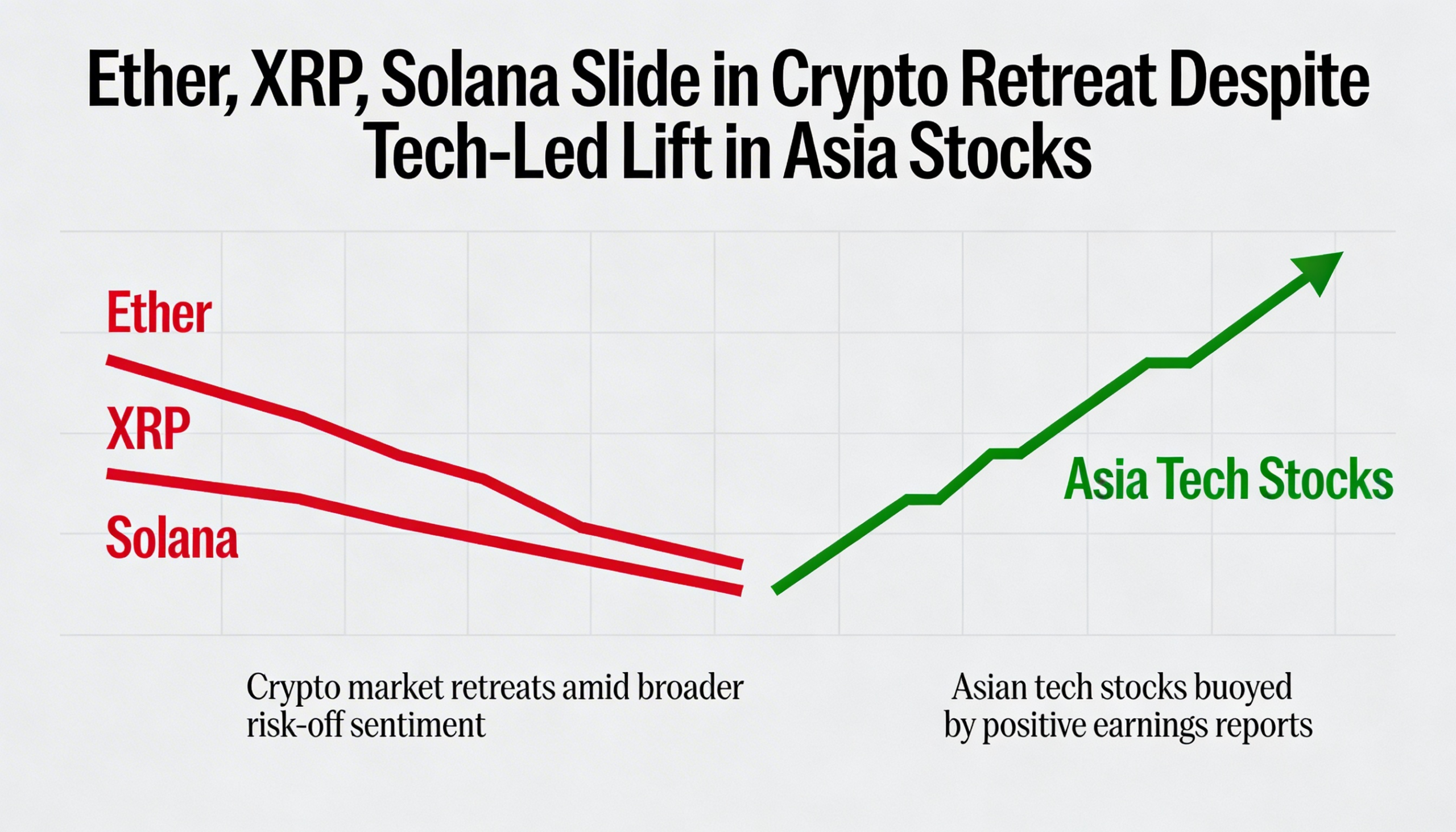
Selling pressure was broad across major tokens, with ether, XRP and Solana leading losses as traders failed to extend the week’s modest stabilization. Bitcoin hovered near $66,700, down roughly 1.7% over the past 24 hours, according to CoinDesk data. Ether traded around $1,965 with a similar decline, while XRP slid nearly 5% and Solana dropped about 4%. BNB and Dogecoin also weakened, pointing to market-wide softness rather than isolated token-specific drivers.
The retreat in digital assets contrasted with gains in Asian equities during thin holiday trading. MSCI’s Asia-Pacific index excluding Japan rose approximately 0.5%, Japan’s Nikkei gained about 0.85%, and South Korea’s Kospi surged close to 3% to a record high.
The equity strength followed renewed optimism in U.S. technology shares after Nvidia secured a multi-year agreement to supply Meta Platforms with AI chips, bolstering sentiment in the tech sector.
Crypto markets, however, did not participate in the rally. Recent bounces have repeatedly encountered steady selling, with gains fading once upward momentum slows. Although the sharp unraveling seen earlier in the quarter has moderated, sustained spot demand remains absent, preventing a decisive shift in tone.
The dollar strengthened after minutes from the Federal Reserve’s latest meeting signaled policymakers are in no hurry to cut rates. Some officials even left open the possibility of further tightening should inflation remain stubborn. A stronger dollar typically tightens global liquidity conditions and pressures risk assets — a pattern reflected in crypto’s renewed slide.
Meanwhile, gold has shown relative resilience, quietly absorbing macro and geopolitical uncertainty as other markets fluctuate. The contrast has revived debate over bitcoin’s “digital gold” narrative.
Alex Tsepaev, chief strategy officer at B2PRIME Group, said gold’s steadiness reflects investors’ preference for straightforward hedges amid ongoing concerns around geopolitics, monetary policy and inflation.
“I believe that gold will continue to be a default haven and will probably attempt to break through the tough $5,000–$5,100 ceiling. That said, once risk appetite returns, ETF flows stabilize, and U.S. regulations stop dragging, Bitcoin may recover considerably more quickly,” he said.
“After all, Bitcoin attracts liquidity faster than gold, partly because it’s still sometimes referred to as a speculative asset.”
Oil prices held onto recent gains amid lingering U.S.-Iran tensions, keeping geopolitical risk in the background. For now, crypto remains stuck between intermittent relief rallies and a macro environment that has yet to turn decisively supportive.