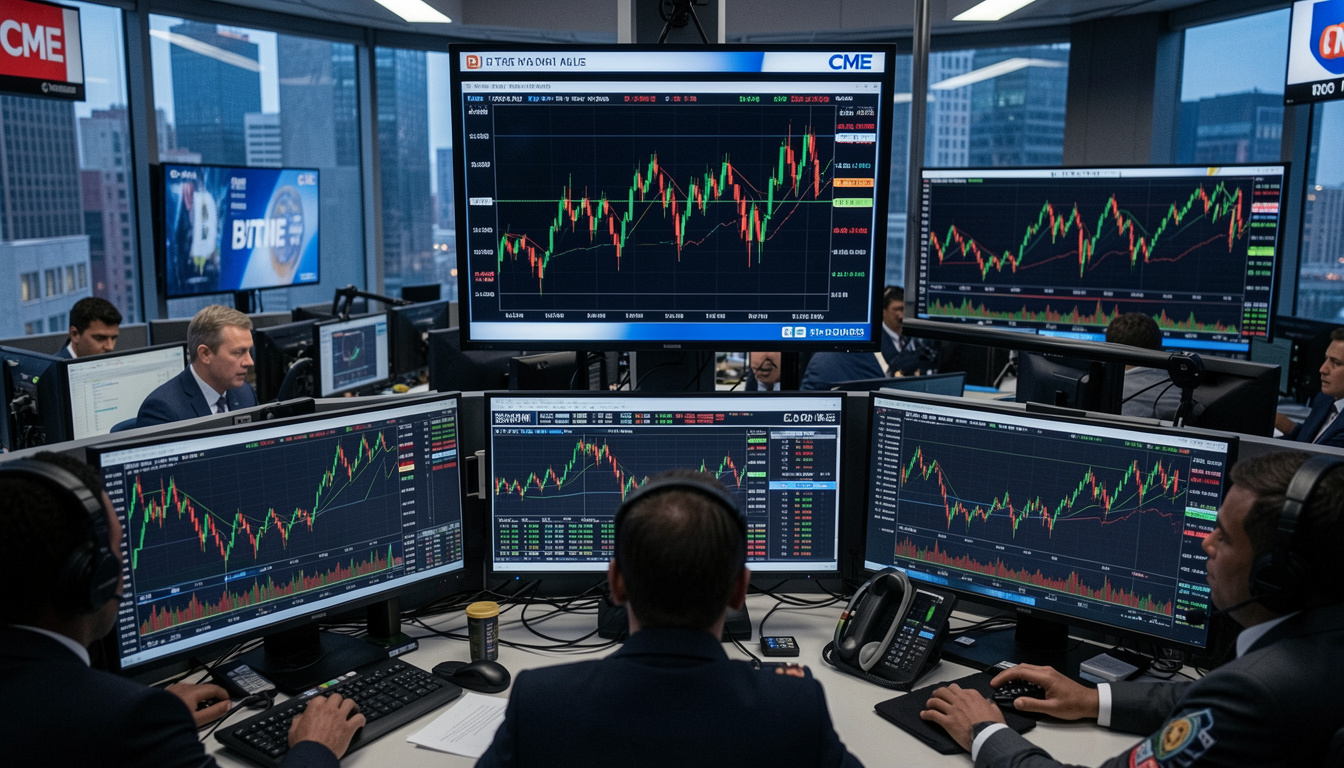
Bitcoin opened the week with erratic price action, briefly surging past $82,400 before slipping back below $81,000 as traders adjusted positions around the CME futures open and geopolitical tensions pressured sentiment.
The move began late Sunday, with BTC rising from around $80,670 at 23:00 UTC to an intraday high near $82,400 within an hour. The rally quickly faded, with prices retreating and stabilizing just under the $81,000 level.
The volatility aligned with the weekly reopening of CME bitcoin futures and U.S. equity futures, a period often marked by heavy repositioning and the formation of “CME gaps,” where prices reopen at levels different from their previous close.
Across the broader crypto market, performance skewed lower. The CoinDesk 100 index declined roughly 1.5%, while the more bitcoin-weighted CoinDesk 5 fell about 0.6%.
Macro developments added further pressure. U.S. President Donald Trump described Iran’s response to a peace proposal as “totally unacceptable,” driving gains in oil and the U.S. dollar while weighing on risk assets, including cryptocurrencies.
In derivatives markets, activity remains subdued. Total crypto futures open interest has held just above $130 billion for a fourth consecutive day, suggesting limited new leverage and muted momentum.
Liquidations have been significant, with more than $400 million in leveraged positions wiped out across centralized exchanges, the majority of which were short positions.
Altcoins showed mixed signals beneath the surface. SUI stood out, with open interest rising 29%, supporting its recent price strength and indicating growing demand for bullish exposure, backed by positive funding rates and strong volume flows.
DOGE and HBAR also recorded increases in open interest, while BTC and ETH futures positioning remained largely unchanged. Meanwhile, ZEC saw open interest fall by around 6%, pointing to capital outflows.
Despite key U.S. inflation reports, including CPI and PPI, scheduled later this week, volatility expectations remain low. Bitcoin’s 30-day implied volatility is near three-month lows, reflecting a relatively calm options market.
On Deribit, call options between $81,000 and $86,000 dominate trading activity, suggesting a bullish tilt. At the same time, traders are employing long call condor strategies, indicating expectations for limited price movement in the near term.
Outside of bitcoin, Venice’s VVV token has been a standout, more than doubling over the past month as traders reacted to supply reductions, token burns, and growing demand tied to AI-related use cases.
The rally gained traction after Venice increased its subscription-linked burn rates in late April, followed by a reduction in annual token emissions from 6 million to 5 million on May 1, with further cuts planned in the coming months.
Momentum accelerated after StrikeRobot announced that Venice would serve as a primary inference API backend for its robotics platforms, adding a new demand catalyst.
At the same time, platform revenue has strengthened, with co-founder Jesse Proudman noting that subscription and credit purchases recently reached a record high, exceeding the previous peak by 10%.
Despite the recent surge, VVV remains below its January 2025 high of $22.5, after initially dropping as much as 50% following its launch amid concerns over insider-related activity tied to early buyers.