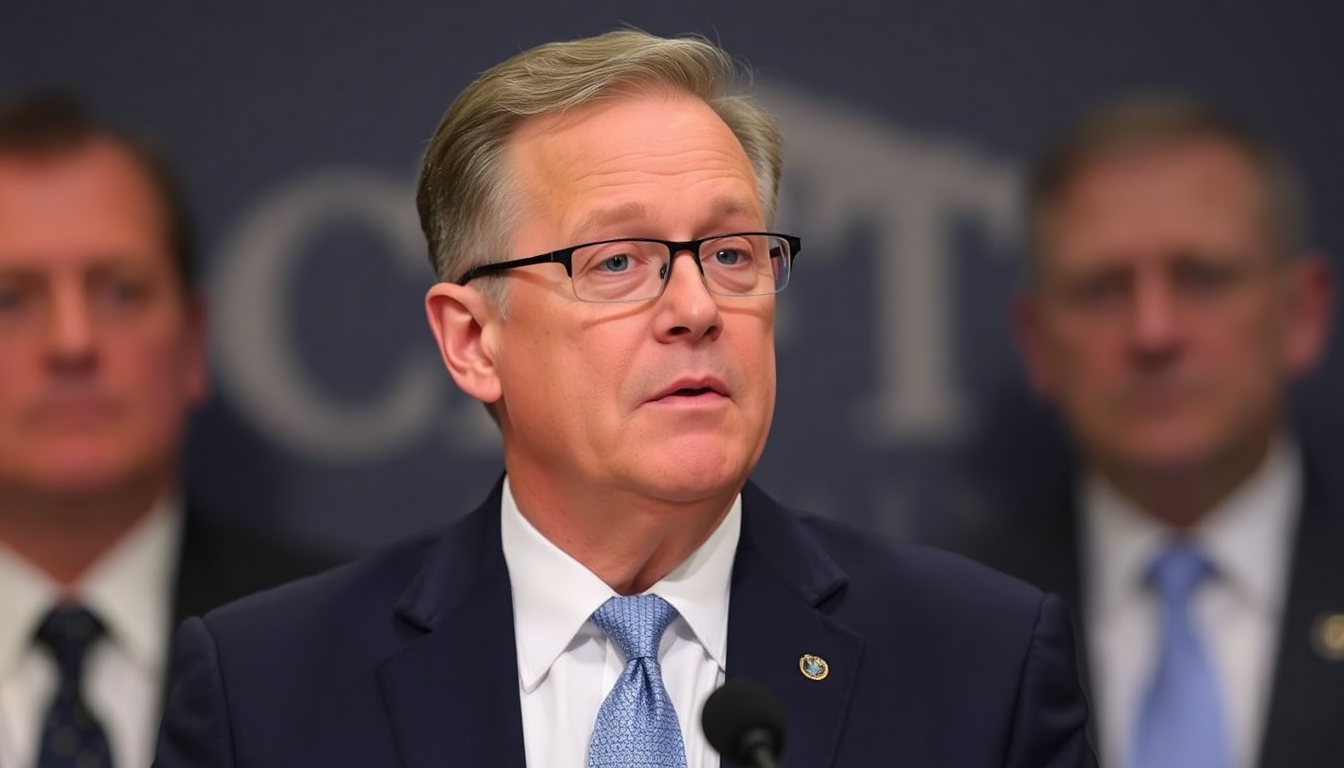
CFTC Chairman Mike Selig said the agency is prepared to move forward with its own crypto rules if Congress fails to pass the Digital Asset Market Clarity Act.
Speaking at the first meeting of the CFTC’s Innovation Advisory Committee, Selig said the derivatives regulator has already begun exploring an alternative regulatory framework for digital asset markets.
If the Senate does not advance the Clarity Act, the CFTC could use its existing authority to establish a crypto market category modeled on its designated contract market, or DCM, framework.
Selig said he has instructed agency staff to develop rules that could create a dedicated market structure for crypto assets without waiting for new legislation. He said the CFTC would be ready to act quickly if the bill remains stalled.
The chairman also directed staff to work with blockchain developers on rules that would allow protocols to operate legally in the U.S. while providing longer-term regulatory protections for developers.
Selig blamed Democratic opposition for delays surrounding the Clarity Act and said the CFTC would pursue President Donald Trump’s goal of establishing a durable digital asset market structure.
The CFTC’s move comes as the Securities and Exchange Commission advances its own crypto agenda. The SEC this week proposed Regulation Crypto Assets, which would seek to reduce regulatory barriers for crypto startups and fundraising.
The SEC and CFTC have also previously issued joint guidance outlining how different digital assets could be categorized and which regulatory regimes might apply, although that framework has not been adopted as a formal rule.
SEC Chairman Paul Atkins said at a White House event with Trump on Wednesday that Congress passing the Clarity Act remains the administration’s most important crypto policy objective. Atkins has argued that legislation would provide greater certainty and durability for the industry.
Selig agreed that congressional action would offer the strongest long-term solution. He said passing the Clarity Act would help prevent future regulators from pursuing aggressive enforcement campaigns against crypto businesses.
Former SEC Chairman Gary Gensler also featured prominently in the discussion, with industry participants continuing to criticize his tenure for what they viewed as years of regulatory pressure on crypto.
Ripple CEO Brad Garlinghouse said his company was among those heavily affected by the SEC’s previous approach. He credited the change in leadership with creating a substantially different environment for digital assets.
Garlinghouse said the earlier regulatory uncertainty pushed Ripple to expand outside the U.S. He argued that blockchain technology could make financial transfers faster, cheaper and more accessible, but said clearer rules are necessary to unlock those benefits responsibly.
Clarity Act Faces Senate Test
The Clarity Act still depends on Senate approval, but its prospects have weakened as lawmakers continue to debate unresolved provisions. Senators have roughly three weeks left to make another attempt at securing the 60 votes required to advance the legislation.
Lawmakers from both parties have raised objections to the current draft, with one major sticking point being a proposed ethics provision from Sens. Ruben Gallego and Thom Tillis and whether the White House will support the revised language.
CFTC Expands Focus to Prediction Markets
The Innovation Advisory Committee also examined artificial intelligence and prediction markets during Thursday’s session.
Selig has become increasingly involved in the legal battle over prediction market regulation, challenging state efforts and arguing that federal law gives the CFTC exclusive authority over the sector.
The agency has already begun developing regulations for prediction markets and plans to release additional proposals.
Selig said upcoming measures will seek to modernize corporate and listing requirements for DCMs offering event contracts while introducing additional consumer safeguards.