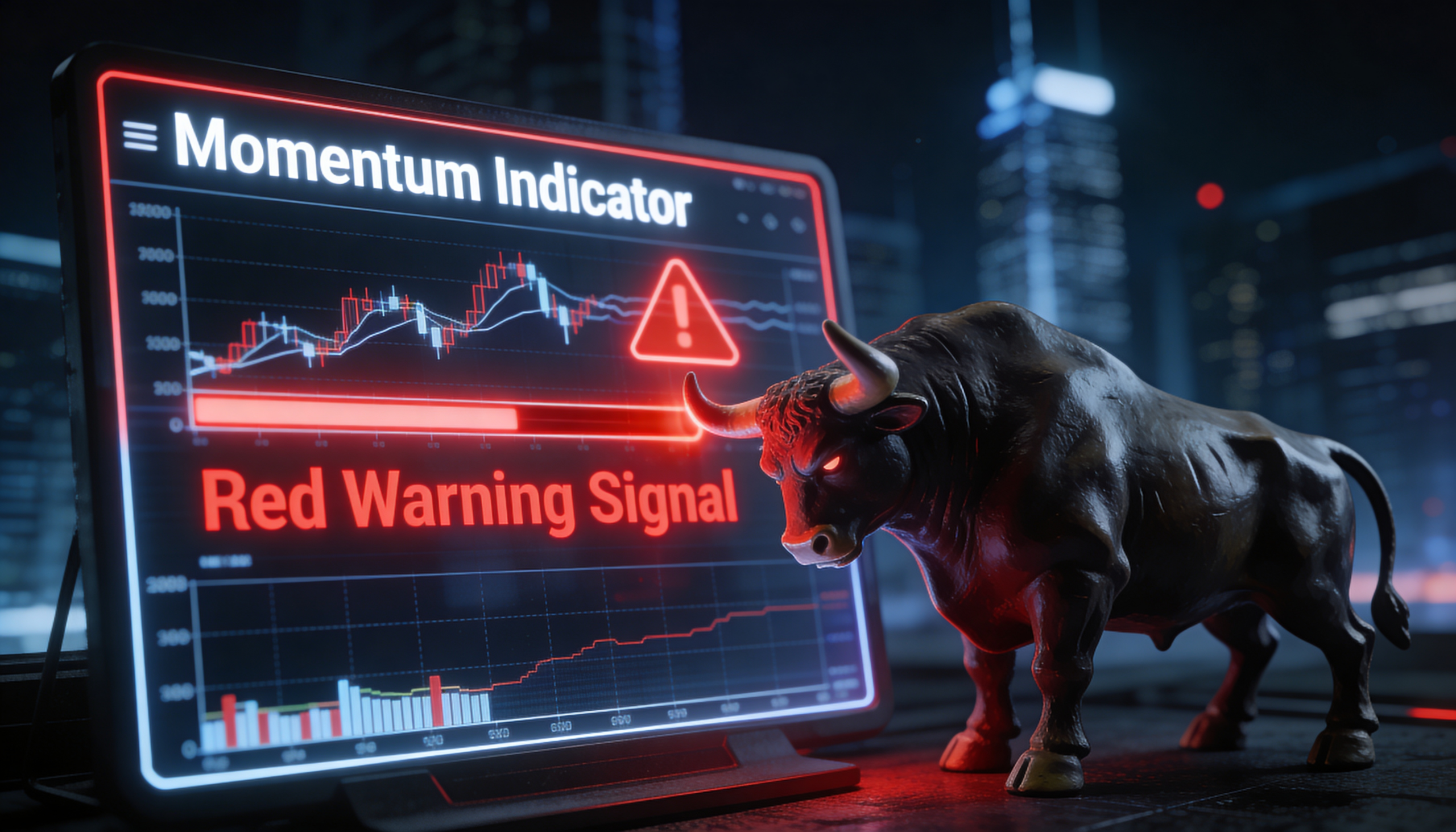
A closely tracked momentum indicator that has repeatedly anticipated bitcoin selloffs in recent months has turned negative again, signaling renewed risk for bullish traders.
Bitcoin is flashing caution as the moving average convergence divergence (MACD) histogram slips below zero for the third time since its October peak, pointing to a fresh bearish shift in momentum.
How the indicator works
The MACD is built using two moving averages. The MACD line reflects the difference between the 12-day and 26-day exponential moving averages (EMAs), helping gauge the direction of momentum.
The signal line, a nine-day EMA of the MACD line, smooths out fluctuations.
The histogram—widely considered the most informative part—measures the distance between the MACD and signal lines. A positive reading indicates bullish momentum, while a negative reading signals bearish momentum. The steepness of the move reflects the strength of the trend.
Because it filters out short-term noise, the MACD is widely used to identify meaningful shifts in market direction. At present, it is pointing lower.
A strong record of calling declines
Since bitcoin surged above $126,000 in October, the MACD has shown a notable ability to flag turning points.
When the histogram first dropped below zero in early November, bitcoin’s consolidation above $100,000 quickly unraveled, sending prices from roughly $106,000 to $80,000 within weeks.
A brief rebound followed as the indicator turned positive, but gains were limited. On Jan. 20, with bitcoin near $90,000, the MACD flipped negative again—preceding another sharp decline to nearly $60,000 by early February. A subsequent bounce stalled around $75,000.
So far, bullish signals have led to short-lived rallies, while bearish turns have consistently preceded deeper pullbacks, underscoring persistent selling pressure.
Bearish signal resurfaces
The MACD histogram has now crossed back into negative territory, reviving the same bearish setup seen ahead of prior declines.
While no technical indicator is foolproof, the consistency of this signal in recent months makes it difficult to ignore. Even as bitcoin showed resilience during the Iran war, the latest momentum shift suggests downside risks may once again be building.