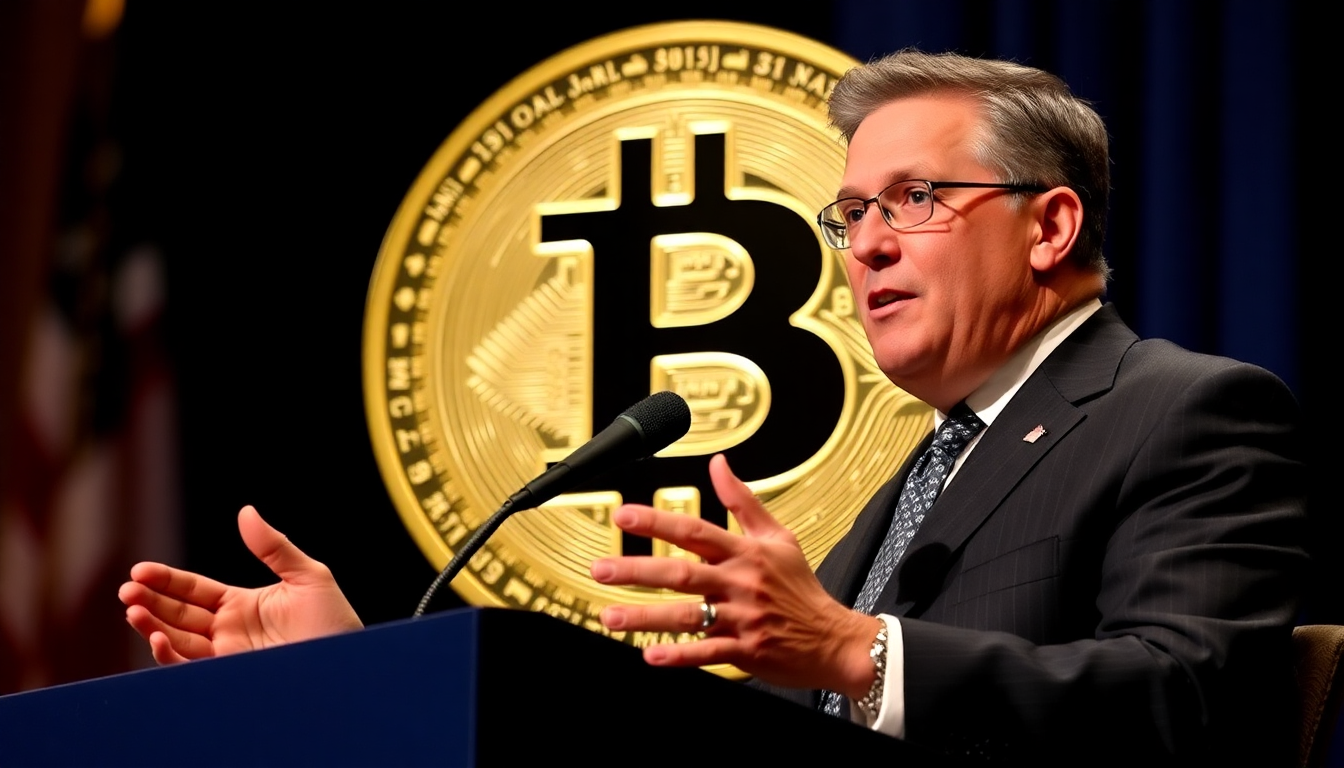
BlackRock’s Robert Mitchnick said the CLARITY Act may have limited impact on Bitcoin as institutional ETF demand strengthens, while regulatory uncertainty continues to weigh on DeFi and other crypto sectors.
Speaking to CNBC on Wednesday, BlackRock’s global head of digital assets Robert Mitchnick said Bitcoin has already secured a level of regulatory recognition that remains out of reach for much of the broader crypto market. As a result, he believes the CLARITY Act is more important for other digital assets than it is for Bitcoin.
The comments followed another strong day of demand for U.S. spot Bitcoin ETFs. The funds attracted $232.1 million on Wednesday, extending their positive streak to eight straight sessions and bringing cumulative inflows during the run to $2.8 billion, CoinGlass data showed.
Mitchnick said the regulatory situation is considerably different for Bitcoin compared with decentralized finance (DeFi) and other more complex areas of crypto. While Bitcoin has developed a clearer regulatory position, the rules surrounding these other sectors remain largely unresolved.
CLARITY Act News: Senate Approval Still Pending
The Digital Asset Market Clarity Act of 2025, introduced as H.R. 3633, passed the House in a 294-134 vote on July 17, 2025, based on congressional records.
The Senate Banking, Housing, and Urban Affairs Committee later advanced the legislation with a substitute amendment on June 1, 2026. On Aug. 8, the Senate received motions seeking cloture and approval to begin consideration of the measure.
Despite those developments, the bill has not yet been approved by the Senate. The legislation seeks to create a regulatory framework for the issuance and sale of digital commodities, assigning regulatory responsibilities to the SEC and CFTC.
Mitchnick said Bitcoin’s institutional adoption does not currently depend on another major legislative breakthrough. Investors, he explained, are not treating additional crypto legislation as a necessary condition for Bitcoin’s continued growth.
Instead, any additional regulatory progress could serve as an upside catalyst. DeFi and other complicated crypto markets, however, remain much more dependent on clearer rules, according to Mitchnick.
BlackRock Expands Its Crypto Product Range
BlackRock’s IBIT remains in demand among institutions, financial advisers and individual investors, Mitchnick said. The firm has also broadened its digital-asset offerings by adding Ethereum products that include both staking and non-staking exposure.
The company also introduced a Bitcoin premium-income product during the summer, further expanding its range of crypto investment vehicles.
Mitchnick said stablecoins represent another area with potential beyond traditional crypto trading. BlackRock is examining their use in areas such as international payments and financial markets as implementation of the Genesis Act approaches.
Bitcoin Rally Driven by Its Own Market Forces
Mitchnick said Bitcoin’s recent strength despite weakness in equities reflects market forces specific to the cryptocurrency rather than simple correlation with stocks.
He highlighted continued fund inflows and the debasement trade, along with growing concerns surrounding government debt and fiscal deficits worldwide. He also pointed to changing investor preferences, saying younger generations are increasingly turning to Bitcoin rather than gold as a store of value.
SoSoValue data showed that U.S. spot Bitcoin ETFs have accumulated $54.6 billion in net inflows, while their combined net assets reached $98.6 billion.
Against that backdrop, Mitchnick views the CLARITY Act as a less decisive factor for Bitcoin. Its greater significance may lie in establishing rules for DeFi and other segments of the digital-asset industry where regulatory uncertainty remains high.