Investors remain split over whether the Federal Reserve will raise interest rates or leave them unchanged on Wednesday, but analysts believe Bitcoin may be less exposed to downside risks compared with AI-driven technology stocks.
Bitcoin recovered from earlier session losses on Tuesday, trading mostly flat near the $64,000 mark, while artificial intelligence-related stocks faced another wave of selling pressure ahead of one of the most uncertain Fed decisions in recent years.
CME FedWatch data shows markets are assigning a 70% probability that the Fed will keep rates steady and a 30% chance of a surprise 25-basis-point increase. The uncertainty reflects Fed Chair Kevin Warsh’s limited reliance on forward guidance, making it harder for investors to predict the central bank’s next move, according to derivatives analytics firm Block Scholes.
“Tomorrow’s FOMC meeting, Kevin Warsh’s second as Fed chair, is one of the most uncertain in years,” said Thahbib Rahman, a research analyst at Block Scholes. He noted that only two Fed meetings since 2015 have seen markets show greater uncertainty over the final decision.
Bitcoin Begins to Diverge From Traditional Risk Assets
While uncertainty around monetary policy continues to weigh on markets, Bitcoin has largely maintained its strength in July as chipmakers and other AI-focused stocks have struggled. The trend suggests digital assets may be beginning to separate, at least partially, from traditional risk-driven investments.
“With the Nasdaq entering July after strong momentum and increasingly stretched positioning, while BTC continues consolidating near multi-year lows, weaker correlations are to be expected,” Vetle Lunde, head of research at K33 Research, said in a Tuesday report.
Lunde added that this changing relationship could mean the upcoming FOMC decision has a smaller impact on Bitcoin compared with previous periods of major policy uncertainty.
The difference between Bitcoin and equities has become more visible this month, according to Block Scholes. Bitcoin has gained around 6% in July, while the S&P 500 has remained relatively unchanged and semiconductor stocks have dropped nearly 20%.
Rahman said market expectations have shifted significantly over the past month as softer inflation figures competed with renewed concerns over geopolitical tensions, higher oil prices, and tariff-related risks.
Despite those challenges, he said crypto market sentiment has continued improving.
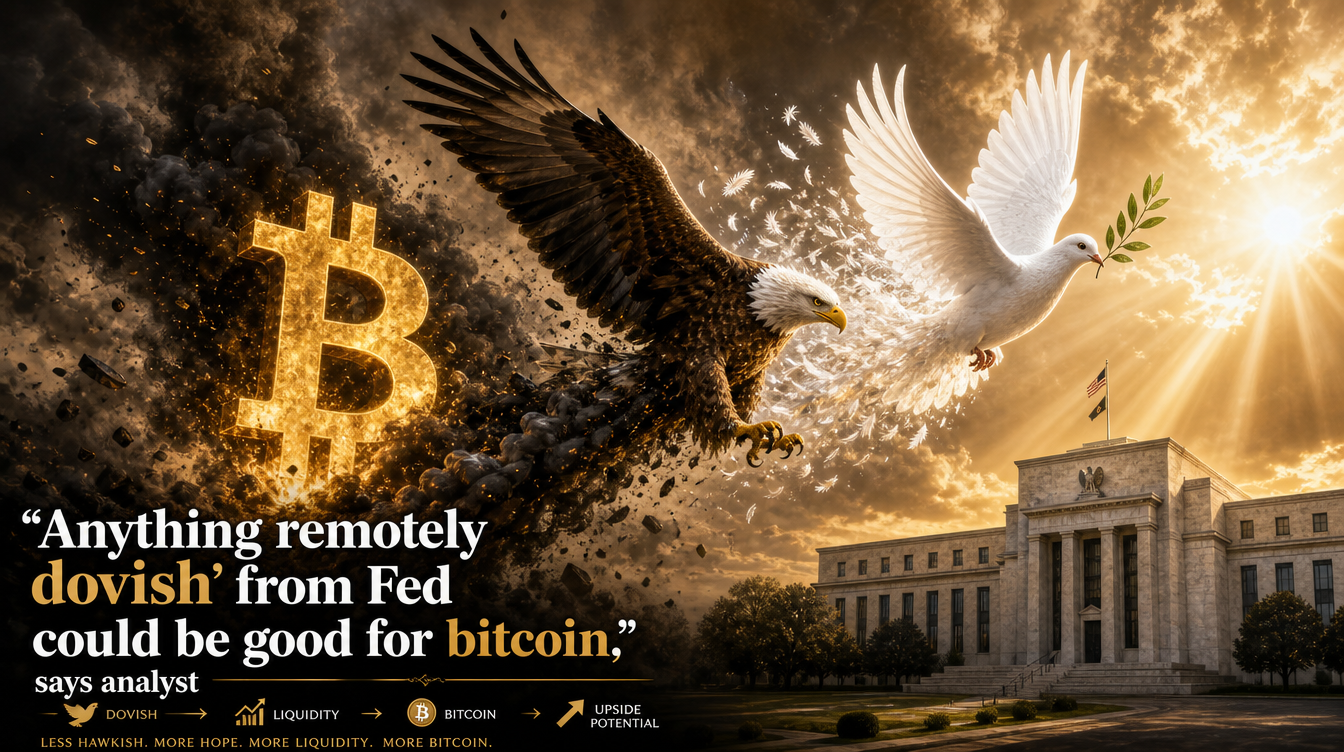
Rahman suggested that even a slightly dovish signal from Fed Chair Warsh could help Bitcoin extend its recent outperformance.