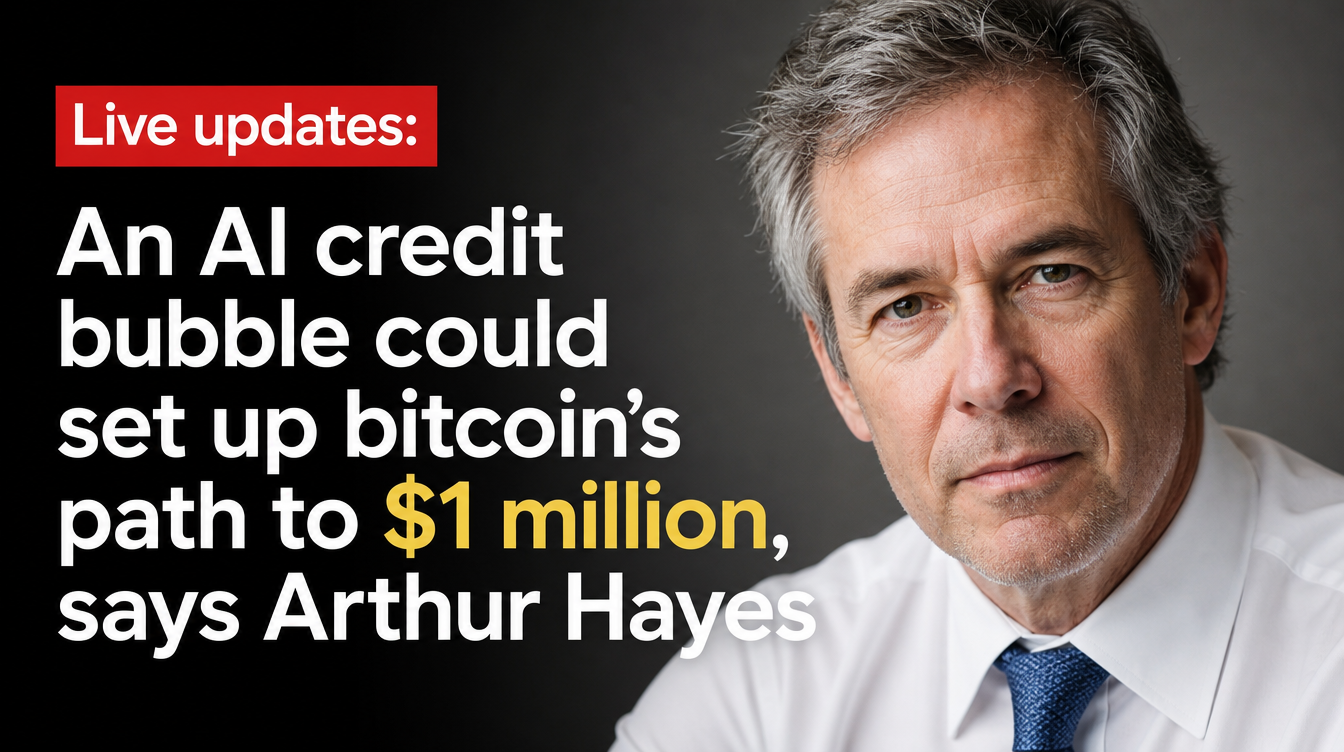
Maelstrom co-founder Arthur Hayes believes the massive borrowing behind AI data-center expansion could eventually trigger a major credit crisis. He argues that government intervention and aggressive money printing would follow, creating a powerful catalyst for bitcoin’s next major rally.
Circle shares drop as analysts debate ARC token impact on 2026 outlook
Circle shares declined about 3% in pre-market trading after the stablecoin issuer delivered stronger earnings but fell short on revenue expectations.
Clear Street said Circle’s adjusted EBITDA was in line with Wall Street forecasts despite a 2% revenue miss. The firm highlighted a stronger-than-expected RLDC margin of 41.2% and suggested that improving profitability may have helped offset concerns linked to Coinbase’s Hyperliquid agreement. It added that the company’s core business appears stronger than expected if projected $160 million in ARC token sales are included this year.
Compass Point also gave a mixed assessment, noting that Circle’s upgraded 2026 outlook was largely supported by non-recurring ARC token pre-sales. The firm pointed to continued progress with the Arc blockchain, Circle Payments Network, and AI-focused payment initiatives.
TeraWulf strengthens AI infrastructure strategy through Anthropic deal
TeraWulf reported second-quarter results following its previously announced $19 billion, 20-year data-center lease agreement with Anthropic. The deal, covering 401 MW of capacity at its Kentucky Justified campus, helped high-performance computing services generate 71% of Q2 revenue.
The company is also building out 336 MW at its Lake Mariner facility and secured a gigawatt-scale Kentucky site in May. TeraWulf shares were up more than 1% before markets opened.
ADP July hiring growth falls short of expectations
Private-sector hiring slowed in July, with ADP reporting a gain of 44,000 jobs compared with 98,000 in June. The figure also missed economists’ forecast of 70,000.
Markets showed limited reaction as investors waited for Friday’s official July Nonfarm Payrolls report from the government, which remains the key labor market release this week.
Citadel records strongest monthly performance in years
Citadel’s flagship Wellington fund climbed 5.9% in July, its best monthly gain in four years, according to CNBC. The fund is now up 12% so far this year.
The firm’s tactical trading and equity funds also posted double-digit monthly gains. Part of the performance was attributed to Citadel taking over positions from Situational Awareness, an AI-heavy portfolio managed by Leopold Aschenbrenner, after those holdings suffered a major decline before rebounding strongly.
SpaceX shares extend losses after earnings as spending rises
SpaceX shares continued their post-earnings decline, falling 11% to $111.80 ahead of the opening bell.
JPMorgan raised its price target from $225 to $240 but warned that SpaceX could spend nearly $200 billion annually in capital expenditures during 2027 and 2028, putting additional pressure on free cash flow.
The bank also highlighted an upcoming lock-up expiration involving 911.5 million shares, which could increase the current public float by a significant amount.
DeFi thrives on uncertainty, says Curve founder
Michael Egorov, founder of Curve Finance and Yield Basis, said the same market uncertainty worrying investors could create opportunities for decentralized finance.
Egorov argued that Federal Reserve decisions have less impact on DeFi than many assume. While higher rates make tokenized Treasury products more appealing, on-chain yield opportunities could become more competitive if the Fed begins cutting rates.
He noted that volatile markets often benefit liquidity providers because increased trading activity generates more fee revenue. Unlike steady returns from lending or Treasury products, trading fees can surge when markets become unpredictable.
According to Egorov, volatility is not a threat to DeFi but rather a key driver of returns.
Bitfinex highlights real yields as key factor for bitcoin outlook
Crypto exchange Bitfinex said bitcoin’s bullish case depends heavily on the direction of the 10-year U.S. Treasury real yield.
The exchange noted that the yield has not remained above 2.5% since before bitcoin existed and currently sits around 2.41%. A sustained move above that threshold, Bitfinex said, could remove an important macro tailwind for BTC.
Rising bond yields since the Iran conflict began in late February have weighed on risk assets, although stocks have continued reaching record highs while bitcoin and gold have lagged.
Zcash leads crypto recovery as BTC and ETH remain muted
Privacy-focused cryptocurrency Zcash outperformed the broader market during a crypto rebound.
ZEC gained nearly 6% over 24 hours, while bitcoin and ether advanced only 0.6% and 0.3%, respectively. Other notable gainers included PUMP, HYPE, and LIT.
Hayes says AI credit bubble could become bitcoin’s next major catalyst
Arthur Hayes believes the AI boom resembles a credit-driven expansion similar to the 2008 financial crisis rather than the earnings-focused dot-com bubble.
The BitMEX co-founder said major technology companies are financing large data-center expansions with debt, using facilities filled with fast-depreciating hardware as collateral. He argued that the real risk emerges when AI capital spending stops accelerating, which he expects could happen between late 2027 and 2028.
Hayes believes lenders may continue extending credit until weaker AI-related borrowers begin to fail, creating a broader financial shock. He expects governments in the U.S. and China to respond with large-scale intervention and money creation, potentially exceeding the response seen during the 2008 crisis.
That wave of liquidity, Hayes argues, could ultimately push bitcoin toward $1 million.
In the near term, he views the recent AI-related market selloff—including Korea’s leveraged unwind—as a temporary correction within a broader bull market.
Bitcoin traded around $64,200 on Wednesday, remaining nearly unchanged over the week and confined to the range it has held since May.