Bitcoin and technology stocks came under renewed pressure as Treasury yields and energy prices climbed alongside a stronger U.S. dollar. Silver also weakened, falling below $59 an ounce.
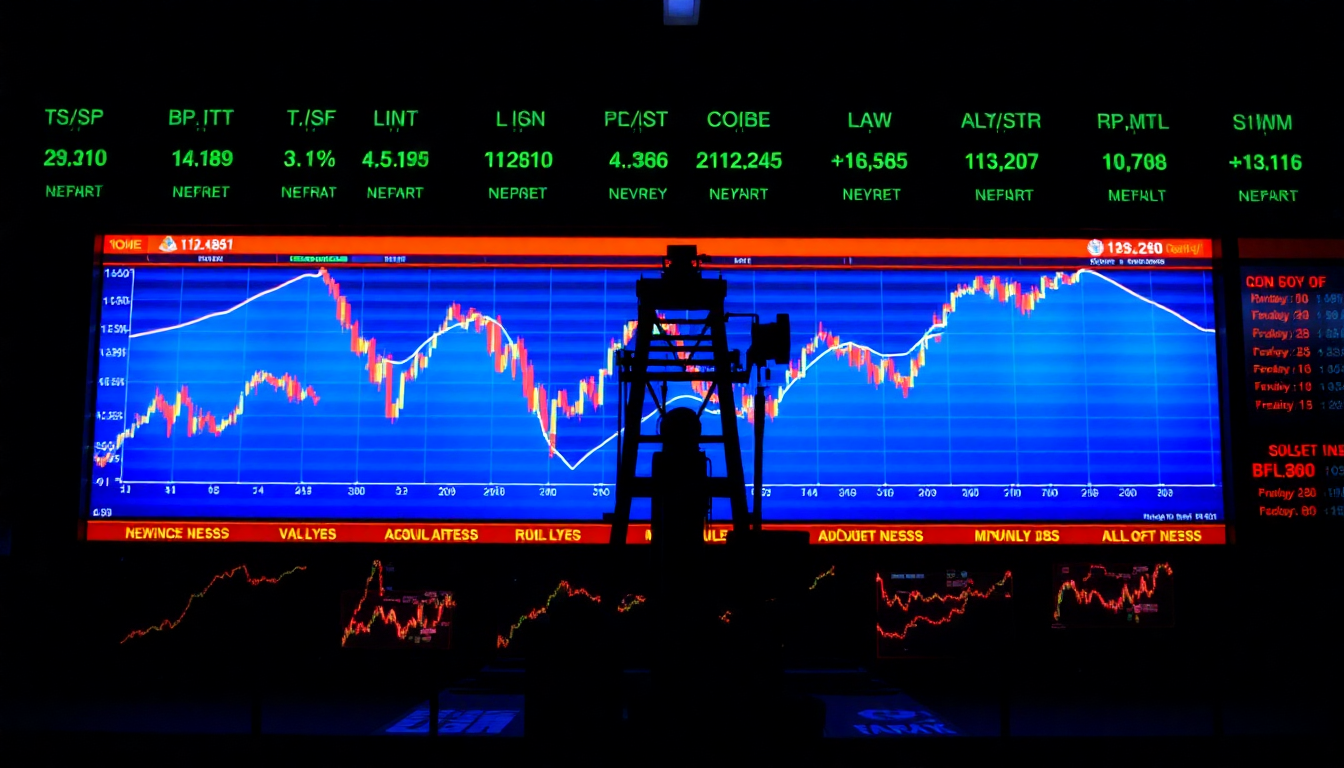
Brent crude has opened an unusually large gap over U.S. benchmark WTI. Brent is trading near $105 a barrel, compared with roughly $92.50 for WTI, leaving a spread of about $12.50.
Wide Brent-WTI spreads have previously appeared during periods of significant disruption.
From 2011 through 2013, surging North American oil production ran into insufficient pipeline capacity, contributing to weaker WTI prices. During the COVID-19 crisis, collapsing demand and a shortage of storage capacity pushed the expiring WTI futures contract into negative territory.
The spread widened again in March after the Iran war began in February. Disruptions to shipping through the Strait of Hormuz and increased freight costs pushed Brent higher relative to WTI, while stronger U.S. inventories provided support for the domestic benchmark.
The current premium points to growing supply and transportation pressures in internationally traded crude markets.
Coinbase Executive Rejects ‘Bunker Mode’ Warning
Yehuda Lindell, Coinbase’s head of cryptography, has criticized Ethereum researcher Justin Drake’s warning that artificial intelligence could soon compromise the cryptographic systems underpinning bitcoin, ether and other digital assets.
“There is no evidence whatsoever pointing to a break of decades old hardness assumptions like elliptic curve cryptography,” Lindell wrote.
His comments followed Drake’s viral post arguing that advances in AI could allow attackers to break the cryptography securing major cryptocurrencies before quantum computers are capable of doing so.
Drake called on the blockchain industry to enter “bunker mode” and advised crypto holders to transfer funds to addresses that have never been used to sign transactions.
Lindell said he initially intended not to respond but decided to address the warning after it gained widespread attention, calling it “a really bad take IMO.”
He argued that the assumption that impressive AI mathematics automatically threatens elliptic-curve cryptography has no logical basis.
Lindell also stressed that a genuine ability to break elliptic-curve cryptography would have consequences far beyond cryptocurrency. Attackers could potentially create fraudulent PKI certificates, impersonate bank websites, distribute malicious banking applications and sign compromised operating systems that could then be delivered to users’ phones and computers.
For Lindell, the lack of evidence is critical. He said there is currently no indication that AI possesses such a capability and characterized the warning as fearmongering.
He added that making claims of this magnitude without evidence is not responsible behavior and described it as the definition of FUD because the claim is difficult to disprove while having no supporting evidence.
U.S. Jobless Claims Stay Historically Low
Initial U.S. jobless claims declined to 197,000 last week from 199,000 previously. Economists had anticipated an increase to 200,000.
Claims have remained unusually low for several months, raising questions about whether the labor market remains particularly resilient or whether jobless claims are becoming a less useful gauge of economic conditions.
Rising Yields and Energy Prices Hit Bitcoin
Bitcoin weakened further as Treasury yields, crude prices and the dollar moved higher.
The U.S. 10-year Treasury yield reached 5.352%, while the 30-year yield continued to establish fresh highs above 5.73%.
WTI crude rose more than 4% over the previous 24 hours to about $92.40 a barrel. Brent also gained roughly 4% to $105. New York Harbor ultra-low sulfur diesel futures climbed another 4% to $4.80 per gallon, extending the broader rally in energy markets.
The U.S. Dollar Index rose to 102.4, creating another obstacle for risk assets as investors faced renewed concerns about inflation and tighter financial conditions.
Bitcoin fell below $83,000 to $82,965, down almost 1% over 24 hours.
Gold remained above $4,100 an ounce, but silver dropped below $59 to a new low. Technology stocks also weakened, with Nasdaq 100 futures down nearly 1%.