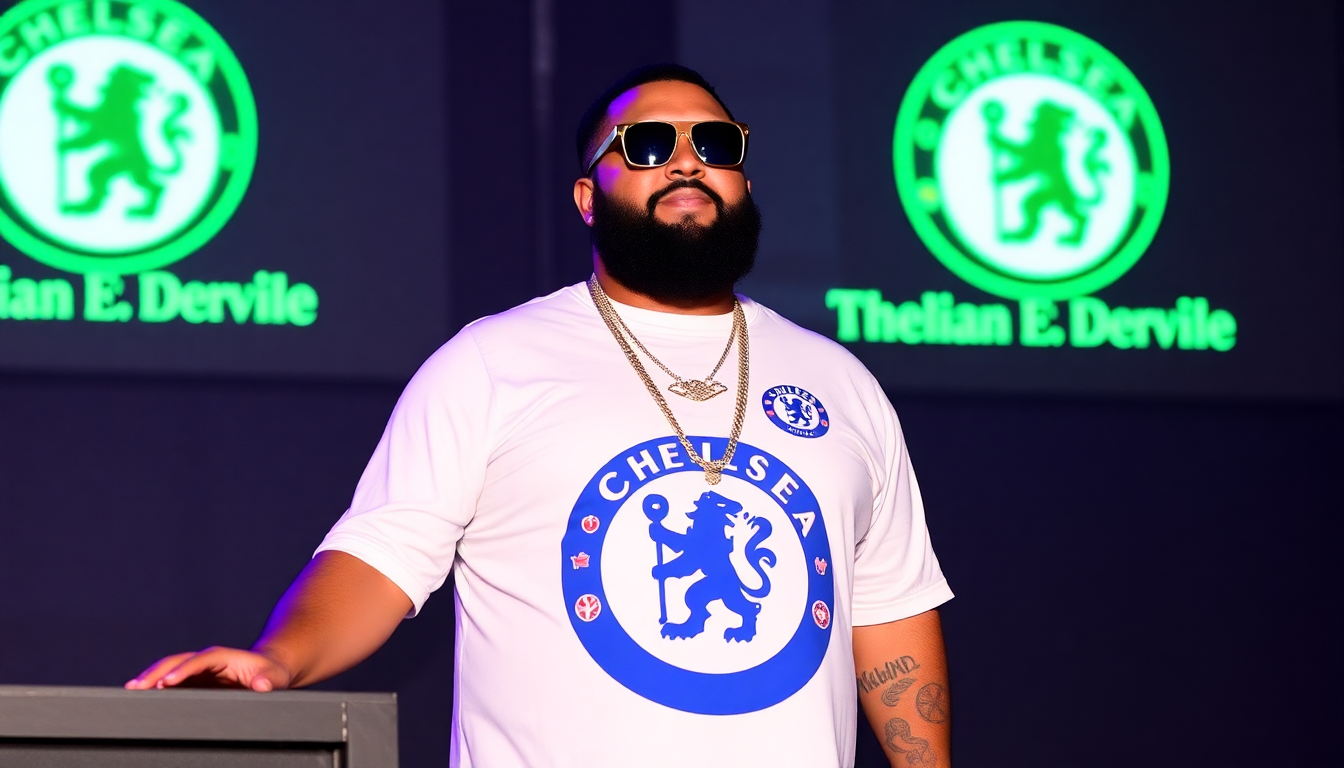
Circle’s official USDC account posted an image of DJ Khaled wearing a Chelsea jersey with USDC branding on October 5, 2026, drawing criticism because of the rapper’s earlier undisclosed promotion of the Centra ICO.
The post revived attention around the SEC settlement connected to that 2017 promotion. However, the available posts do not demonstrate that Circle has signed Khaled to a new sponsorship, ambassador position, employment agreement, or paid promotional deal.
Separate Chelsea Relationships Behind the Image
The apparent connection between Khaled and Circle stems from two separate Chelsea relationships. Circle serves as Chelsea’s official front-of-shirt sponsor, while Khaled was featured in a promotional activation associated with the club’s separate partnership with Roc Nation, announced in May.
That helps explain why Khaled appeared in a Chelsea shirt carrying Circle’s branding without necessarily indicating a direct Circle endorsement. Neither the USDC account’s post nor Circle CEO Jeremy Allaire’s subsequent amplification identified Khaled as a Circle sponsor or ambassador. The posts also did not disclose any payment or formal agreement.
Calling the image proof of a new Circle marketing campaign would therefore go beyond what has been publicly established.
The issue is particularly sensitive for Circle because trust and compliance are central to the reputation of a stablecoin issuer. While the post itself was presented casually, the backlash showed how a celebrity’s previous crypto promotions can quickly create reputational questions when that person appears alongside a financial brand.
Crypto users such as Joseph Schiarizzi and Taylor Monahan criticized the apparent association by highlighting Khaled’s history with the SEC. Wazz Crypto also drew a sarcastic comparison with Kim Kardashian, who faced a separate SEC penalty over an undisclosed cryptocurrency promotion. Kardashian’s case is unrelated to the SEC action involving Khaled.
The details of Khaled’s earlier case are specific. In September 2017, he promoted Centra Tech’s debit-card product on Instagram to an audience of roughly 12.4 million followers and encouraged them to obtain CTR tokens. The SEC said Centra Tech paid him $50,000 for the promotion and that he failed to reveal that compensation.
The $50,000 represented the payment for the original promotional post, while the later SEC settlement amounted to $152,725.
Khaled was not charged with fraud by either the SEC or the Department of Justice. Centra Tech’s founders faced separate prosecution over the fraudulent cryptocurrency project, and their case should not be combined with the SEC’s enforcement action against Khaled concerning undisclosed compensation.
The restrictions associated with Khaled’s old settlement have expired, so that case does not automatically prevent him from working with a crypto company today. Nevertheless, the legal ability to participate in a crypto promotion is separate from the reputational implications of appearing to endorse a particular company.
In this case, Circle’s posts prompted renewed criticism because of Khaled’s history, but there is currently no evidence in the cited posts that Circle employed him, paid him, or formally appointed him as an ambassador or sponsor.