Fidelity’s latest FETH filing seeks permission to stake as much as 100% of the fund’s ether holdings, but the strategy cannot launch until the SEC declares the registration statement effective.
FD Funds Management LLC, the sponsor of the Fidelity Crypto Ethereum Fund (FETH), submitted a pre-effective amendment to its Form S-3 registration statement to the U.S. Securities and Exchange Commission on July 24, 2026. The updated filing introduces provisions that would allow FETH to stake its entire ETH portfolio.
The amendment does not register any new securities and instead modifies an earlier S-1 registration statement that the SEC approved on July 31, 2025.
The filing represents more than a routine registration update. Fidelity is attempting to add staking rewards to its spot Ethereum ETF, which initially launched without a staking component. According to the filing, staking would begin after the registration statement becomes effective, meaning the fund has not yet started the activity.
Fidelity’s Proposed FETH Staking Structure
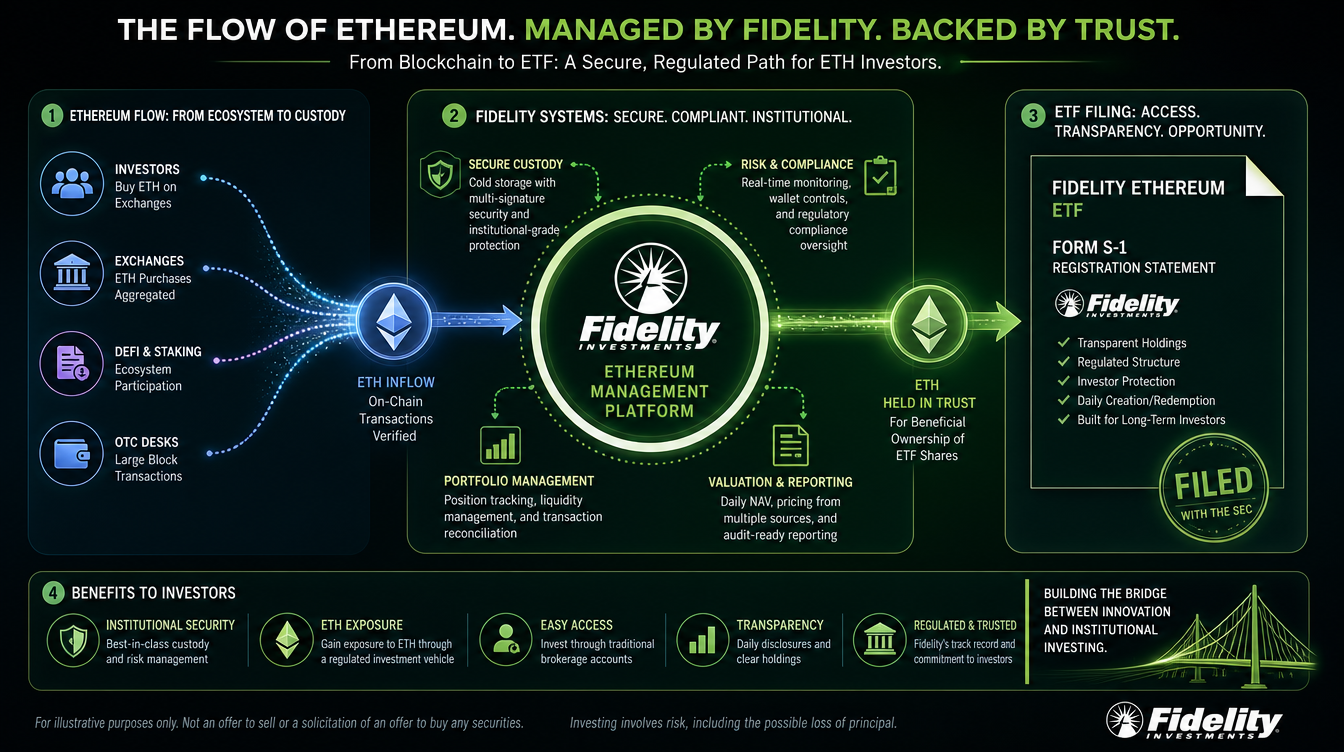
Under the proposed arrangement, FETH would stake ether through designated custodians and node operators during normal operations. The fund would keep some ETH available to cover redemptions, expenses and liquidity requirements through its Liquidity Program.
The trust would receive 85% of the gross rewards generated from staking, while the remaining 15% would be charged as a staking fee and distributed among the sponsor, custodians and node operators. This fee would come on top of FETH’s existing 0.25% annual sponsor fee on its ether holdings.
The filing lists Anchorage Digital Bank NA, BitGo Bank & Trust and Fidelity Digital Assets, N.A. as custodians for the fund.
Fidelity also highlighted the risks associated with staking, including slashing penalties and temporary restrictions on transferring ETH during the activation and withdrawal processes. To address potential liquidity issues, the sponsor could extend redemption settlement periods or use cash to satisfy certain redemption requests.
Why SEC Effectiveness Is Important
The S-3 filing establishes a framework for future securities issuance, but submitting the document does not by itself authorize FETH to begin staking.
The registration statement remains preliminary, and the prospectus states that shares cannot be sold until it becomes effective. Fidelity similarly describes staking as an activity it expects to begin “as soon as practicable” after effectiveness rather than something currently underway.
The approach suggests Fidelity is preparing the legal and operational infrastructure in advance so FETH can potentially begin staking soon after receiving SEC effectiveness, rather than waiting to complete the process later.
FETH could also distribute net staking rewards to investors on a quarterly basis through cash payments. However, the prospectus makes clear that such distributions are not guaranteed and could be changed or suspended.
The distinction is significant for investors comparing the ETF with direct ETH staking. While direct staking already allows holders to earn network rewards, an ETF must address additional regulatory, custody, liquidity and operational considerations before those rewards can be distributed to shareholders.