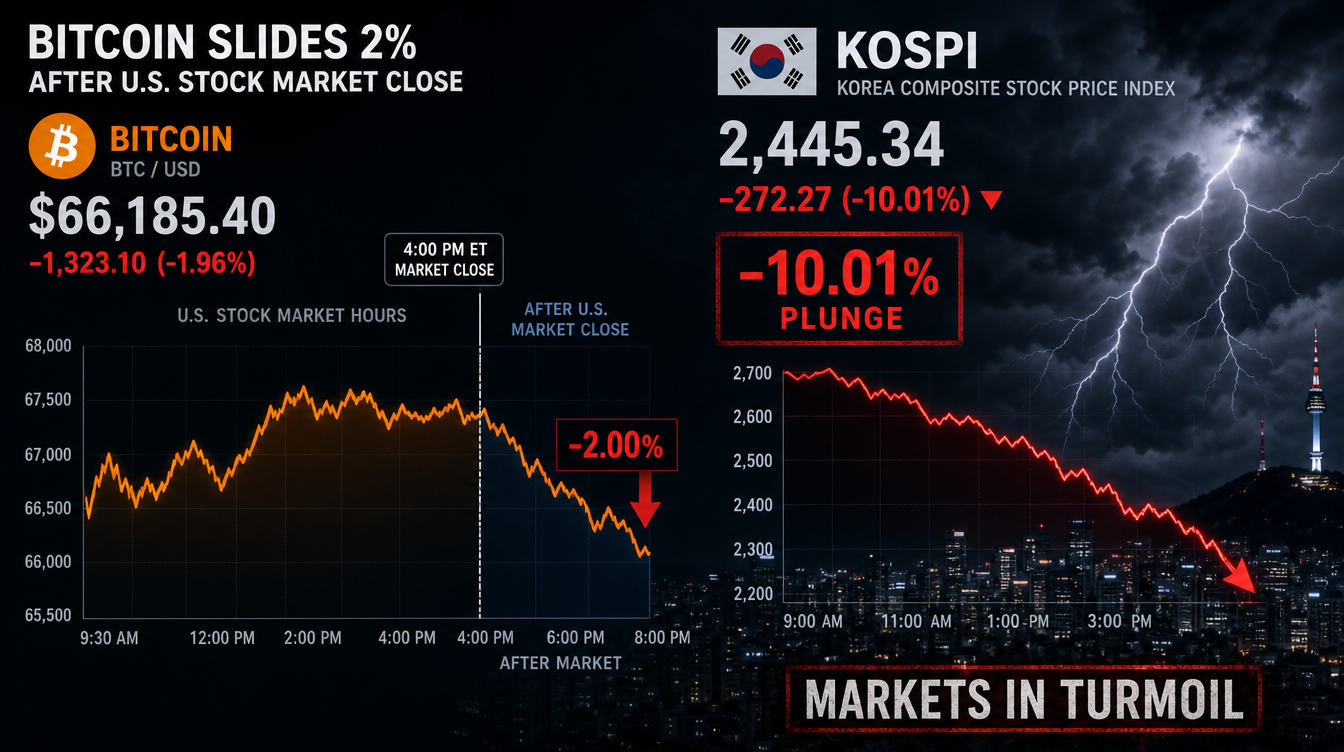
Bitcoin faced fresh selling pressure after the U.S. market close on Monday, as a sharp downturn in South Korea’s Kospi index dragged Asian stocks lower and triggered a broader risk-off sentiment across cryptocurrency markets.
BTC slipped from almost $65,000 to about $63,200, representing a decline of roughly 2.7%. The pullback spread across the crypto sector, weighing on major assets such as Ethereum (ETH), XRP, and Solana (SOL). The move erased the market’s earlier resilience on Monday, when cryptocurrencies had held firm despite a significant drop in Nvidia shares on Wall Street.
Crypto sentiment was also affected by delays surrounding the Senate’s CLARITY Act. Lawmakers have shifted their focus toward a Russia sanctions package, making it unlikely that the highly anticipated crypto market structure bill will receive a vote before next week. The delay leaves limited time before the Senate’s August 8 recess, despite expectations that the legislation could provide regulatory certainty and attract greater institutional investment into digital assets.
Asian equity markets suffered a major selloff, with South Korea’s Kospi plunging 10% to its lowest point since mid-April. The index has now fallen 25% from its mid-June high, with heavy losses recorded among major semiconductor companies including Samsung and SK Hynix. Market observers pointed to declining investor enthusiasm for chipmakers as a key factor behind the recent weakness in South Korean stocks.
Bitcoin has often moved in line with traditional markets during periods of financial stress, though the relationship is more complex than a simple correlation.
According to Bitfinex analysts, BTC tends to track equities when market pressure is driven by macroeconomic factors such as interest rate expectations. However, Bitcoin can separate from stocks when equity weakness comes from sector-specific concerns. They noted that current debates around technology earnings and capital spending are more company-focused, suggesting that the BTC-stock relationship may be exaggerated.
Investors are now preparing for several major events that could increase volatility across global markets. The Federal Reserve’s interest rate decision is scheduled for Wednesday, followed by important economic data releases on Thursday.
Nexo analyst Dessislava Ianeva said the combination of the Fed announcement, core PCE inflation data, and GDP figures makes the Wednesday-to-Thursday period the week’s most critical period for potential changes in rate expectations and market direction.