Here’s another rewritten version with a smooth, concise flow:
Senate leadership is currently dedicating floor time to other legislative priorities, leaving the crypto industry waiting for its long-anticipated policy bill to advance.
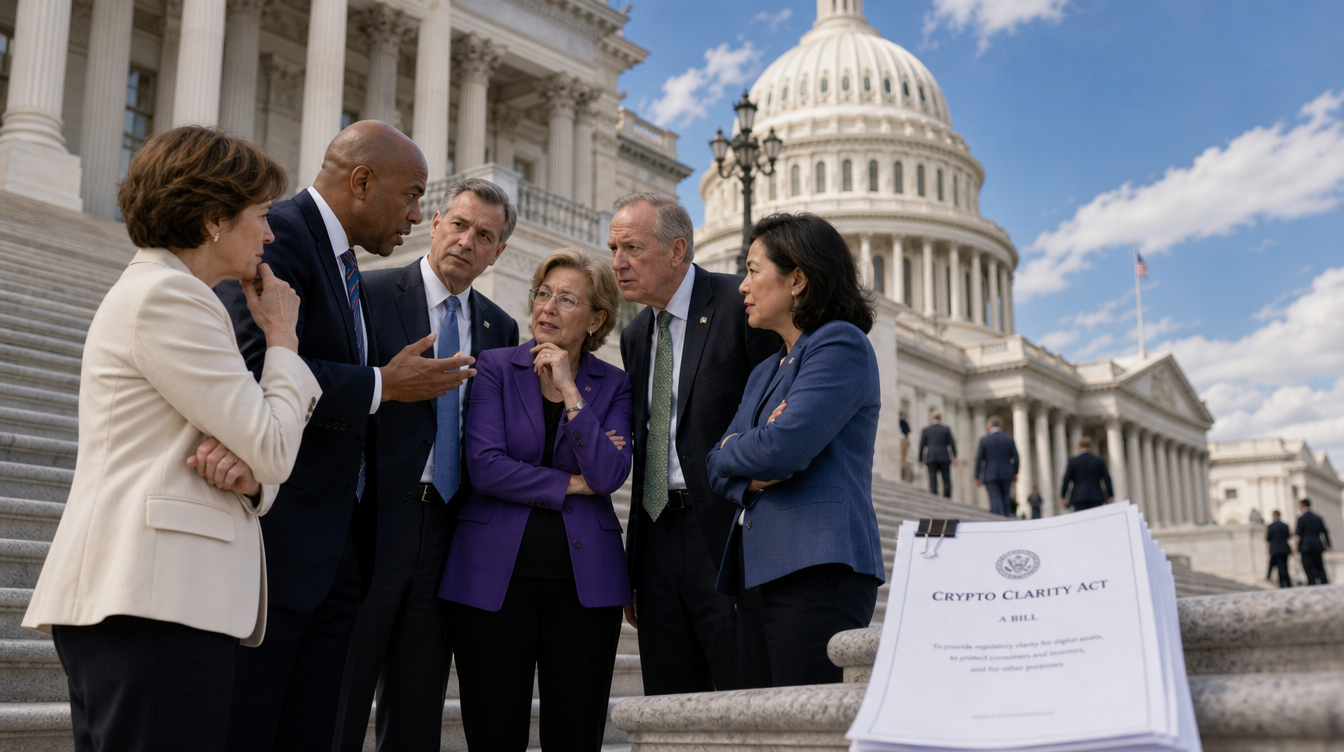
The Digital Asset Market Clarity Act has been temporarily pushed aside as the U.S. Senate turns its attention to issues such as Russian sanctions and federal nominations. This delay further sidelines the crypto sector’s key legislative effort and squeezes its chances within an already crowded agenda.
Majority Leader John Thune began the week by advancing a package of nominations and is expected to move next to a Russia sanctions bill, initiating the cloture process. Due to the Senate’s procedural rules—which involve multiple steps and typically limit consideration to one contested bill at a time—the Clarity Act is unlikely to be addressed until current matters are resolved, a process that could take several days.
The sanctions bill targets Russia’s leadership and trade partners and has been dedicated to the late Senator Lindsey Graham. His funeral proceedings in Washington and South Carolina are also expected to take up significant Senate attention during the week.
As a result, the Clarity Act is not expected to reach a vote until at least next week, just ahead of the Senate’s summer recess beginning August 8. Even then, the bill remains unfinished, as lawmakers continue to negotiate a contentious provision that would restrict senior government officials, including Donald Trump, from supporting crypto-related ventures.
While Thune has indicated a desire to bring the bill forward before the break, he has acknowledged that progress depends on securing sufficient support.
At this late stage in the legislative calendar, floor time is extremely limited, and major disagreements—particularly around ethics rules—remain unresolved. These issues could reduce the likelihood of the bill passing in 2026, potentially prolonging uncertainty around U.S. crypto regulation.
If the Clarity Act stalls, the industry may have to rely on alternative efforts for regulatory clarity, including implementation of the GENIUS Act and ongoing rulemaking by the SEC and CFTC.
For now, the most realistic scenario may be a preliminary procedural push before lawmakers leave for recess.
Although the House of Representatives has already advanced a similar version of the bill, the Senate continues to be the main hurdle. Earlier debates focused on stablecoin yields, eventually leading to a compromise, while more recent discussions have centered on limiting government officials’ involvement in crypto.
There was some progress last week when Trump signaled openness to restrictions on his crypto activities. However, Democrats argued the proposed limits were insufficient, and negotiations are still ongoing.
Lawmakers will briefly return in September, but time will be tight. After the November elections, Congress will enter its “lame duck” session, a period that can either produce last-minute deals or stall due to political gridlock.
Even if the Senate passes the Clarity Act, it must return to the House for final approval, where internal divisions have already slowed other legislative efforts. If approved by both chambers, the bill would go to the president for signing.
However, Trump has recently refused to sign other bipartisan legislation, demanding action on voter ID requirements first. Although he has called for progress on the Clarity Act, it remains unclear whether he would approve it. If the president takes no action within 10 days, the bill would automatically become law.