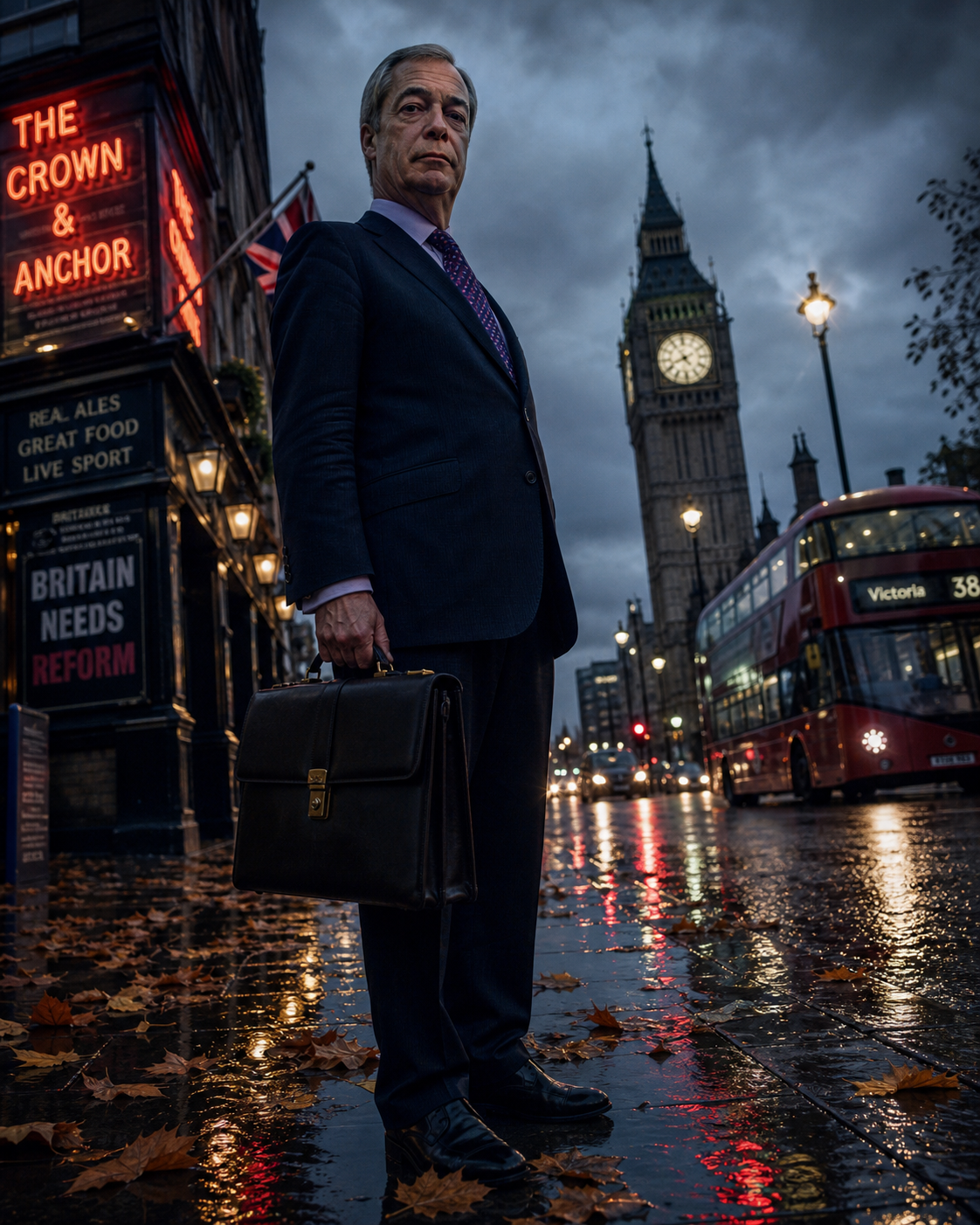
In the latest UK crypto developments, Christopher Harborne—an investor in Tether and Bitfinex—is under dual regulatory scrutiny after directing around £30 million into British politics. This includes an undeclared £5 million personal gift to Nigel Farage ahead of the 2024 general election, making Harborne the largest individual donor in UK political history.
Both the Parliamentary Commissioner for Standards and the Electoral Commission have opened formal probes. Separately, a complaint alleges that Farage used his parliamentary position to lobby against the introduction of a digital pound, a move that could directly conflict with Harborne’s crypto interests.
The £5 million payment, received before Farage entered Parliament and not disclosed under Rule 5 of the MPs’ Code of Conduct, comes in addition to more than £25 million Harborne has contributed to Reform UK and its predecessor parties since 2019, according to Al Jazeera. These donations make up roughly two-thirds of the party’s total funding.
Farage has defended the £5 million as a personal, unconditional gift intended to fund lifetime security and has rejected any suggestion of wrongdoing. He resigned his parliamentary seat on July 7, 2026, casting the Clacton by-election as a battle between himself and “the establishment.”
A more significant issue lies in the overlap between crypto lobbying and central bank policy. In September 2025, Farage met with Bank of England Governor Andrew Bailey and pushed back against plans for a retail central bank digital currency—often referred to as “Britcoin”—which would compete with privately issued stablecoins such as Tether.
The Bank of England has confirmed that no final decision has been made on the digital pound, leaving it as one of the most important unresolved regulatory questions for the UK crypto market.
Labour MP Phil Brickell, chair of the APPG on Anti-Corruption and Responsible Tax, formally referred the matter to the standards commissioner in July 2026. Harborne’s estimated 12% economic stake in Tether puts him in direct competition with any future state-backed digital currency. Tether itself is reported to generate roughly $10 billion in annual profit, supported by around $184 billion in USDT in circulation.
Analysts say the alignment between Farage, Reform UK, and crypto-industry figures like Harborne reflects a broader ideological overlap. Economist Frances Coppola described the political foundations of crypto as “anarcho-capitalist,” emphasizing resistance to centralized banking and skepticism toward democratic oversight of monetary systems.
The political fallout is already becoming visible. Sam Power, a political finance expert at the University of Bristol, told Al Jazeera that Farage and Reform UK are facing “serious trouble.” The controversy surrounding Harborne’s donations appeared to impact Reform’s performance in the Makerfield by-election, where its candidate lost to new Prime Minister Andy Burnham.
Power noted that while Reform maintains a solid core support base of around 20%, the additional 10% needed to win a general election is “already slipping away.”
Reputational risks are further heightened by Tether’s associations. A 2024 report by the UN Office on Drugs and Crime identified Tether as a commonly used tool for crypto money laundering in Southeast Asia. The stablecoin has also been linked to alleged human trafficking operations in Cambodia and large-scale fraud schemes—allegations the company denies.
David Gerard, author of the Pivot to AI blog, told Al Jazeera that Tether continues to be widely used in illicit networks, particularly in cases such as human trafficking.
This pattern of crypto-linked political funding influencing policy is not limited to the UK. Similar concerns are emerging in the United States, where industry-backed political donations are shaping legislation, and potential conflicts of interest have drawn scrutiny from the Department of Justice.
Overall, the case underscores the growing intersection between crypto finance, political influence, and regulatory decision-making—an area likely to face increasing scrutiny going forward.